Pages

Apr 30, 2020

Andromeda Island Universe Andromeda Island Universe


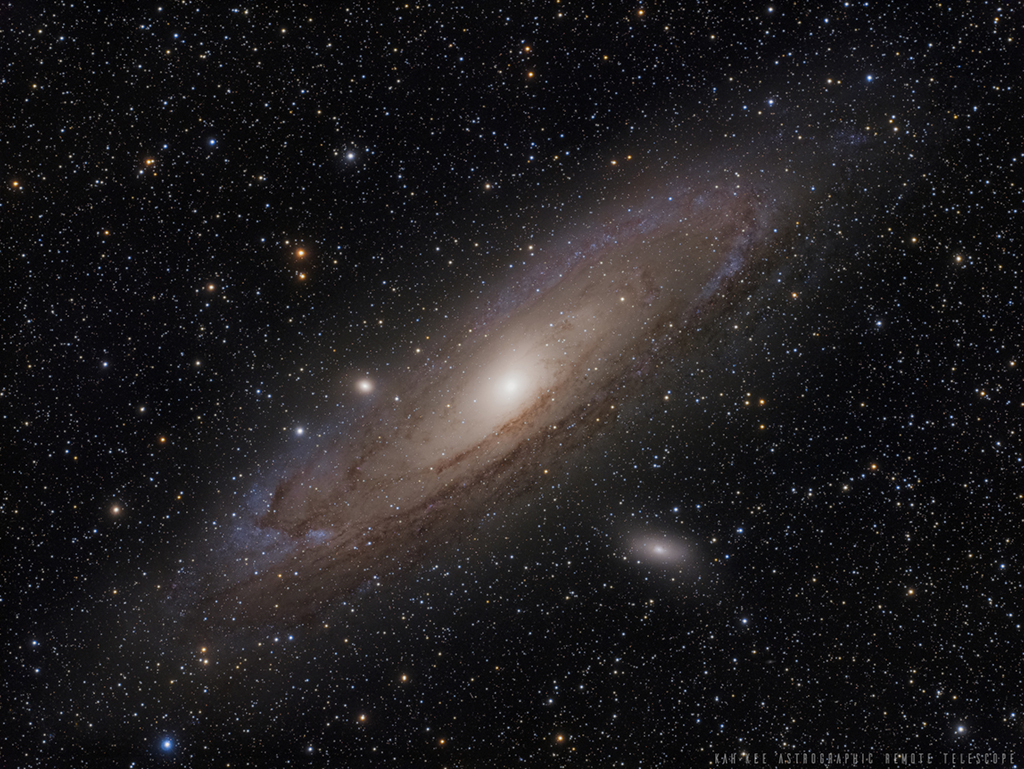
The most distant object easily visible to the unaided eye is M31, the great Andromeda Galaxy some two and a half million light-years away. But without a telescope, even this immense spiral galaxy - spanning over 200,000 light years - appears as a faint, nebulous cloud in the constellation Andromeda. In contrast, a bright yellow nucleus, dark winding dust lanes, expansive blue spiral arms and star clusters are recorded in this stunning telescopic image. While even casual skygazers are now inspired by the knowledge that there are many distant galaxies like M31, astronomers debated this fundamental concept 100 years ago. Were these "spiral nebulae" simply outlying components of our own Milky Way Galaxy or were they instead "island universes", distant systems of stars comparable to the Milky Way itself? This question was central to the famous Shapley-Curtis debate of 1920, which was later resolved by observations of M31 in favor of Andromeda, island universe. via NASA https://ift.tt/2zM6QF7

Apr 29, 2020

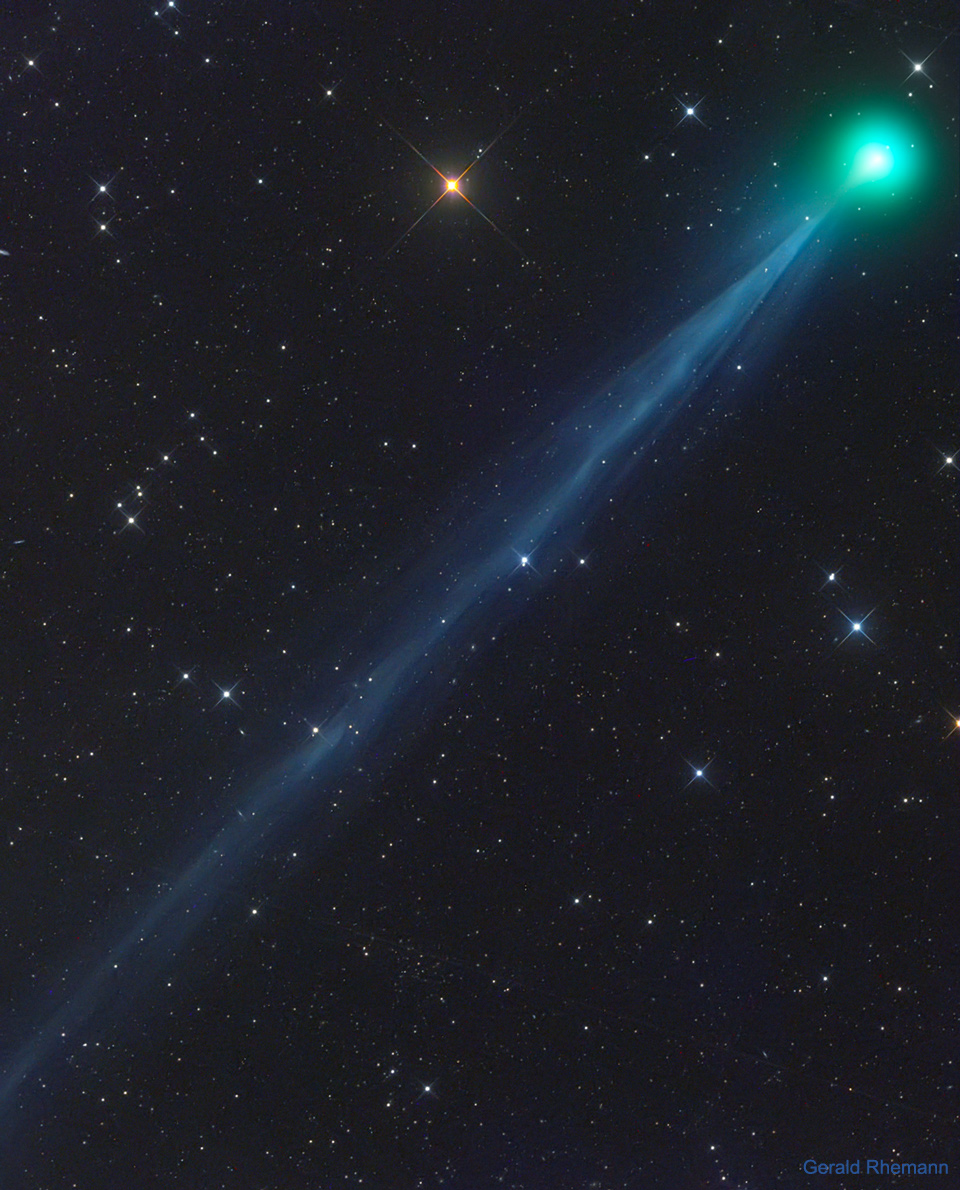
The Ion Tail of New Comet SWAN The Ion Tail of New Comet SWAN


Newly discovered Comet SWAN has already developed an impressive tail. The comet came in from the outer Solar System and has just passed inside the orbit of the Earth. Officially designated C/2020 F8 (SWAN), this outgassing interplanetary iceberg will pass its closest to the Earth on May 13, and closest to the Sun on May 27. The comet was first noticed in late March by an astronomy enthusiast looking through images taken by NASA's Sun-orbiting SOHO spacecraft, and is named for this spacecraft's Solar Wind Anisotropies (SWAN) camera. The featured image, taken from the dark skies in Namibia in mid-April, captured Comet SWAN's green-glowing coma and unexpectedly long, detailed, and blue ion-tail. Although the brightness of comets are notoriously hard to predict, some models have Comet SWAN becoming bright enough to see with the unaided eye during June. via NASA https://ift.tt/3bNGnov

Apr 28, 2020

The Kepler 90 Planetary System The Kepler 90 Planetary System


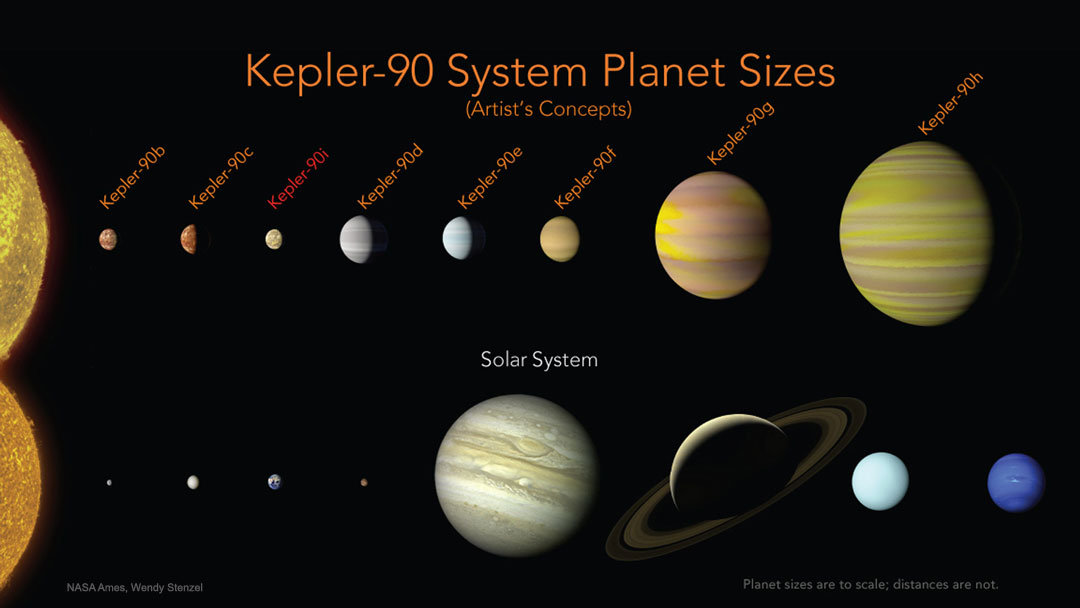
Do other stars have planetary systems like our own? Yes -- one such system is Kepler-90. Cataloged by the Kepler satellite that operated from Earth orbit between 2009 and 2018, eight planets were discovered, giving Kepler-90 the same number of known planets as our Solar System. Similarities between Kepler-90 and our system include a G-type star comparable to our Sun, rocky planets comparable to our Earth, and large planets comparable in size to Jupiter and Saturn. Differences include that all of the known Kepler-90 planets orbit relatively close in -- closer than Earth's orbit around the Sun -- making them possibly too hot to harbor life. However, observations over longer time periods may discover cooler planets further out. Kepler-90 lies about 2,500 light years away, and at magnitude 14 is visible with a medium-sized telescope toward the constellation of the Dragon (Draco). The exoplanet-finding mission TESS was launched in 2018, while missions with exoplanet finding capability planned for launch in the next decade include NASA's JWST and WFIRST. via NASA https://ift.tt/2y4uHz9

Apr 26, 2020

Edwin Hubble Discovers the Universe Edwin Hubble Discovers the Universe


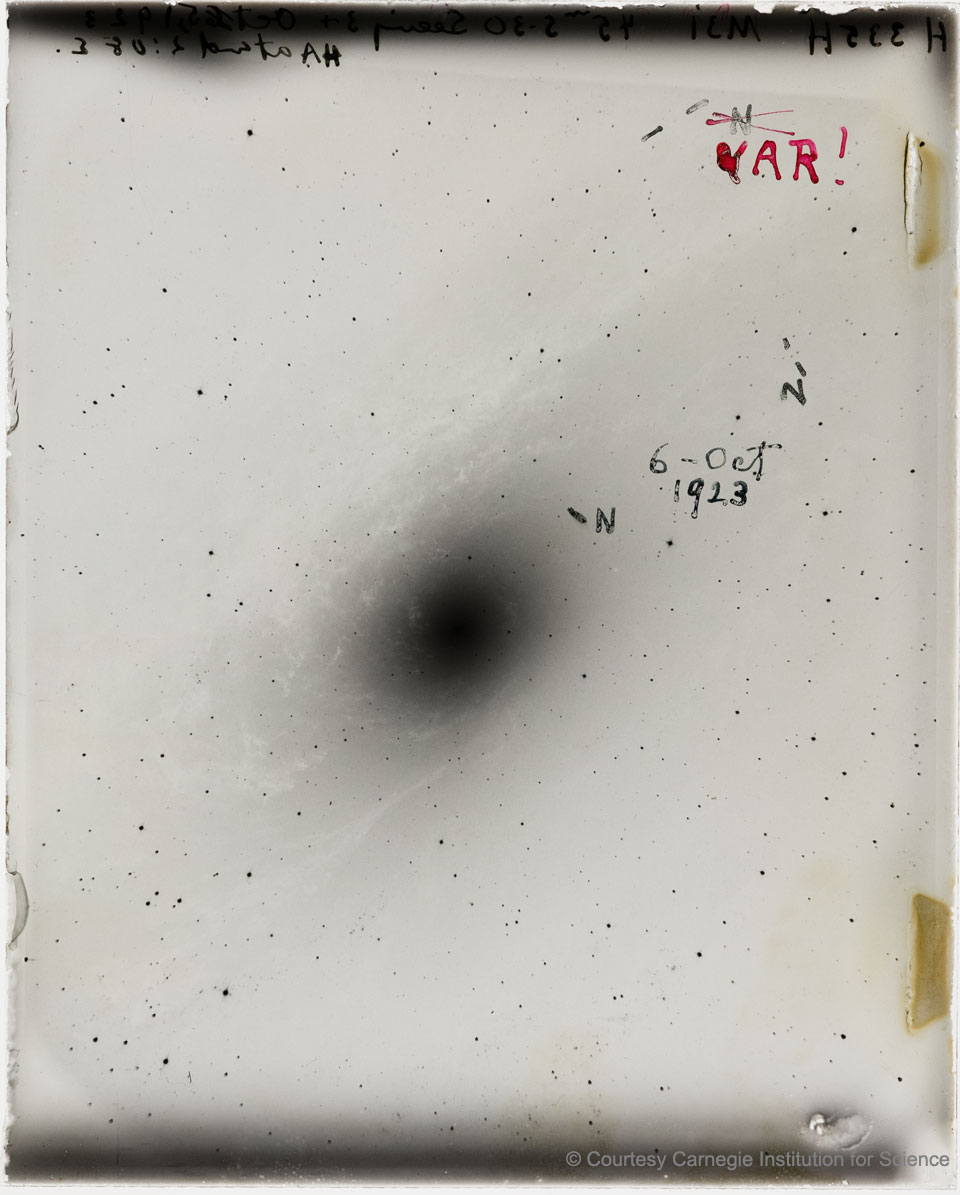
How big is our universe? This very question, among others, was debated by two leading astronomers 100 years ago today in what has become known as astronomy's Great Debate. Many astronomers then believed that our Milky Way Galaxy was the entire universe. Many others, though, believed that our galaxy was just one of many. In the Great Debate, each argument was detailed, but no consensus was reached. The answer came over three years later with the detected variation of single spot in the Andromeda Nebula, as shown on the original glass discovery plate digitally reproduced here. When Edwin Hubble compared images, he noticed that this spot varied, and so wrote "VAR!" on the plate. The best explanation, Hubble knew, was that this spot was the image of a variable star that was very far away. So M31 was really the Andromeda Galaxy -- a galaxy possibly similar to our own. The featured image may not be pretty, but the variable spot on it opened a door through which humanity gazed knowingly, for the first time, into a surprisingly vast cosmos. via NASA https://ift.tt/3cS9ebz

Apr 25, 2020

Hubble s Cosmic Reef Hubble s Cosmic Reef


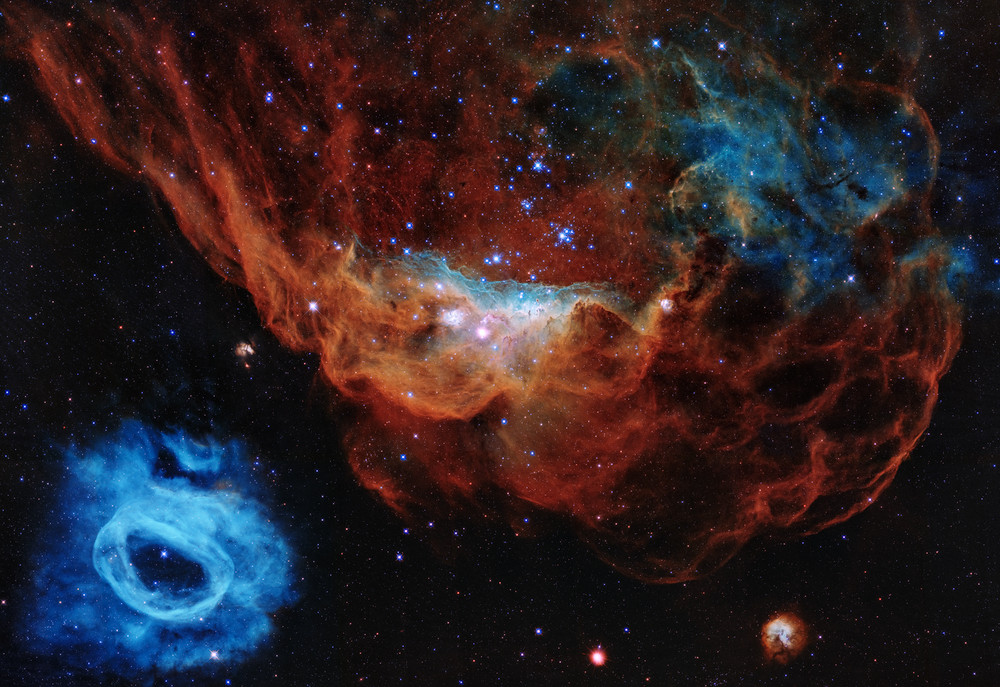
These bright ridges of interstellar gas and dust are bathed in energetic starlight. With its sea of young stars, the massive star-forming region NGC 2014 has been dubbed the Cosmic Reef. Drifting just off shore, the smaller NGC 2020, is an expansive blue-hued structure erupting from a single central Wolf-Rayet star, 200,000 times brighter than the Sun. The cosmic frame spans some 600 light-years within the Large Magellanic Cloud 160,000 light-years away, a satellite galaxy of our Milky Way. A magnificent Hubble Space Telescope portrait, the image was released this week as part of a celebration to mark Hubble's 30th year exploring the Universe from Earth orbit. via NASA https://ift.tt/2S5DGqC

Apr 24, 2020

Look Up Together Look Up Together


Watch this video. In only a minute or so you can explore the night skies around planet Earth through a compilation of stunning timelapse sequences. The presentation will take you to sites in the United States, Germany, Russia, Iran, Nepal, Thailand, Laos and China. You might even catch the view from a small island in the southeastern Pacific Ocean. But remember that while you're home tonight, the night sky will come to you. Look up and celebrate the night during this International Dark Sky Week. via NASA https://ift.tt/2VzwVzi

Apr 23, 2020

Lyrid Meteor Streak Lyrid Meteor Streak


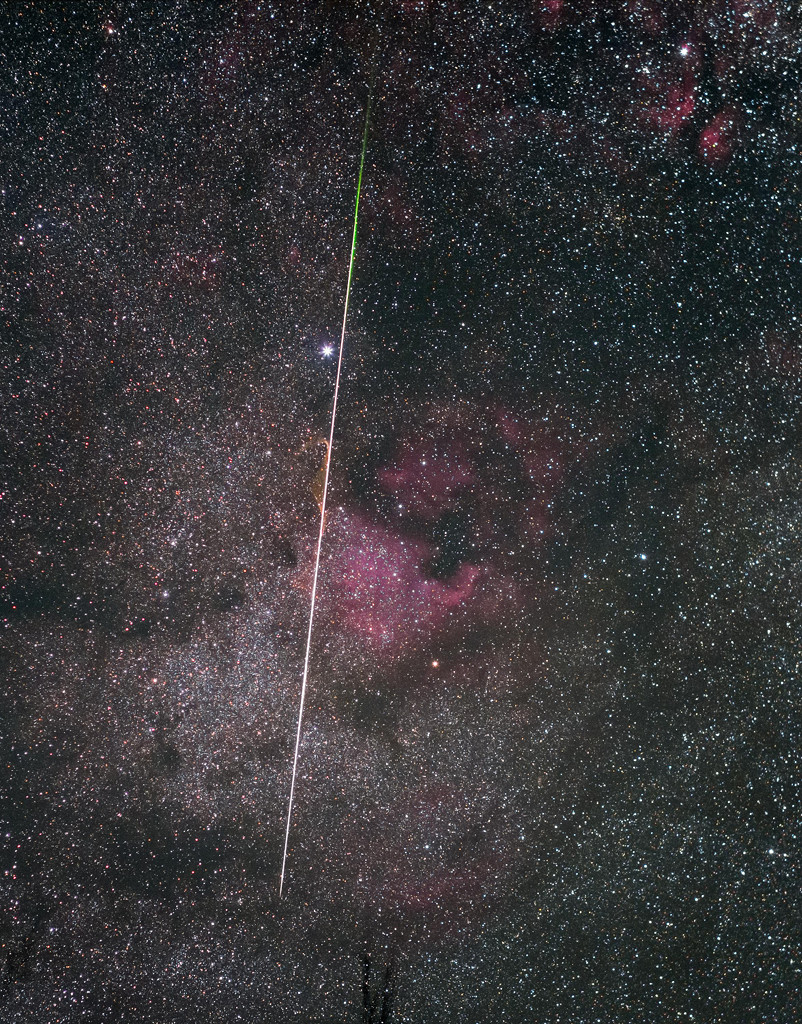
Earth's annual Lyrid Meteor Shower peaked before dawn yesterday, as our fair planet plowed through debris from the tail of long-period comet Thatcher. In crisp, clear and moonless predawn skies over Brown County, Indiana this streak of vaporizing comet dust briefly shared a telephoto field of view with stars and nebulae along the Milky Way. Alpha star of the constellation Cygnus, Deneb lies near the bright meteor's path along with the region's dark interstellar clouds of dust and the recognizable glow of the North America nebula (NGC 7000). The meteor's streak points back to the shower's radiant, its apparent point of origin on the sky. That would be in the constellation Lyra, near bright star Vega and off the top edge of the frame. via NASA https://ift.tt/3bxwwTR

Apr 22, 2020

Planet Earth at Twilight Planet Earth at Twilight


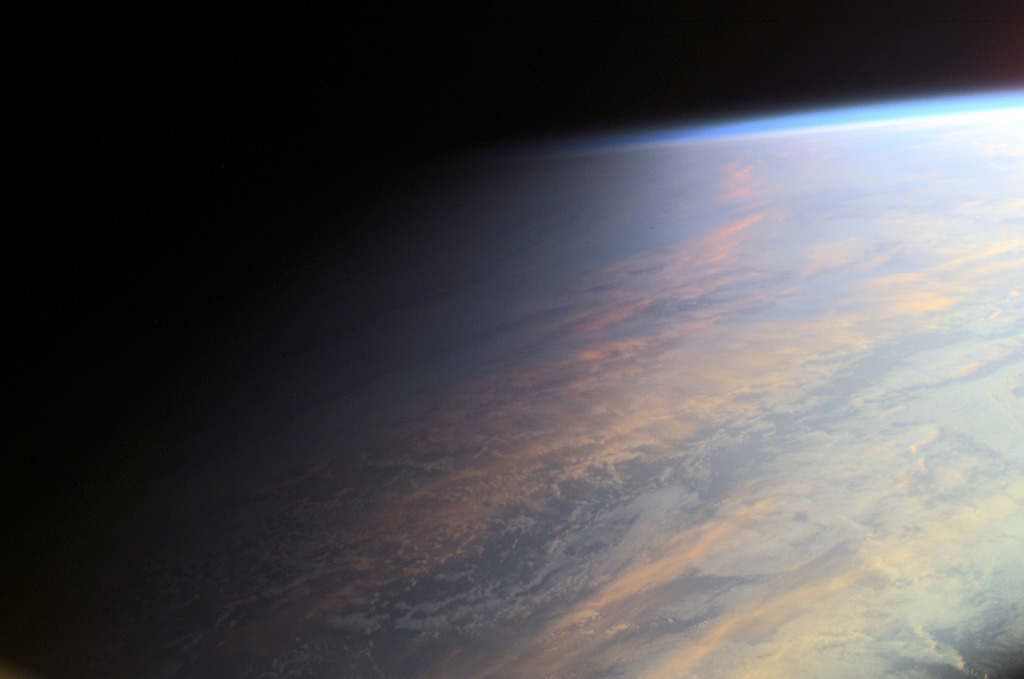
No sudden, sharp boundary marks the passage of day into night in this gorgeous view of ocean and clouds over our fair planet Earth. Instead, the shadow line or terminator is diffuse and shows the gradual transition to darkness we experience as twilight. With the Sun illuminating the scene from the right, the cloud tops reflect gently reddened sunlight filtered through the dusty troposphere, the lowest layer of the planet's nurturing atmosphere. A clear high altitude layer, visible along the dayside's upper edge, scatters blue sunlight and fades into the blackness of space. This picture was taken in June of 2001 from the International Space Station orbiting at an altitude of 211 nautical miles. Of course from home, you can check out the Earth Now. via NASA https://ift.tt/3asa6C3

Apr 21, 2020

Eye on the Milky Way Eye on the Milky Way


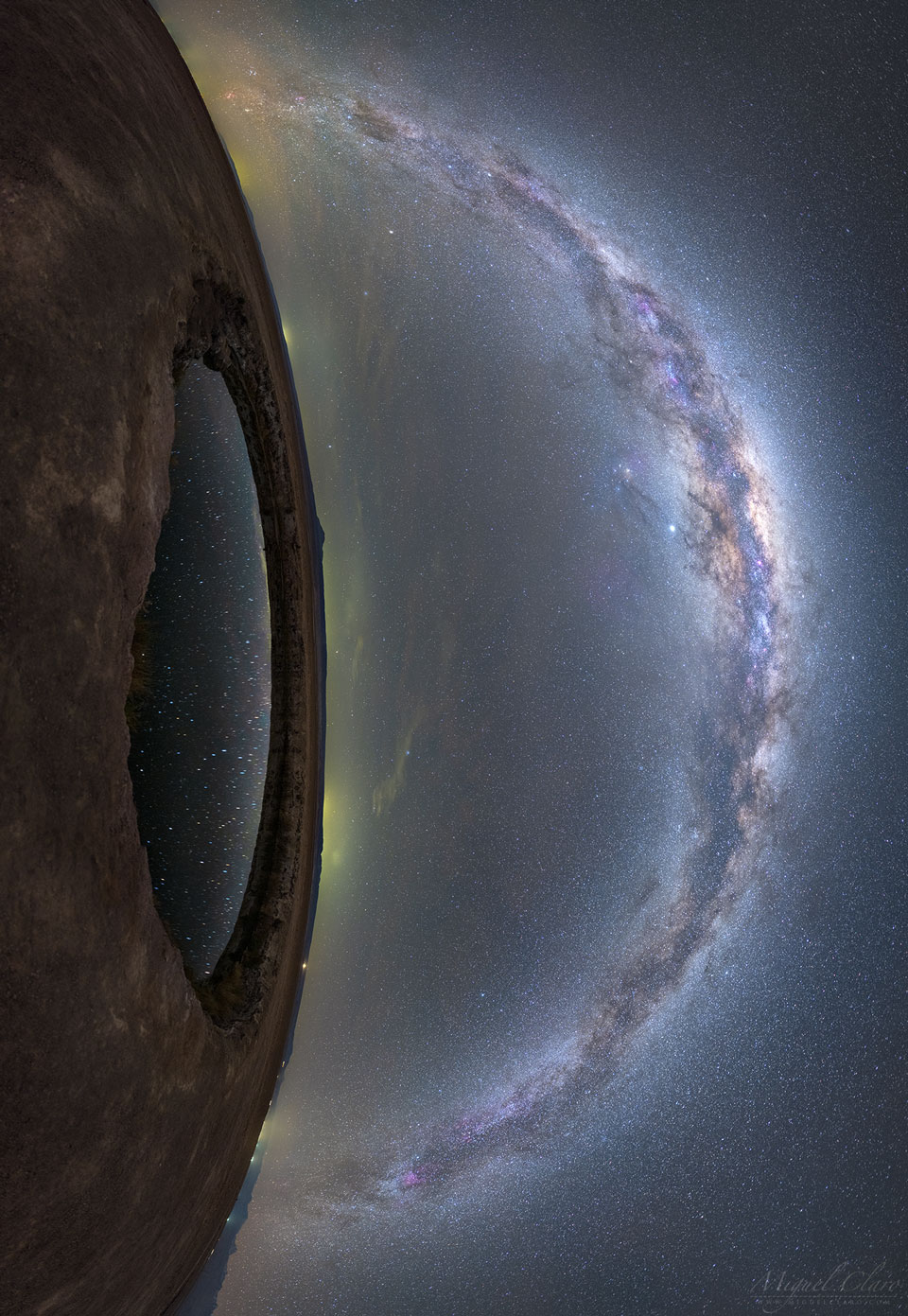
Have you ever had stars in your eyes? It appears that the eye on the left does, and moreover it appears to be gazing at even more stars. The featured 27-frame mosaic was taken last July from Ojas de Salar in the Atacama Desert of Chile. The eye is actually a small lagoon captured reflecting the dark night sky as the Milky Way Galaxy arched overhead. The seemingly smooth band of the Milky Way is really composed of billions of stars, but decorated with filaments of light-absorbing dust and red-glowing nebulas. Additionally, both Jupiter (slightly left the galactic arch) and Saturn (slightly to the right) are visible. The lights of small towns dot the unusual vertical horizon. The rocky terrain around the lagoon appears to some more like the surface of Mars than our Earth. via NASA https://ift.tt/2RTGXcw

Apr 20, 2020

IC 2944: The Running Chicken Nebula IC 2944: The Running Chicken Nebula


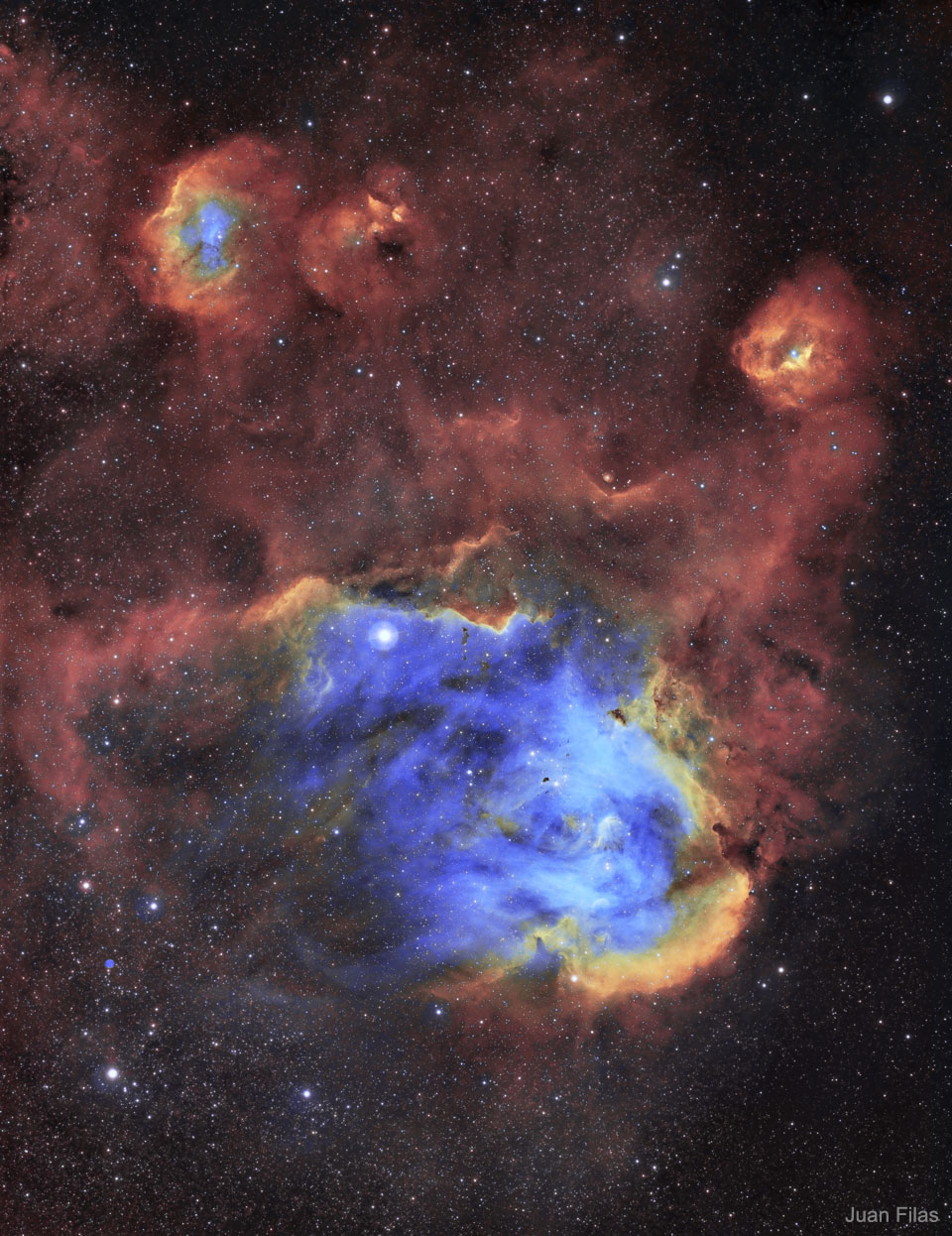
To some, it looks like a giant chicken running across the sky. To others, it looks like a gaseous nebula where star formation takes place. Cataloged as IC 2944, the Running Chicken Nebula spans about 100 light years and lies about 6,000 light years away toward the constellation of the Centaur (Centaurus). The featured image, shown in scientifically assigned colors, was captured recently in a 12-hour exposure. The star cluster Collinder 249 is visible embedded in the nebula's glowing gas. Although difficult to discern here, several dark molecular clouds with distinct shapes can be found inside the nebula. via NASA https://ift.tt/2XNJwR3