Pages

May 31, 2019

Lynds Dark Nebula 1251 Lynds Dark Nebula 1251


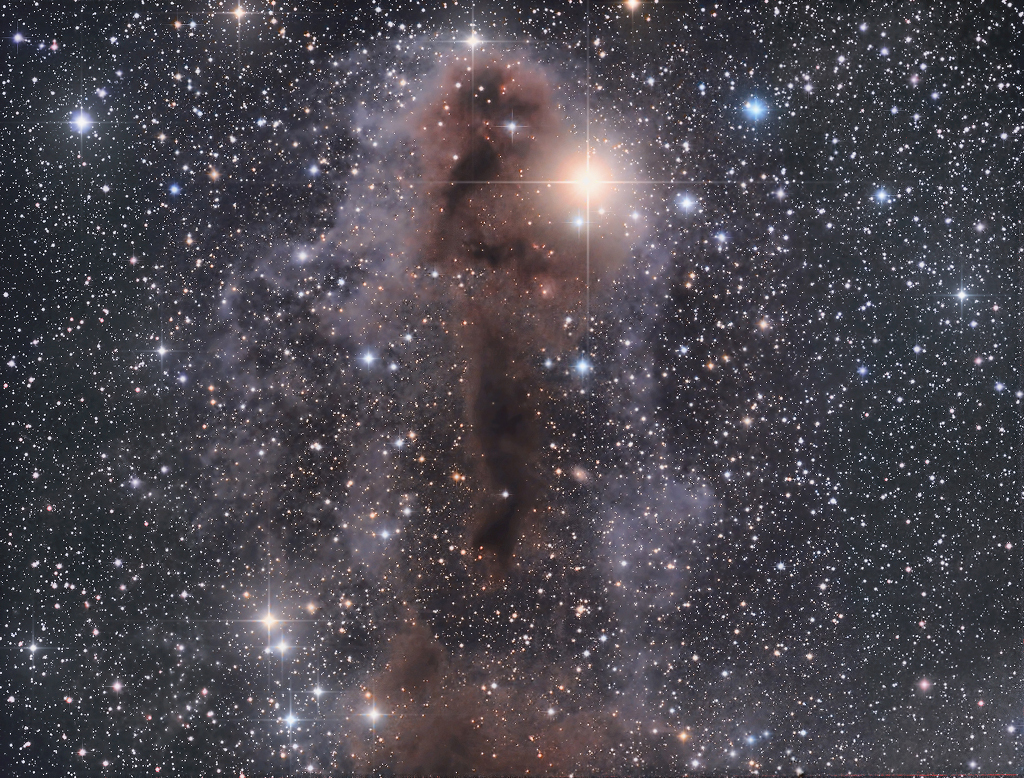
Stars are forming in Lynds Dark Nebula (LDN) 1251. About 1,000 light-years away and drifting above the plane of our Milky Way galaxy, the dusty molecular cloud is part of a complex of dark nebulae mapped toward the Cepheus flare region. Across the spectrum, astronomical explorations of the obscuring interstellar clouds reveal energetic shocks and outflows associated with newborn stars, including the telltale reddish glow from scattered Herbig-Haro objects seen in this sharp image. Distant background galaxies also lurk on the scene, visually buried behind the dusty expanse. The deep telescopic field of view imaged with broadband filters spans about two full moons on the sky, or 17 light-years at the estimated distance of LDN 1251. via NASA https://go.nasa.gov/2JPdi1A

May 30, 2019

Sunrise at Copernicus Crater Sunrise at Copernicus Crater


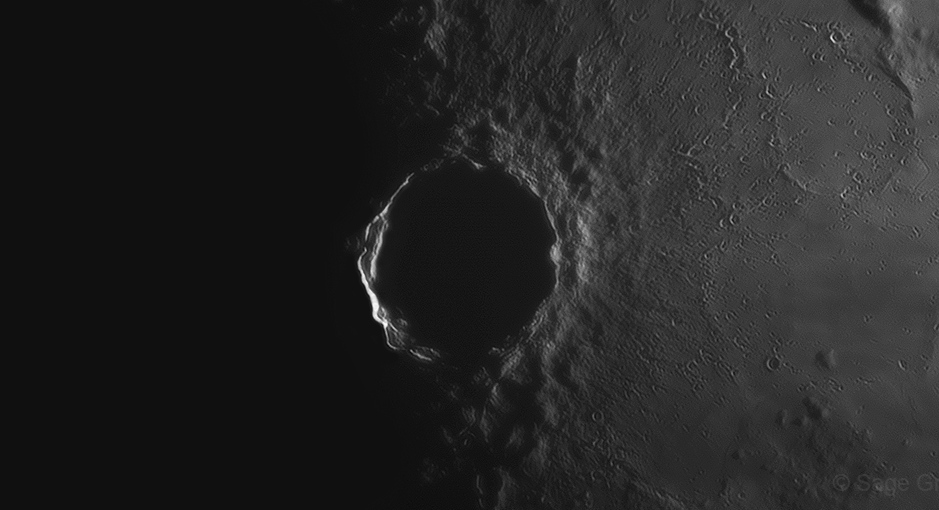
A prominent impact site anchored in the lunar Oceanus Procellarum, Copernicus crater is at the center of this telescopic portrait in light and shadow. Caught in stacked and sharpened video frames recorded on April 14 at 3:30am UTC, the lunar terminator, or boundary between night and day, cuts across the middle of the 93 kilometer diameter crater. Sunlight is just beginning to strike its tall western walls but doesn't yet shine on lower terrain nearby, briefly extending the crater's outline into the lunar nightside. At that moment standing at Copernicus crater you could watch the sunrise, an event that happens at Copernicus every 29.5 days. Of course that corresponds to a lunar month or a lunation, the time between consecutive Full Moons, as seen from planet Earth. via NASA https://go.nasa.gov/30SsH6x

May 29, 2019

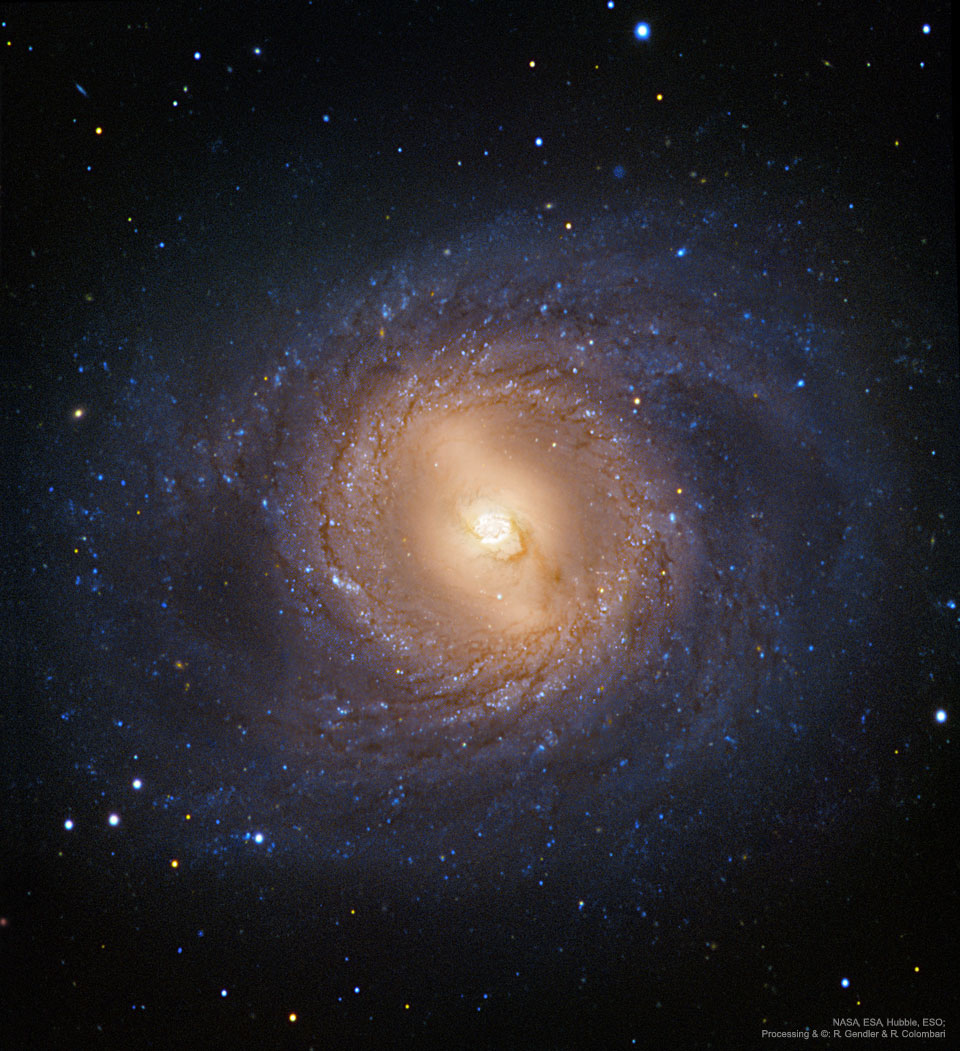
M95: Spiral Galaxy with an Inner Ring M95: Spiral Galaxy with an Inner Ring


Why do some spiral galaxies have a ring around the center? First and foremost, M95 is one of the closer examples of a big and beautiful barred spiral galaxy. Visible in the featured combination of images from Hubble and several ground based telescopes are sprawling spiral arms delineated by open clusters of bright blue stars, lanes of dark dust, the diffuse glow of billions of faint stars, and a short bar across the galaxy center. What intrigues many astronomers, however, is the circumnuclear ring around the galaxy center visible just outside the central bar. Although the long term stability of this ring remains a topic of research, observations indicate its present brightness is at least enhanced by transient bursts of star formation. M95, also known as NGC 3351, spans about 50,000 light-years, lies about 30 million light years away, and can be seen with a small telescope toward the constellation of the Lion (Leo). via NASA https://go.nasa.gov/2JLBi5G

May 28, 2019

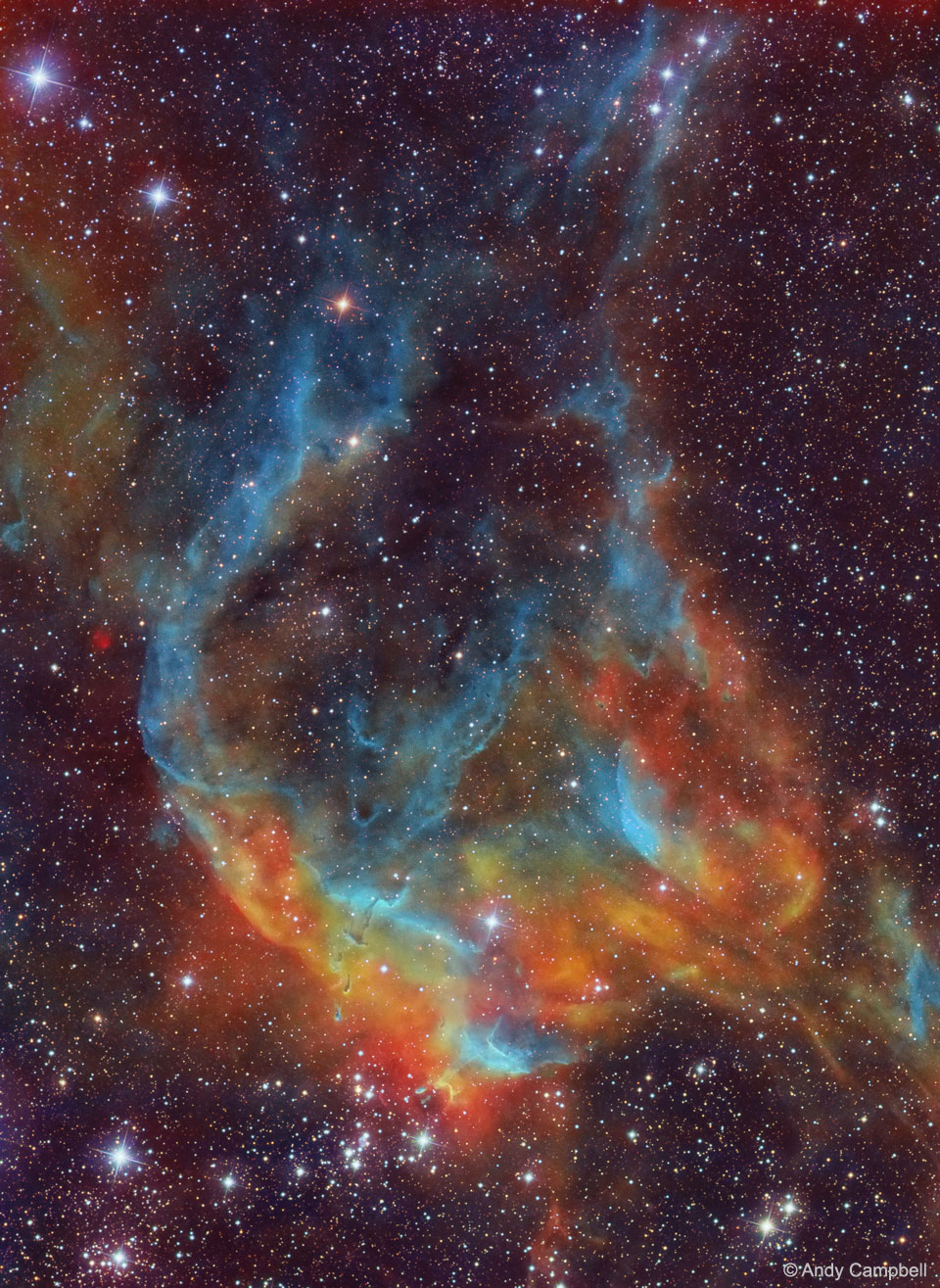
Stars, Dust, and Gas near NGC 3572 Stars, Dust, and Gas near NGC 3572


Star formation can be colorful. This chromatic cosmic portrait features glowing gas and dark dust near some recently formed stars of NGC 3572, a little-studied star cluster near the Carina Nebula. Stars from NGC 3572 are visible near the bottom of the image, while the expansive gas cloud above is likely what remains of their formation nebula. The image's striking hues were created by featuring specific colors emitted by hydrogen, oxygen, and sulfur, and blending them with images recorded through broadband filters in red, green, and blue. This nebula near NGC 3572 spans about 100 light years and lies about 9,000 light years away toward the southern constellation of the Ship's Keel (Carina). Within a few million years the pictured gas will likely disperse, while gravitational encounters will likely disperse the cluster stars over about a billion years. via NASA https://go.nasa.gov/2YOTn6p

May 27, 2019

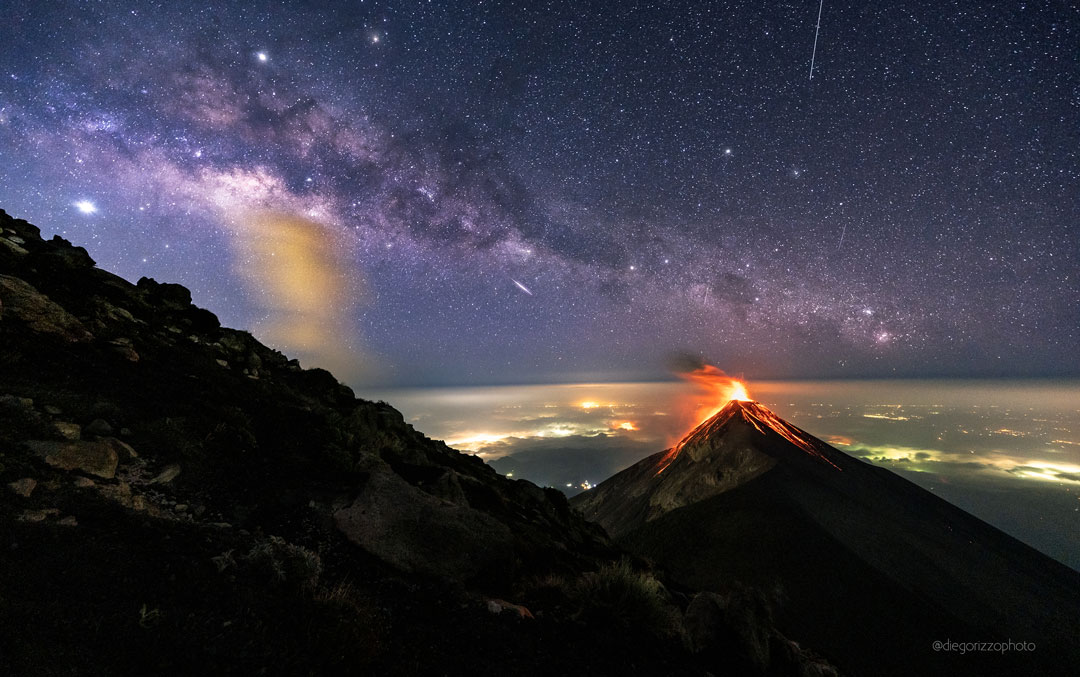
A Volcano of Fire under a Milky Way of Stars A Volcano of Fire under a Milky Way of Stars


Sometimes it's hard to decide which is more impressive -- the land or the sky. On the land of the featured image, for example, the Volcano of Fire (Volcán de Fuego) is seen erupting topped by red-hot, wind-blown ash and with streams of glowing lava running down its side. Lights from neighboring towns are seen through a thin haze below. In the sky, though, the central plane of our Milky Way Galaxy runs diagonally from the upper left, with a fleeting meteor just below, and the trail of a satellite to the upper right. The planet Jupiter also appears toward the upper left, with the bright star Antares just to its right. Much of the land and the sky were captured together in a single, well-timed, 25-second exposure taken in mid-April from the side of Fuego's sister volcano Acatenango in Guatemala. The image of the meteor, though, was captured in a similar frame taken about 30 minutes earlier -- when the volanic eruption was not as photogenic -- and added later digitally. via NASA https://go.nasa.gov/2X8erVd

May 26, 2019

A Solar Prominence Eruption from SDO A Solar Prominence Eruption from SDO


One of the most spectacular solar sights is an erupting prominence. In 2011, NASA's Sun-orbiting Solar Dynamic Observatory spacecraft imaged an impressively large prominence erupting from the surface. The dramatic explosion was captured in ultraviolet light in the featured time lapse video covering 90 minutes, where a new frame was taken every 24 seconds. The scale of the prominence is huge -- the entire Earth would easily fit under the flowing curtain of hot gas. A solar prominence is channeled and sometimes held above the Sun's surface by the Sun's magnetic field. A quiescent prominence typically lasts about a month, and may erupt in a Coronal Mass Ejection (CME) expelling hot gas into the Solar System. The energy mechanism that creates a solar prominence is still a topic of research. After our Sun passes the current Solar Minimum, solar activity like eruptive prominences are expected to become more common over the next few years. via NASA https://go.nasa.gov/2VT3XY5

May 25, 2019

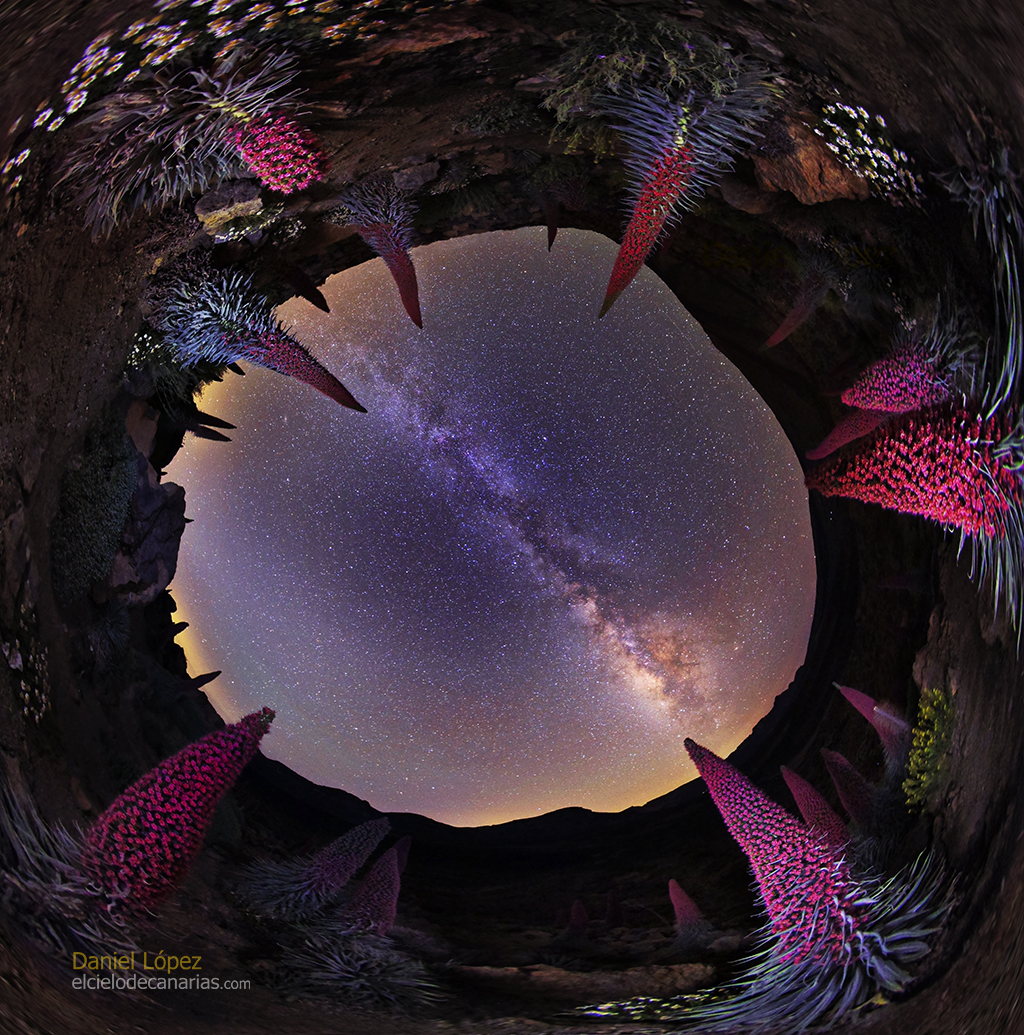
Planet of the Tajinastes Planet of the Tajinastes


What bizarre planet are these alien creatures from? It's only planet Earth, of course. The planet's home galaxy the Milky Way stretches across a dark sky in the panoramic, fisheye all-sky projection composed with a wide lens. But the imposing forms gazing skyward probably look strange to many denizens of Earth. Found on the Canary Island of Tenerife in the Teide National Park, they are red tajinastes, flowering plants that grow to a height of up to 3 meters. Among the rocks of the volcanic terrain, tajinastes bloom in spring and early summer and then die after a week or so as their seeds mature. A species known as Echium wildpretii, the terrestrial life forms were individually lit by flashlight during the wide-angle exposures. via NASA https://go.nasa.gov/2YQd9ia

May 21, 2019

Deep Field: Nebulae of Sagittarius Deep Field: Nebulae of Sagittarius


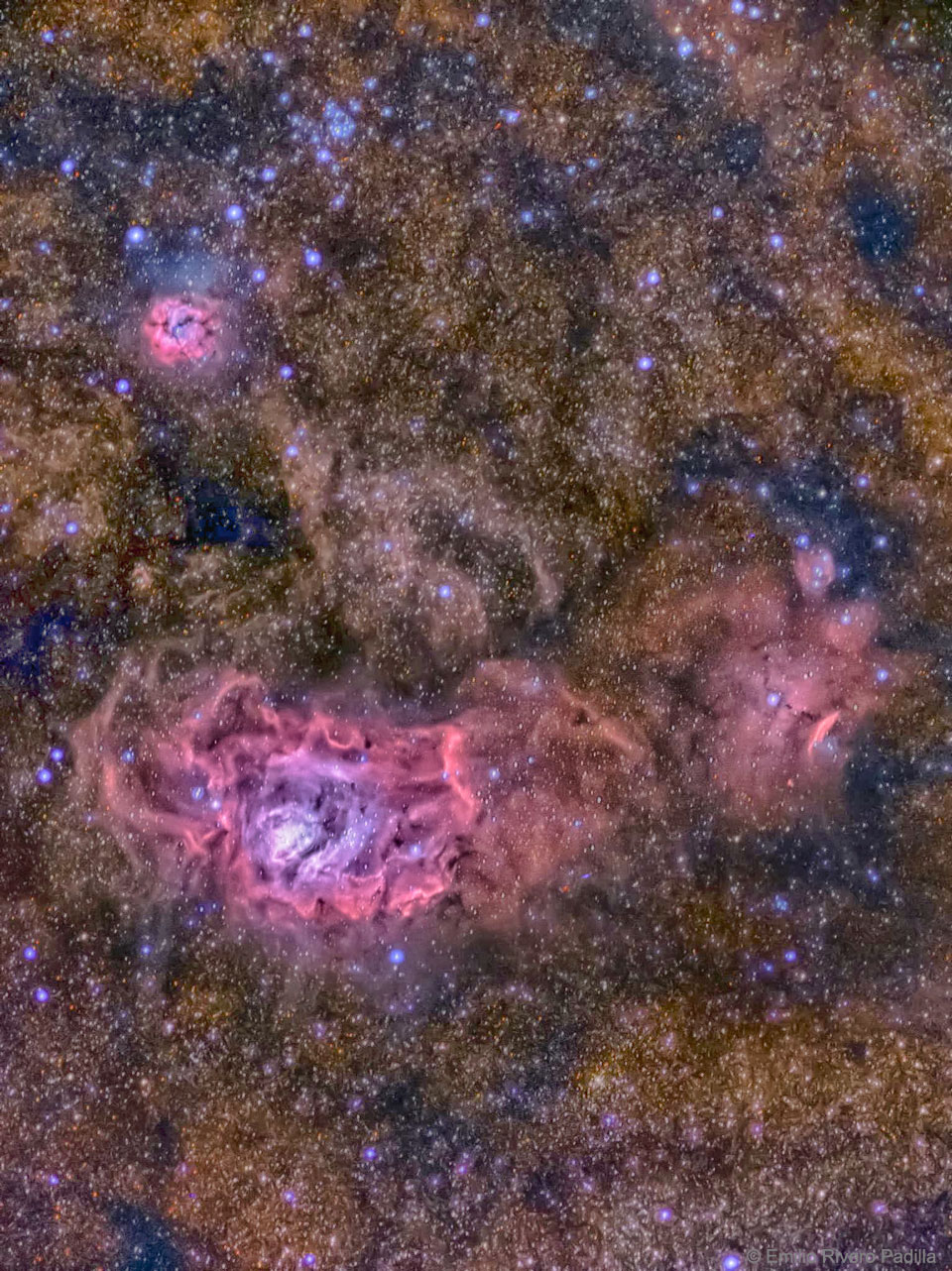
These three bright nebulae are often featured on telescopic tours of the constellation Sagittarius and the crowded starfields of the central Milky Way. In fact, 18th century cosmic tourist Charles Messier cataloged two of them; M8, the large nebula just left of center, and colorful M20 on the top left. The third emission region includes NGC 6559 and can be found to the right of M8. All three are stellar nurseries about five thousand light-years or so distant. Over a hundred light-years across, the expansive M8 is also known as the Lagoon Nebula. M20's popular moniker is the Trifid. Glowing hydrogen gas creates the dominant red color of the emission nebulae. In striking contrast, blue hues in the Trifid are due to dust reflected starlight. Recently formed bright blue stars are visible nearby. The colorful composite skyscape was recorded in 2018 in Teide National Park in the Canary Islands, Spain. via NASA https://go.nasa.gov/2LU59L7

May 20, 2019

Planets of the Solar System: Tilts and Spins Planets of the Solar System: Tilts and Spins


How does your favorite planet spin? Does it spin rapidly around a nearly vertical axis, or horizontally, or backwards? The featured video animates NASA images of all eight planets in our Solar System to show them spinning side-by-side for an easy comparison. In the time-lapse video, a day on Earth -- one Earth rotation -- takes just a few seconds. Jupiter rotates the fastest, while Venus spins not only the slowest (can you see it?), but backwards. The inner rocky planets, across the top, most certainly underwent dramatic spin-altering collisions during the early days of the Solar System. The reasons why planets spin and tilt as they do remains a topic of research with much insight gained from modern computer modeling and the recent discovery and analysis of hundreds of exoplanets: planets orbiting other stars. via NASA https://go.nasa.gov/30uLuEZ

May 19, 2019

A Circumhorizontal Arc Over Ohio A Circumhorizontal Arc Over Ohio


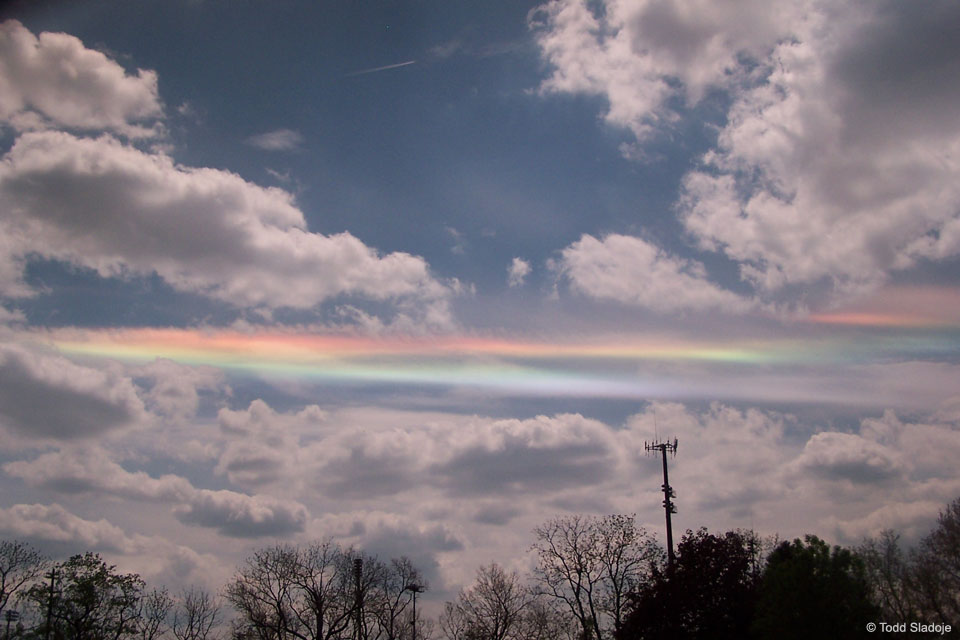
Why would clouds appear to be different colors? The reason here is that ice crystals in distant cirrus clouds are acting like little floating prisms. Sometimes known as a fire rainbow for its flame-like appearance, a circumhorizon arc lies parallel to the horizon. For a circumhorizontal arc to be visible, the Sun must be at least 58 degrees high in a sky where cirrus clouds are present. Furthermore, the numerous, flat, hexagonal ice-crystals that compose the cirrus cloud must be aligned horizontally to properly refract sunlight in a collectively similar manner. Therefore, circumhorizontal arcs are quite unusual to see. This circumhorizon display was photographed through a polarized lens above Dublin, Ohio in 2009. via NASA https://go.nasa.gov/2HxzFFm