Pages

Sep 29, 2017

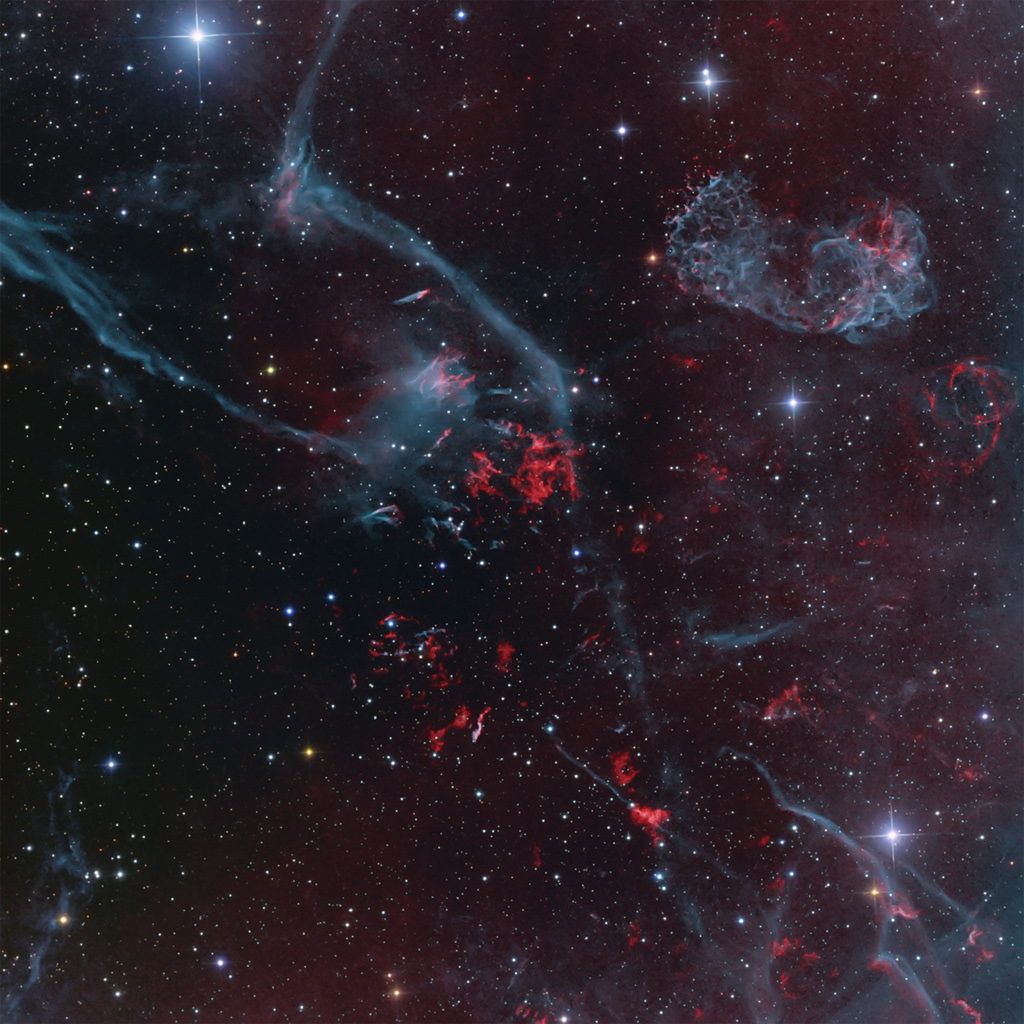
Puppis A Supernova Remnant Puppis A Supernova Remnant


Driven by the explosion of a massive star, supernova remnant Puppis A is blasting into the surrounding interstellar medium about 7,000 light-years away. At that distance, this colorful telescopic field based on broadband and narrowband optical image data is about 60 light-years across. As the supernova remnant (upper right) expands into its clumpy, non-uniform surroundings, shocked filaments of oxygen atoms glow in green-blue hues. Hydrogen and nitrogen are in red. Light from the initial supernova itself, triggered by the collapse of the massive star's core, would have reached Earth about 3,700 years ago. The Puppis A remnant is actually seen through outlying emission from the closer but more ancient Vela supernova remnant, near the crowded plane of our Milky Way galaxy. Still glowing across the electromagnetic spectrum Puppis A remains one of the brightest sources in the X-ray sky. via NASA http://ift.tt/2xOgBiH

Sep 26, 2017

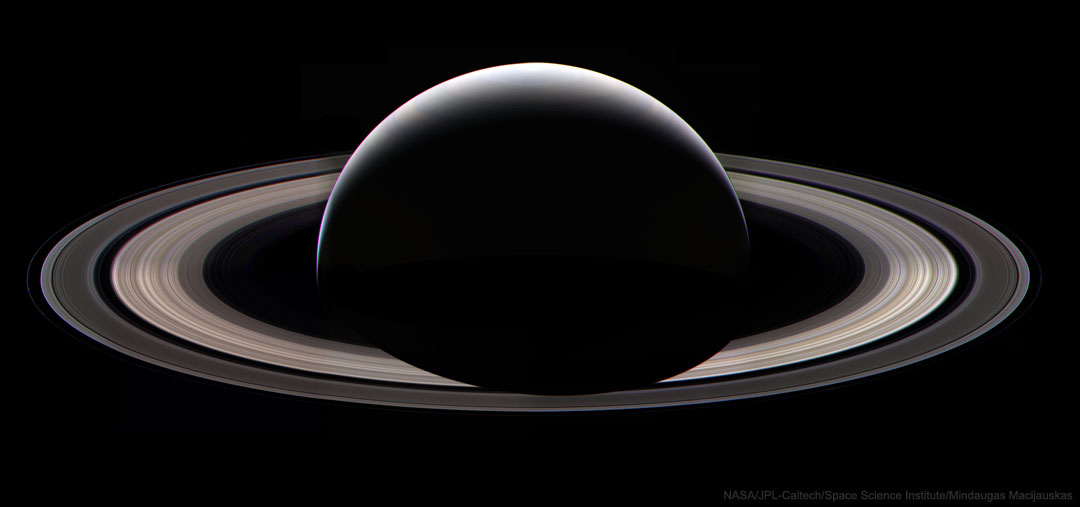
Cassinis Last Ring Portrait at Saturn Cassinis Last Ring Portrait at Saturn


How should Cassini say farewell to Saturn? Three days before plunging into Saturn's sunny side, the robotic Cassini spacecraft swooped far behind Saturn's night side with cameras blazing. Thirty-six of these images have been merged -- by an alert and adept citizen scientist -- into a last full-ring portrait of Cassini's home planet for the past 13 years. The Sun is just above the frame, causing Saturn to cast a dark shadow onto its enormous rings. This shadow position cannot be imaged from Earth and will not be visible again until another Earth-launched spaceship visits the ringed giant. Data and images from Cassini's mission-ending dive into Saturn's atmosphere on September 15 continue to be analyzed. via NASA http://ift.tt/2wMUGtg

Sep 24, 2017

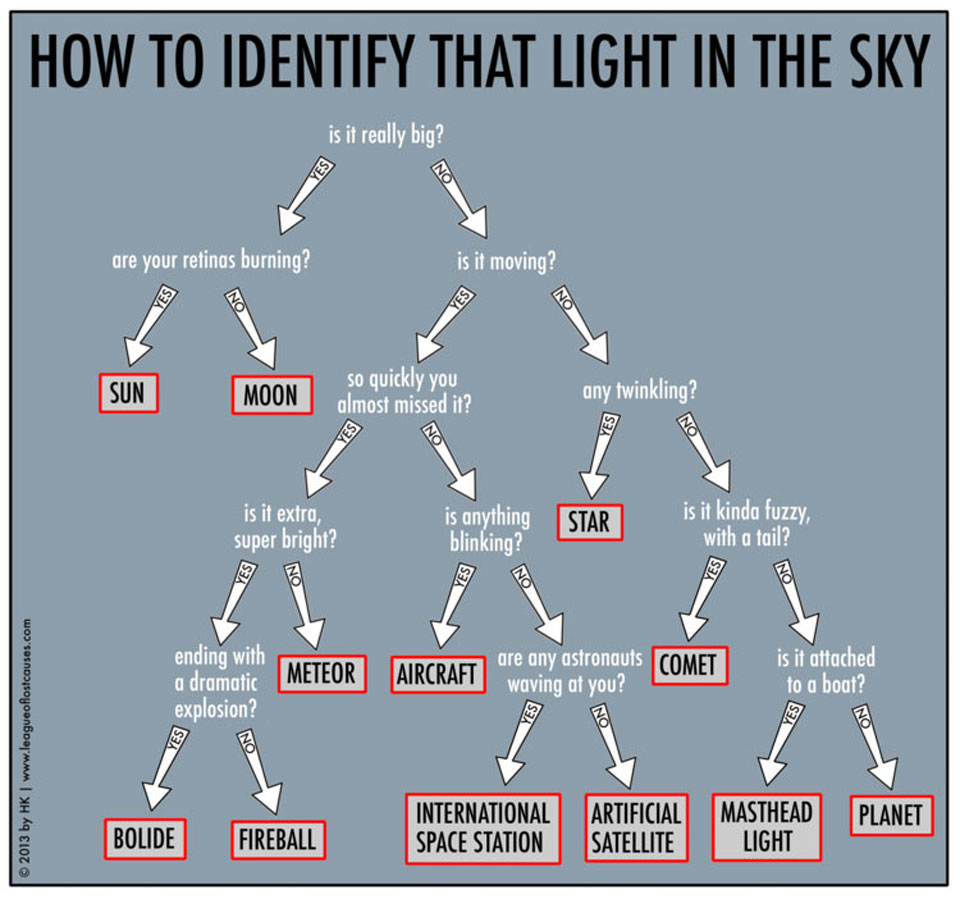
How to Identify that Light in the Sky How to Identify that Light in the Sky


What is that light in the sky? Perhaps one of humanity's more common questions, an answer may result from a few quick observations. For example -- is it moving or blinking? If so, and if you live near a city, the answer is typically an airplane, since planes are so numerous and so few stars and satellites are bright enough to be seen over the din of artificial city lights. If not, and if you live far from a city, that bright light is likely a planet such as Venus or Mars -- the former of which is constrained to appear near the horizon just before dawn or after dusk. Sometimes the low apparent motion of a distant airplane near the horizon makes it hard to tell from a bright planet, but even this can usually be discerned by the plane's motion over a few minutes. Still unsure? The featured chart gives a sometimes-humorous but mostly-accurate assessment. Dedicated sky enthusiasts will likely note -- and are encouraged to provide -- polite corrections. via NASA http://ift.tt/2xAZSQ5

Sep 23, 2017

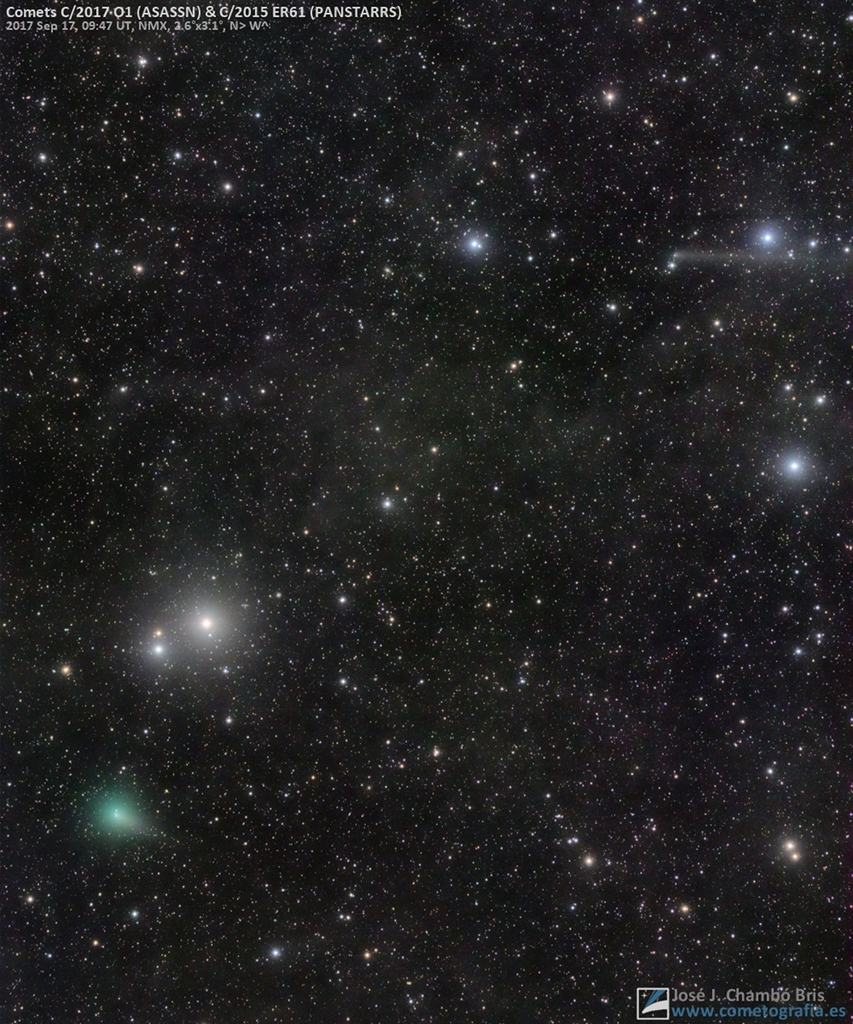
A Conjunction of Comets A Conjunction of Comets


A conjunction of comets is captured in this pretty star field from the morning of September 17. Discovered in July by a robotic sky survey searching for supernovae, comet C/2017 O1 ASASSN is at the lower left. The visible greenish glow of its coma is produced by the fluorescence of diatomic carbon molecules in sunlight. Nearing its closest approach to the Sun, the binocular comet was only about 7.2 light-minutes from Earth. In the same telescopic field of view is the long-tailed, outbound comet C/2015 ER61 PanSTARRS at the upper right, almost 14 light-minutes away. Many light-years distant, the starry background includes faint, dusty nebulae of the Milky Way. The well-known Pleiades star cluster lies just off the top right of the frame. via NASA http://ift.tt/2hkU6fa

Sep 21, 2017

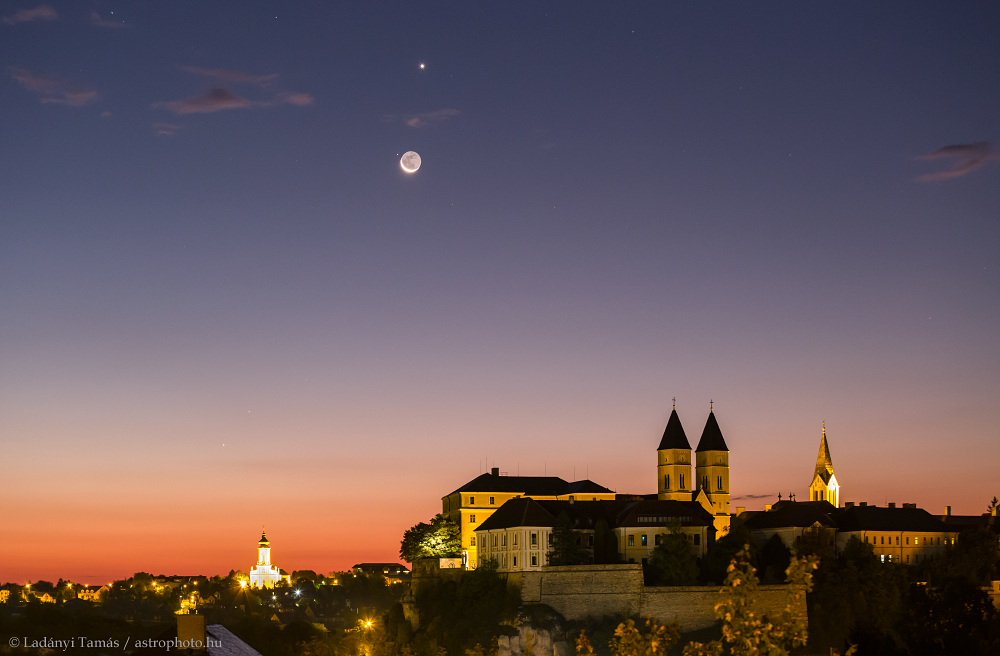
A September Morning Sky A September Morning Sky


The Moon, three planets, and a bright star gathered near the ecliptic plane in the September 18 morning sky over Veszprem Castle, Hungary. In this twilight skyscape, Mercury and Mars still shine close to the eastern horizon, soon to disappear in the glare of the Sun. Regulus, alpha star of the constellation Leo, is the bright point next to a waning crescent Moon, with brilliant Venus near the top of the frame. The beautiful morning conjunction of Moon, planets, and bright star could generally be followed by early morning risers all around planet Earth. But remarkably, the Moon also occulted, or passed directly in front of, Regulus and each of the three planets within 24 hours, all on September 18 UT. Visible from different locations, timing and watching the lunar occultations was much more difficult though, and mostly required viewing in daytime skies. via NASA http://ift.tt/2xhaqlg

Sep 20, 2017

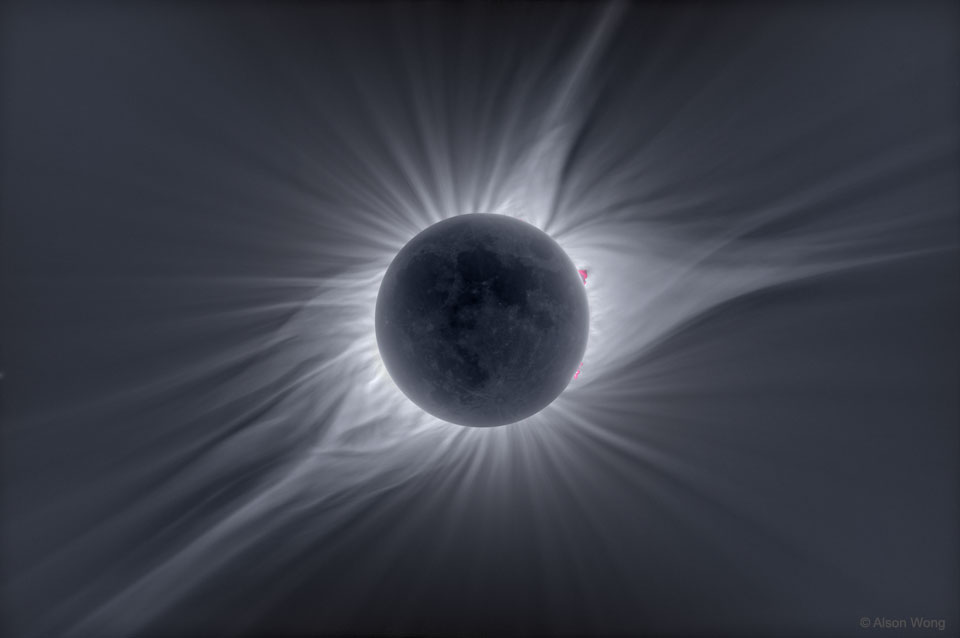
The Big Corona The Big Corona


Most photographs don't adequately portray the magnificence of the Sun's corona. Seeing the corona first-hand during a total solar eclipse is unparalleled. The human eye can adapt to see coronal features and extent that average cameras usually cannot. Welcome, however, to the digital age. The featured picture is a combination of forty exposures from one thousandth of a second to two seconds that, together, were digitally combined and processed to highlight faint features of the total solar eclipse that occurred in August of 2017. Clearly visible are intricate layers and glowing caustics of an ever changing mixture of hot gas and magnetic fields in the Sun's corona. Looping prominences appear bright pink just past the Sun's limb. Faint details on the night side of the New Moon can even be made out, illuminated by sunlight reflected from the dayside of the Full Earth. via NASA http://ift.tt/2hbq0KU

Sep 19, 2017

Veil Nebula: Wisps of an Exploded Star Veil Nebula: Wisps of an Exploded Star


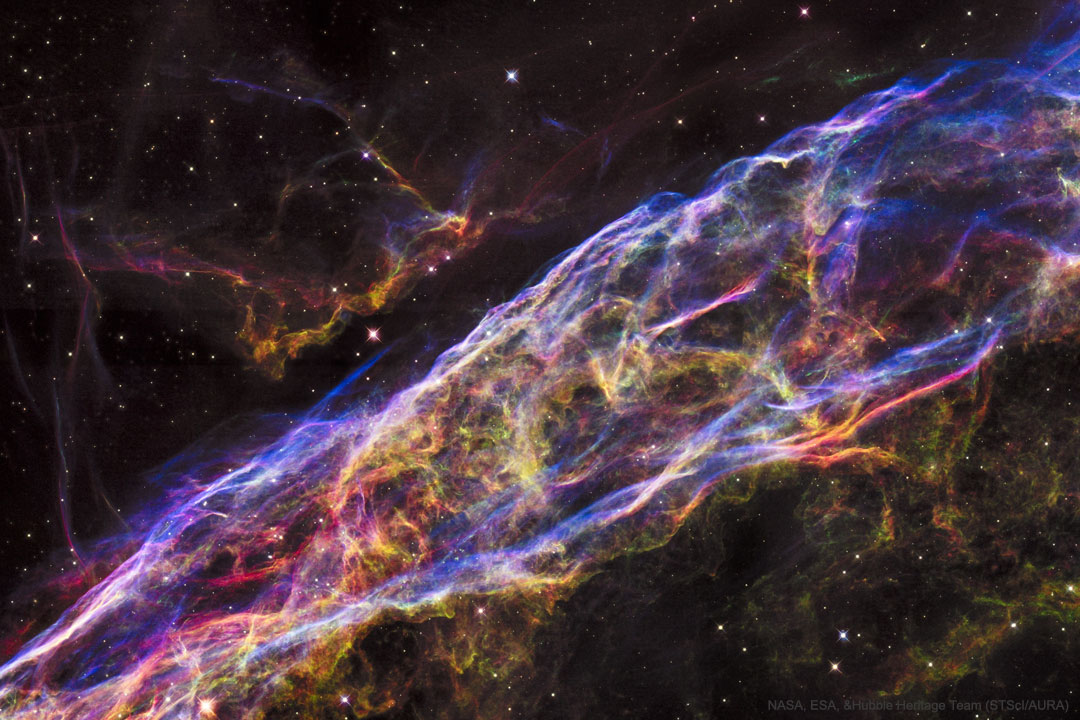
Wisps like this are all that remain visible of a Milky Way star. About 7,000 years ago that star exploded in a supernova leaving the Veil Nebula. At the time, the expanding cloud was likely as bright as a crescent Moon, remaining visible for weeks to people living at the dawn of recorded history. Today, the resulting supernova remnant, also known as the Cygnus Loop, has faded and is now visible only through a small telescope directed toward the constellation of the Swan (Cygnus). The remaining Veil Nebula is physically huge, however, and even though it lies about 1,400 light-years distant, it covers over five times the size of the full Moon. The featured picture is a Hubble Space Telescope mosaic of six images together covering a span of only about two light years, a small part of the expansive supernova remnant. In images of the complete Veil Nebula, even studious readers might not be able to identify the featured filaments. via NASA http://ift.tt/2fckF5B

Sep 17, 2017

Bright Spiral Galaxy M81 Bright Spiral Galaxy M81


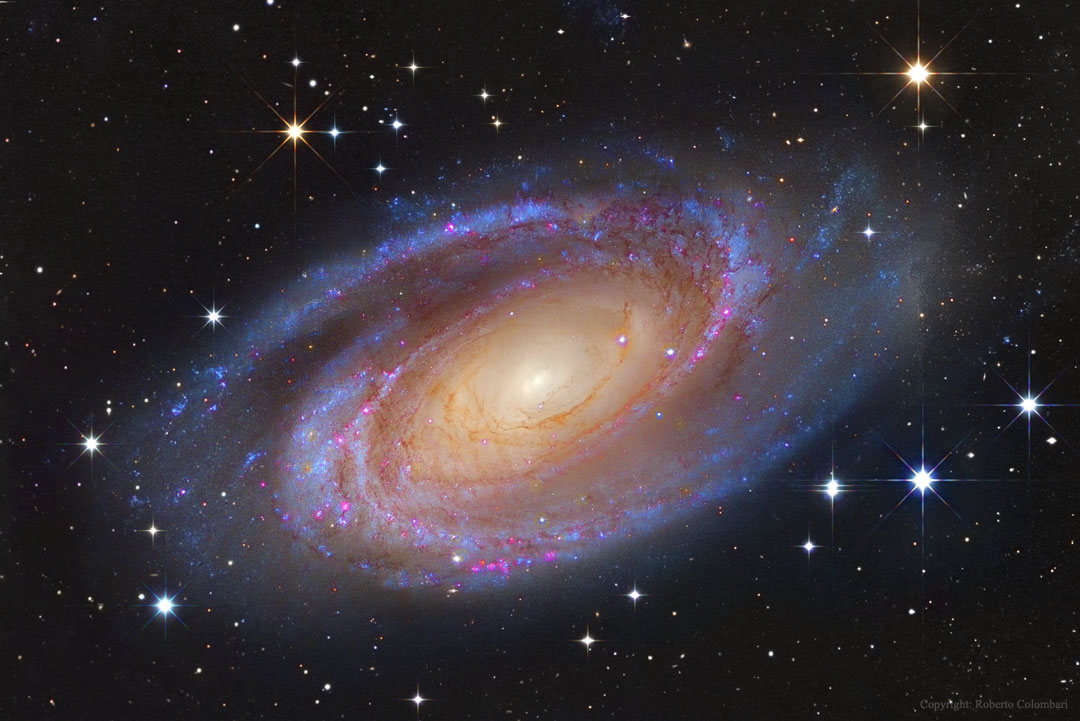
One of the brightest galaxies in planet Earth's sky is similar in size to our Milky Way Galaxy: big, beautiful M81. This grand spiral galaxy can be found toward the northern constellation of the Great Bear (Ursa Major). This superbly detailed view reveals M81's bright yellow nucleus, blue spiral arms, and sweeping cosmic dust lanes with a scale comparable to the Milky Way. Hinting at a disorderly past, a remarkable dust lane actually runs straight through the disk, to the left of the galactic center, contrary to M81's other prominent spiral features. The errant dust lane may be the lingering result of a close encounter between M81 and its smaller companion galaxy, M82. Scrutiny of variable stars in M81 has yielded one of the best determined distances for an external galaxy -- 11.8 million light-years. via NASA http://ift.tt/2x9X8bS

Sep 15, 2017

100 Steps Forward 100 Steps Forward


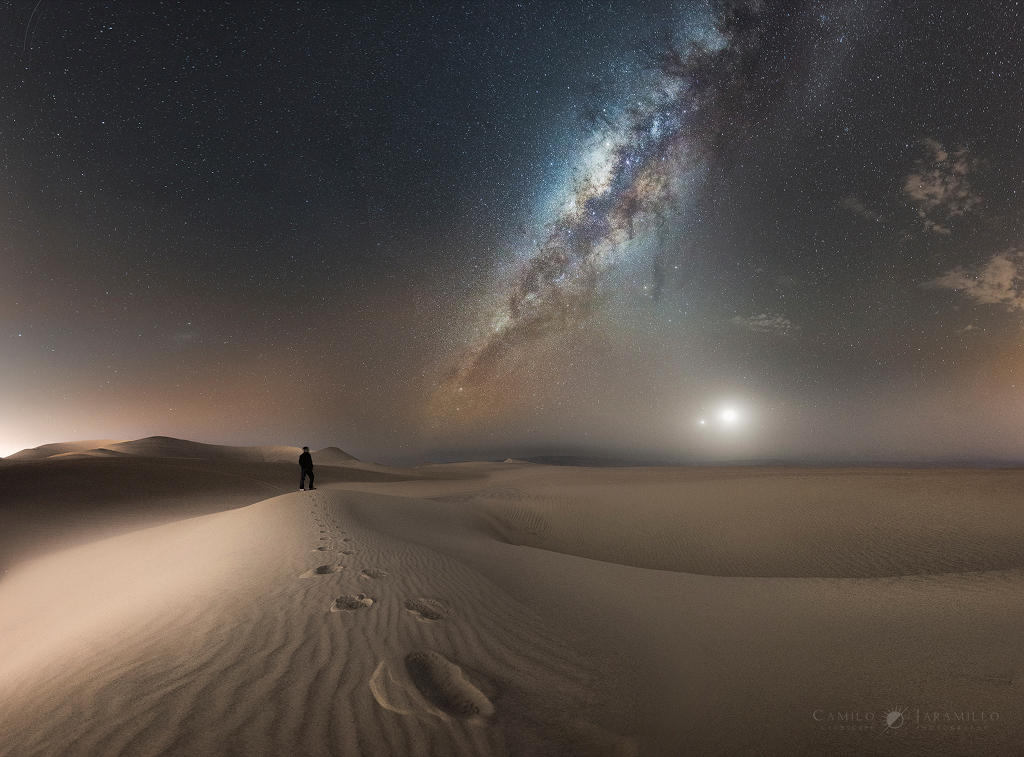
A beautiful conjunction of Venus and Moon, human, sand, and Milky Way is depicted in this night skyscape from planet Earth. The scene is a panorama of 6 photos taken in a moment near the end of a journey. In the foreground, footsteps along the wind-rippled dunes are close to the Huacachina oasis in the southwestern desert of Peru. An engaging perspective on the world at night, the stunning final image was also chosen as a winner in The World at Night's 2017 International Earth and Sky Photo Contest. via NASA http://ift.tt/2wYuhaU

Sep 14, 2017

Flare Well AR2673 Flare Well AR2673


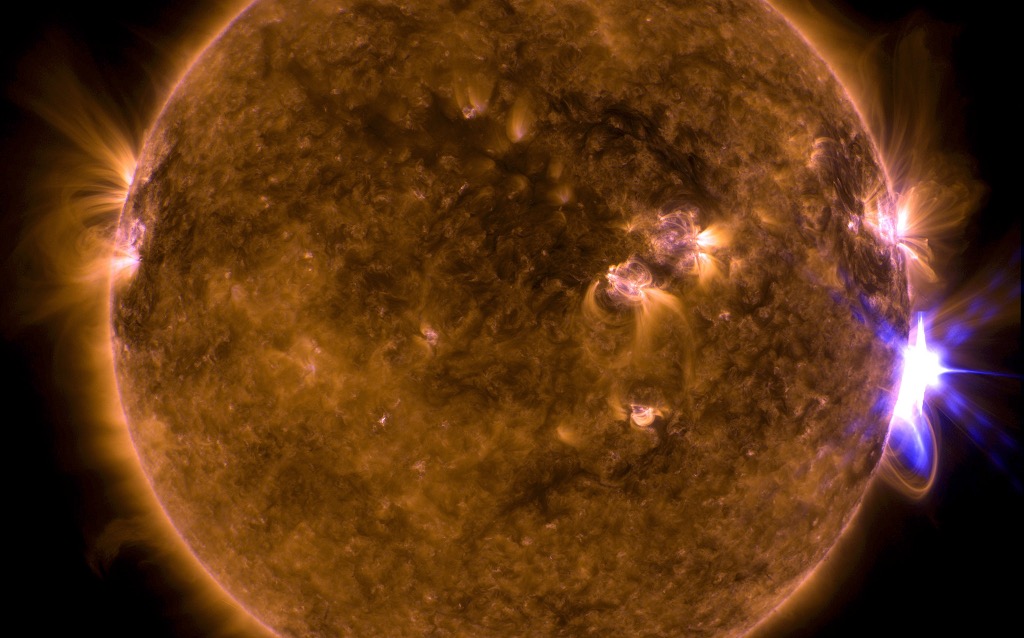
Almost out of view from our fair planet, rotating around the Sun's western edge giant active region AR2673 lashed out with another intense solar flare followed by a large coronal mass ejection on September 10. The flare itself is seen here at the right in an extreme ultraviolet image from the sun-staring Solar Dynamics Observatory. This intense flare was the fourth X-class flare from AR2673 this month. The active region's most recent associated coronal mass ejection collided with Earth's magnetosphere 2 days later. Say farewell to the mighty AR2673, for now. For the next two weeks, the powerful sunspot group will be on the Sun's far side. via NASA http://ift.tt/2xwBDDn