Pages

Feb 26, 2019

Simulation TNG50: A Galaxy Cluster Forms Simulation TNG50: A Galaxy Cluster Forms


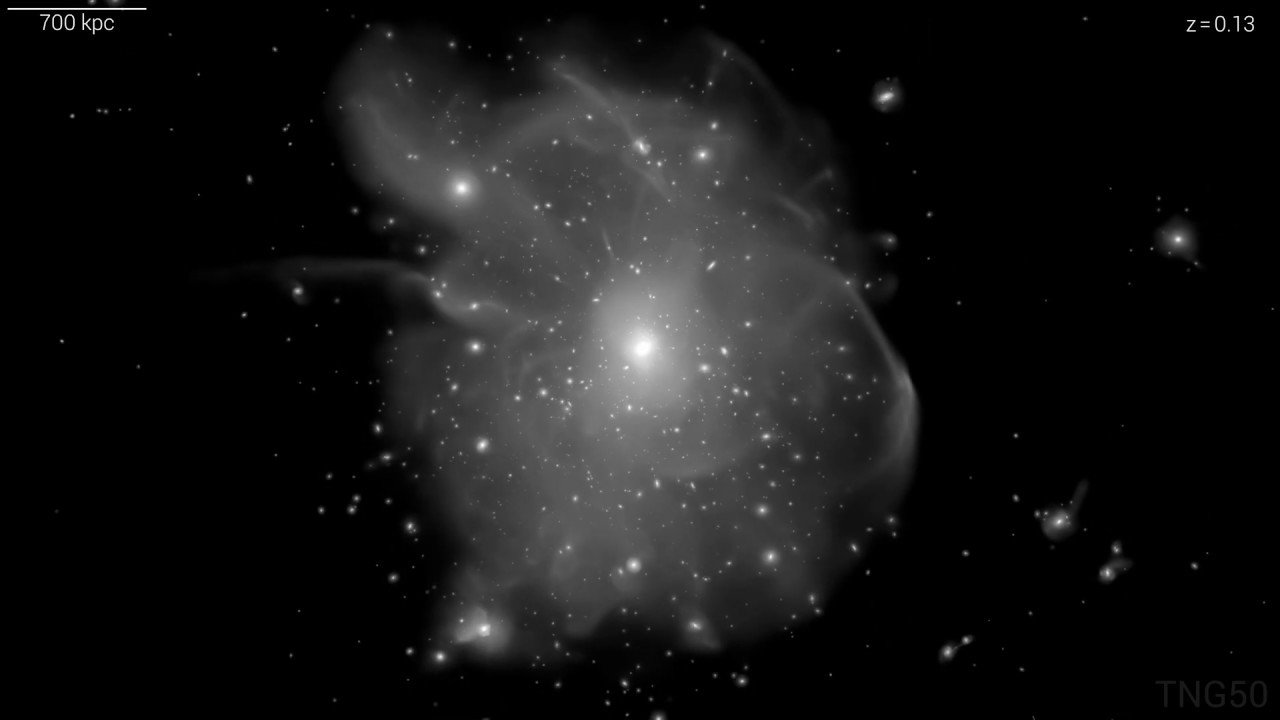
How do clusters of galaxies form? Since our universe moves too slowly to watch, faster-moving computer simulations are created to help find out. A recent effort is TNG50 from IllustrisTNG, an upgrade of the famous Illustris Simulation. The first part of the featured video tracks cosmic gas (mostly hydrogen) as it evolves into galaxies and galaxy clusters from the early universe to today, with brighter colors marking faster moving gas. As the universe matures, gas falls into gravitational wells, galaxies forms, galaxies spin, galaxies collide and merge, all while black holes form in galaxy centers and expel surrounding gas at high speeds. The second half of the video switches to tracking stars, showing a galaxy cluster coming together complete with tidal tails and stellar streams. The outflow from black holes in TNG50 is surprisingly complex and details are being compared with our real universe. Studying how gas coalesced in the early universe helps humanity better understand how our Earth, Sun, and Solar System originally formed. via NASA https://ift.tt/2XxA5CW

Feb 25, 2019

Red Sprite Lightning over Kununurra Red Sprite Lightning over Kununurra


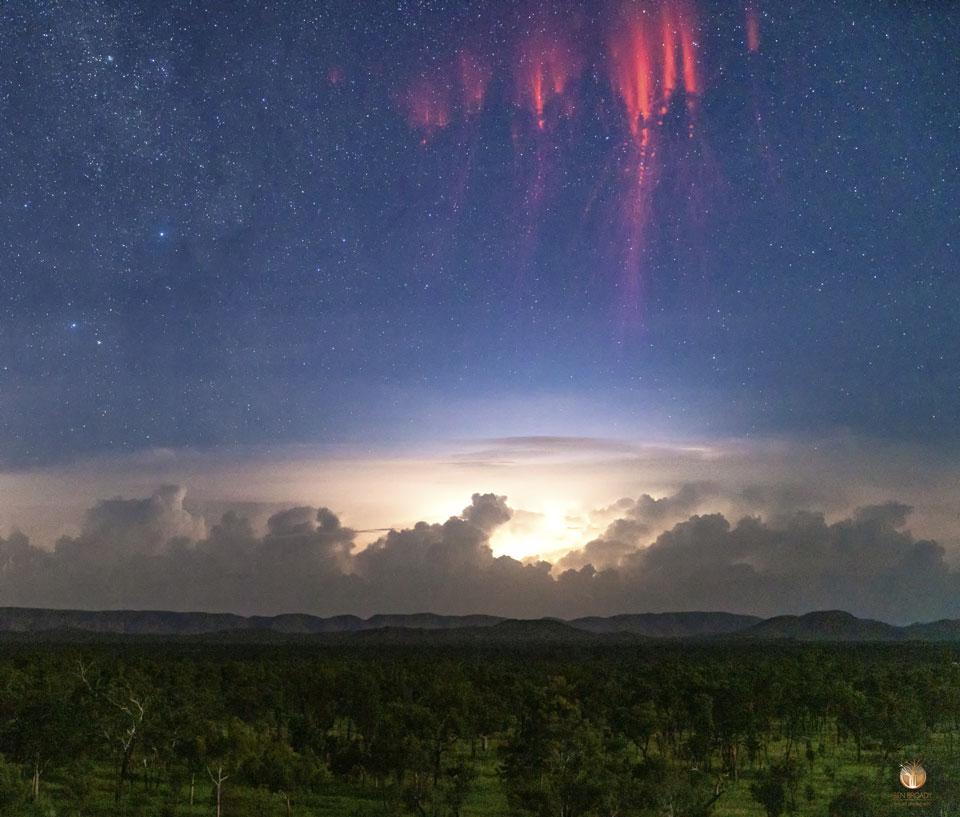
What are those red filaments in the sky? It is a rarely seen form of lightning confirmed only about 30 years ago: red sprites. Recent research has shown that following a powerful positive cloud-to-ground lightning strike, red sprites may start as 100-meter balls of ionized air that shoot down from about 80-km high at 10 percent the speed of light and are quickly followed by a group of upward streaking ionized balls. The featured image, taken just over a week ago in Kununurra, Western Australia, captured some red sprites while shooting a time-lapse sequence of a distant lightning storm. Pictured, green trees cover the foreground, dark mountains are seen on the horizon, ominous storm clouds hover over the distant land, while red sprites appear in front of stars far in the distance. Red sprites take only a fraction of a second to occur and are best seen when powerful thunderstorms are visible from the side. via NASA https://ift.tt/2T0DgV5

Feb 24, 2019

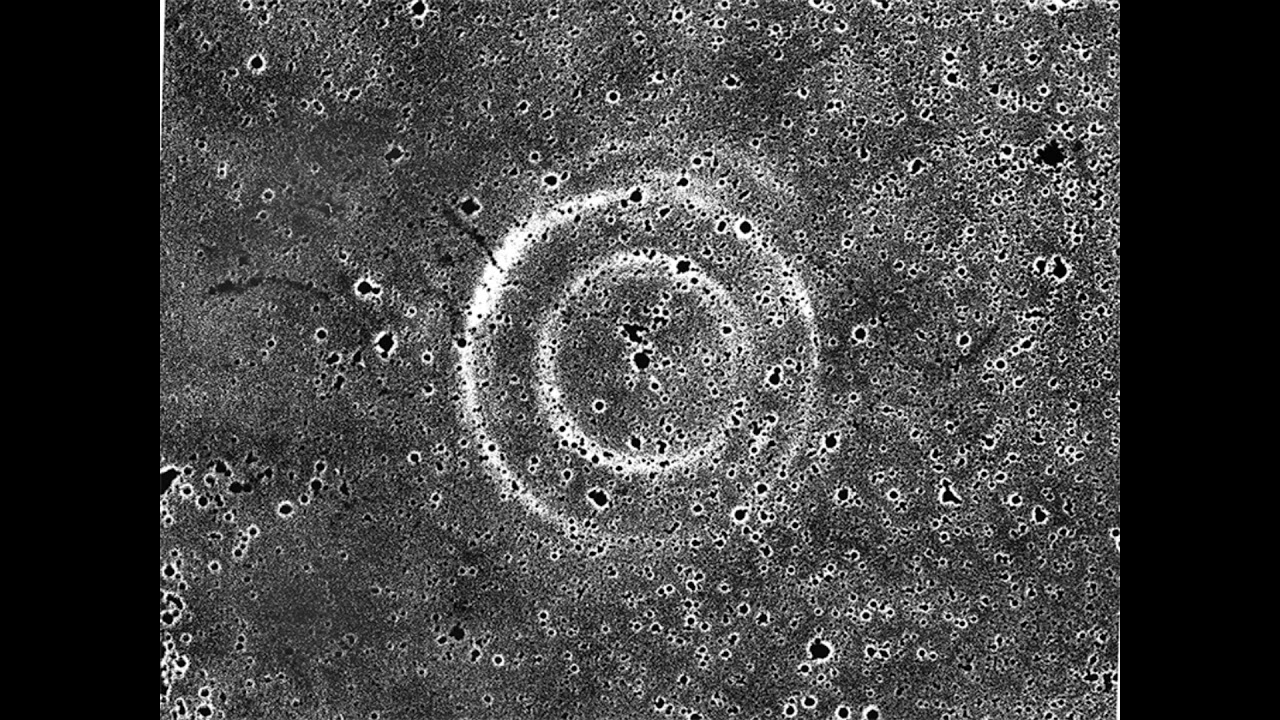
The Expanding Echoes of Supernova 1987A The Expanding Echoes of Supernova 1987A


Can you find supernova 1987A? It isn't hard -- it occurred at the center of the expanding bullseye pattern. Although this stellar detonation was first seen in 1987, light from SN 1987A continued to bounce off clumps of interstellar dust and be reflected to us even many years later. Light echoes recorded between 1988 and 1992 by the Anglo Australian Telescope (AAT) in Australia are shown moving out from the position of the supernova in the featured time-lapse sequence. These images were composed by subtracting an LMC image taken before the supernova light arrived from later LMC images that included the supernova echo. Other prominent light echo sequences include those taken by the EROS2 and SuperMACHO sky monitoring projects. Studies of expanding light echo rings around other supernovas have enabled more accurate determinations of the location, date, and symmetry of these tremendous stellar explosions. Yesterday marked the 32nd anniversary of SN 1987A: the last recoded supernova in or around our Milky Way Galaxy, and the last to be visible to the unaided eye. via NASA https://ift.tt/2VhAEPi

Feb 23, 2019

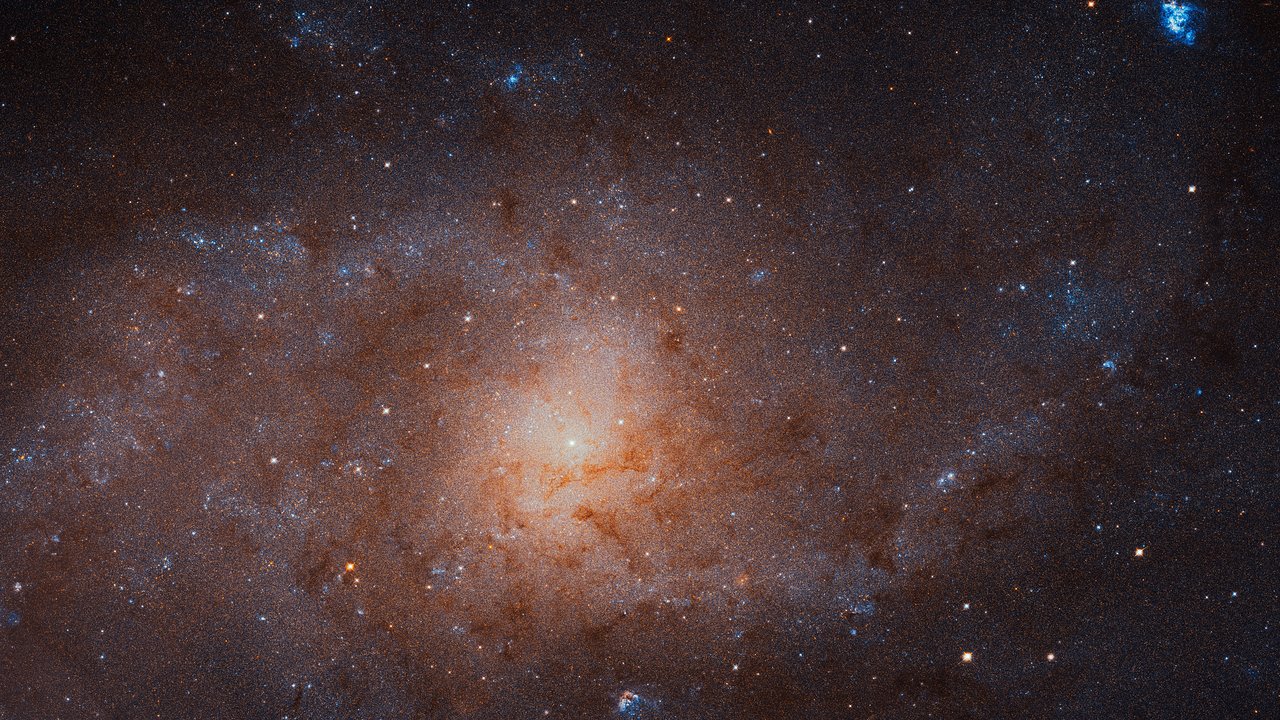
The Stars of the Triangulum Galaxy The Stars of the Triangulum Galaxy


Like grains of sand on a cosmic beach, stars of the Triangulum Galaxy are resolved in this sharp mosaic from the Hubble Space Telescope's Advanced Camera for Surveys (ACS). The inner region of the galaxy spanning over 17,000 light-years is covered at extreme resolution, the second largest image ever released by Hubble. At its center is the bright, densely packed galactic core surrounded by a loose array of dark dust lanes mixed with the stars in the galactic plane. Also known as M33, the face-on spiral galaxy lies 3 million light-years away in the small northern constellation Triangulum. Over 50,000 light-years in diameter, the Triangulum Galaxy is the third largest in the Local Group of galaxies after the Andromeda Galaxy (M31), and our own Milky Way. Of course, to fully appreciate the Triangulum's stars, star clusters, and bright nebulae captured in this Hubble mosaic, you'll need to use a zoom tool. via NASA https://ift.tt/2NnzwGV

Feb 22, 2019

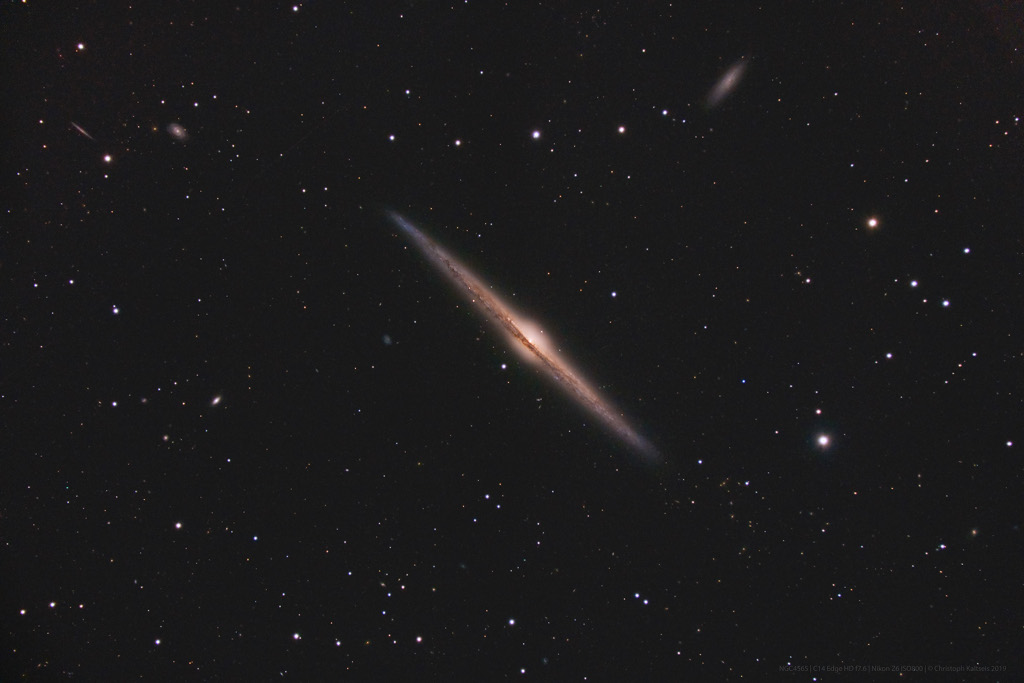
NGC 4565: Galaxy on Edge NGC 4565: Galaxy on Edge


Magnificent spiral galaxy NGC 4565 is viewed edge-on from planet Earth. Also known as the Needle Galaxy for its narrow profile, bright NGC 4565 is a stop on many telescopic tours of the northern sky, in the faint but well-groomed constellation Coma Berenices. This sharp, colorful image reveals the galaxy's bulging central core cut by obscuring dust lanes that lace NGC 4565's thin galactic plane. An assortment of other background galaxies is included in the pretty field of view, with neighboring galaxy NGC 4562 at the upper right. NGC 4565 itself lies about 40 million light-years distant and spans some 100,000 light-years. Easily spotted with small telescopes, sky enthusiasts consider NGC 4565 to be a prominent celestial masterpiece Messier missed. via NASA https://ift.tt/2It0o9C

Feb 20, 2019

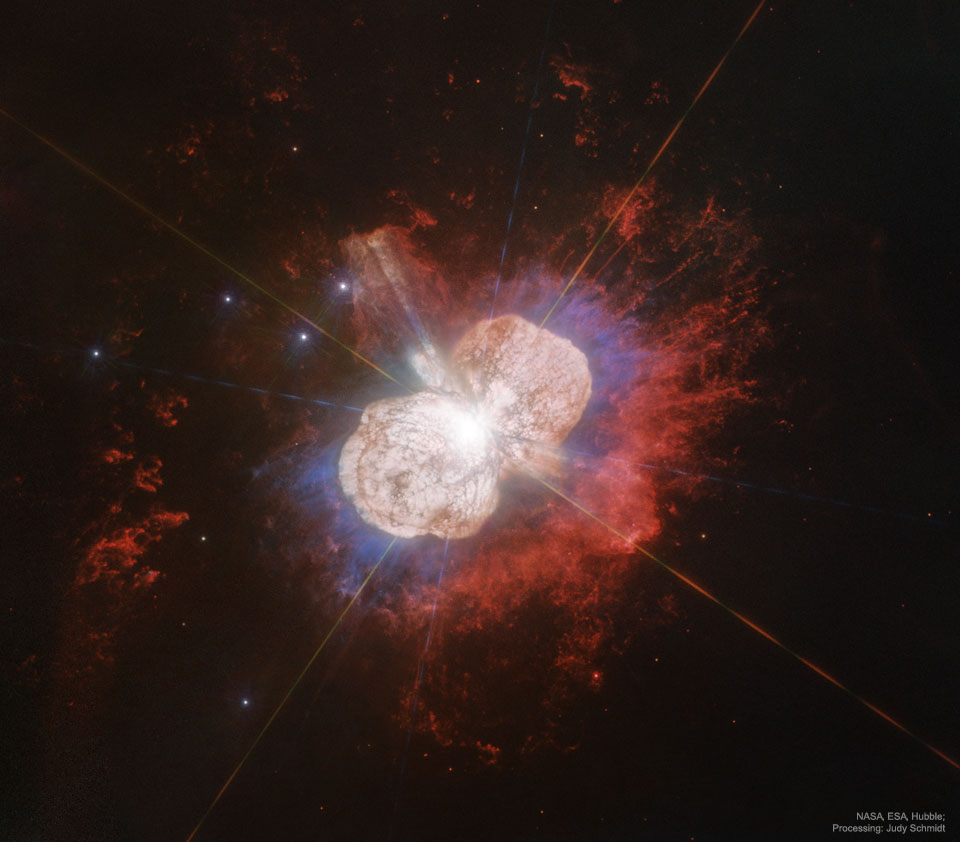
Doomed Star Eta Carinae Doomed Star Eta Carinae


Eta Carinae may be about to explode. But no one knows when - it may be next year, it may be one million years from now. Eta Carinae's mass - about 100 times greater than our Sun - makes it an excellent candidate for a full blown supernova. Historical records do show that about 170 years ago Eta Carinae underwent an unusual outburst that made it one of the brightest stars in the southern sky. Eta Carinae, in the Keyhole Nebula, is the only star currently thought to emit natural LASER light. This featured image brings out details in the unusual nebula that surrounds this rogue star. Diffraction spikes, caused by the telescope, are visible as bright multi-colored streaks emanating from Eta Carinae's center. Two distinct lobes of the Homunculus Nebula encompass the hot central region, while some strange radial streaks are visible in red extending toward the image right. The lobes are filled with lanes of gas and dust which absorb the blue and ultraviolet light emitted near the center. The streaks, however, remain unexplained. via NASA https://ift.tt/2T0OfNw

Feb 19, 2019

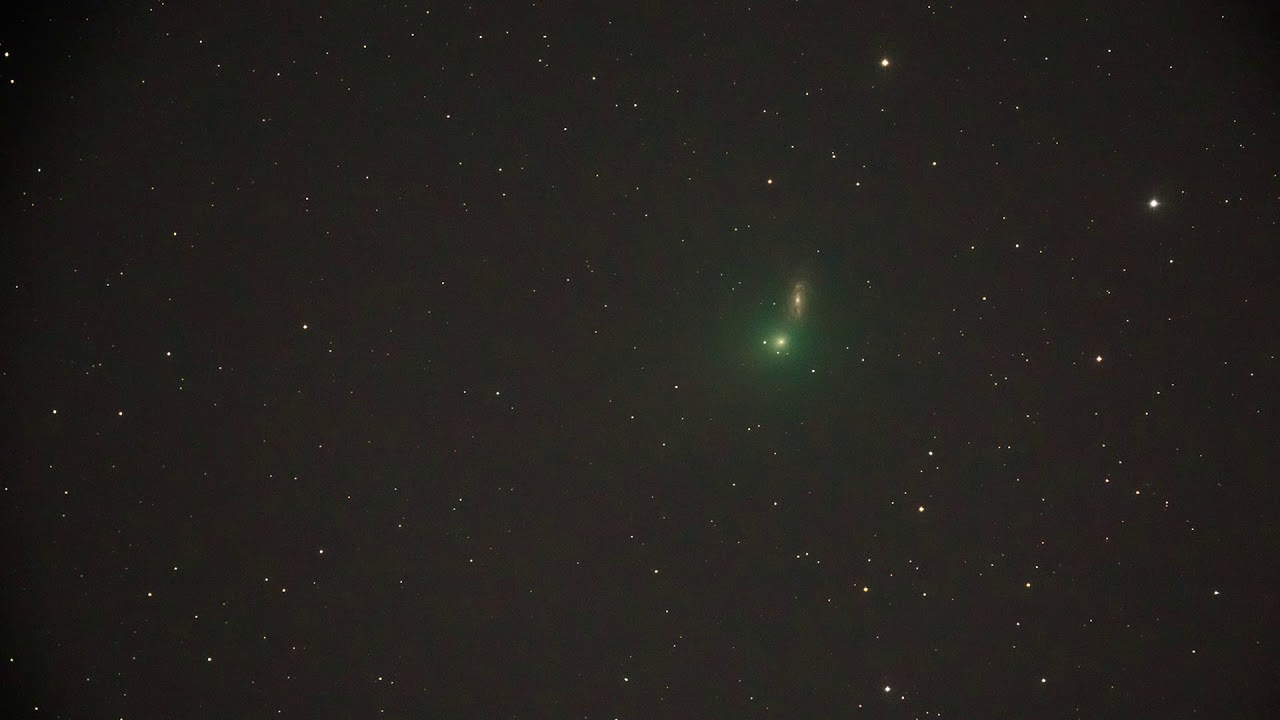
Comet Iwamoto Before Spiral Galaxy NGC 2903 Comet Iwamoto Before Spiral Galaxy NGC 2903


It isn't every night that a comet passes a galaxy. Last Thursday, though, binocular comet C/2018 Y1 (Iwamoto) moved nearly in front of a spiral galaxy of approximately the same brightness: NGC 2903. Comet Iwamoto was discovered late last year and orbits the Sun in a long ellipse. It last visited the inner Solar System during the Middle Ages, around the year 648. The comet reached its closest point to the Sun -- between Earth and Mars -- on February 6, and its closest point to Earth a few days ago, on February 13. The featured time-lapse video condenses almost three hours into about ten seconds, and was captured last week from Switzerland. At that time Comet Iwamoto, sporting a green coma, was about 10 light minutes distant, while spiral galaxy NGC 2903 remained about 30 million light years away. Two satellites zip diagonally through the field about a third of the way through the video. Typically, a few comets each year become as bright as Comet Iwamoto. via NASA https://go.nasa.gov/2Egfnjp

Feb 18, 2019

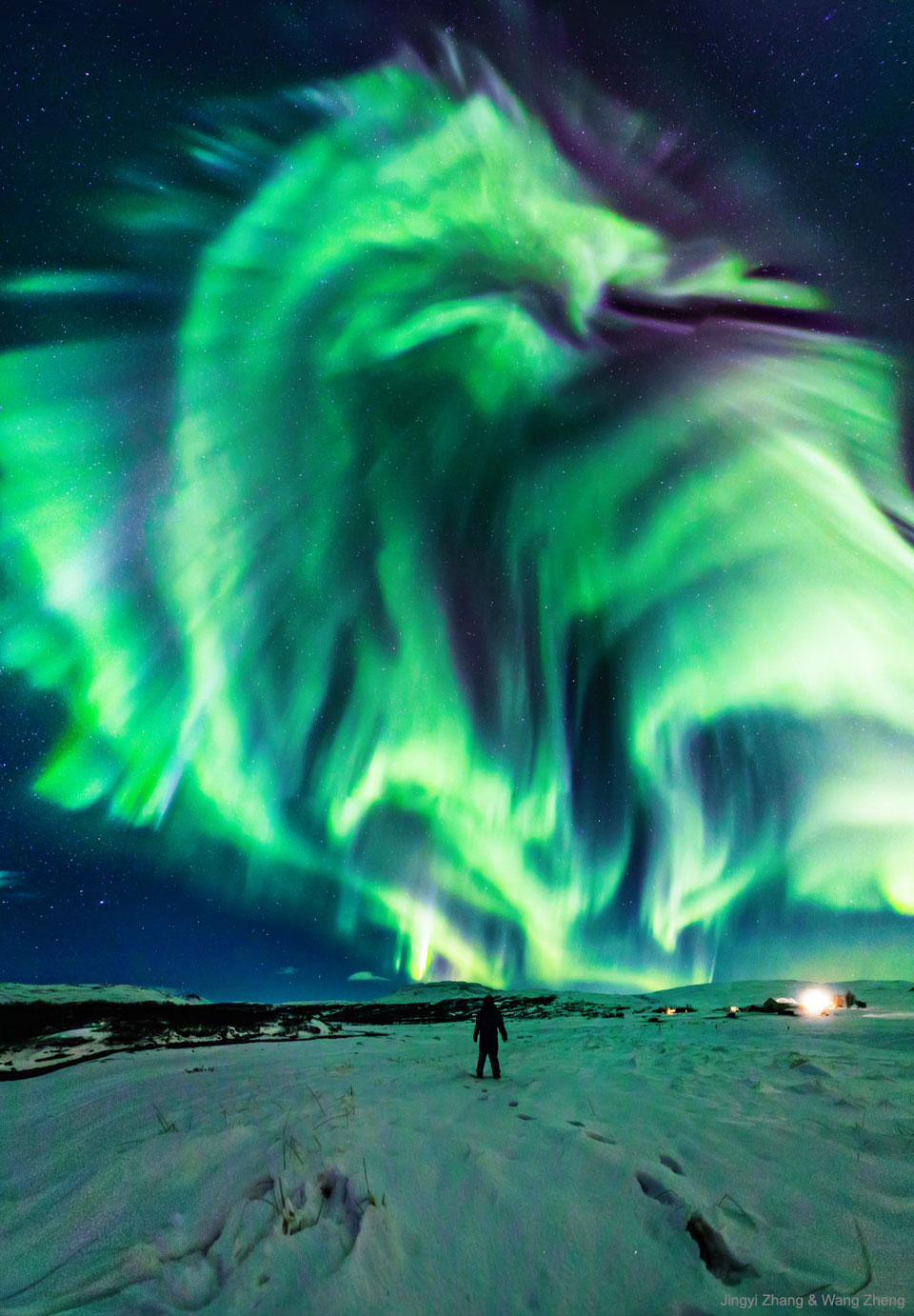
Dragon Aurora over Iceland Dragon Aurora over Iceland


Have you ever seen a dragon in the sky? Although real flying dragons don't exist, a huge dragon-shaped aurora developed in the sky over Iceland earlier this month. The aurora was caused by a hole in the Sun's corona that expelled charged particles into a solar wind that followed a changing interplanetary magnetic field to Earth's magnetosphere. As some of those particles then struck Earth's atmosphere, they excited atoms which subsequently emitted light: aurora. This iconic display was so enthralling that the photographer's mother ran out to see it and was captured in the foreground. No sunspots have appeared on the Sun so far in February, making the multiple days of picturesque auroral activity this month somewhat surprising. via NASA https://go.nasa.gov/2V5BcHF

Feb 17, 2019

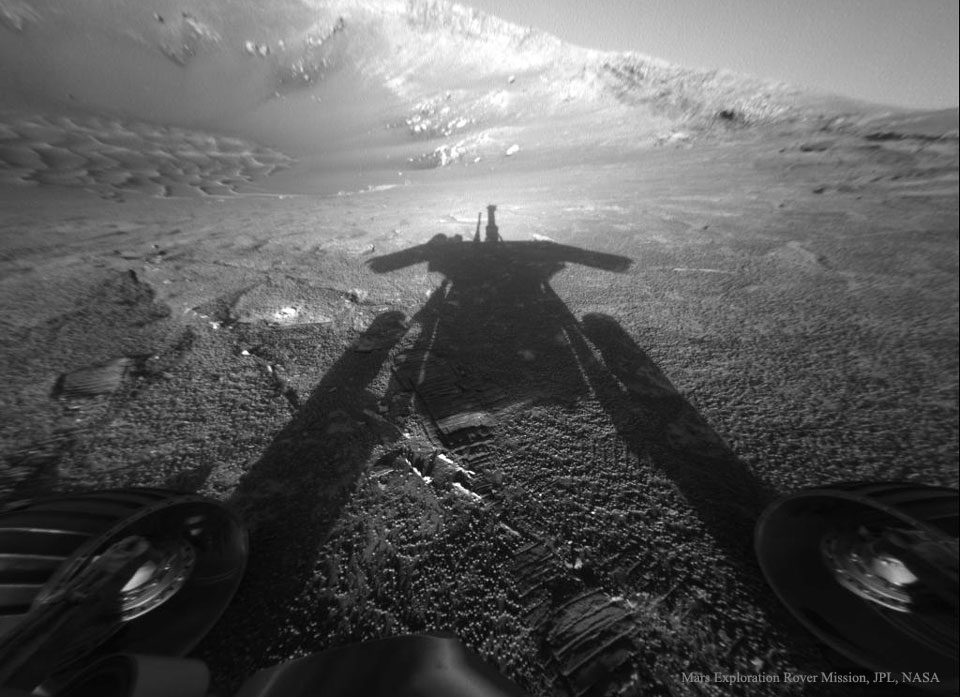
Shadow of a Martian Robot Shadow of a Martian Robot


What if you saw your shadow on Mars and it wasn't human? Then you might be the Opportunity rover currently exploring Mars. Opportunity explored the red planet from 2004 to 2018, finding evidence of ancient water, and sending breathtaking images across the inner Solar System. Pictured here in 2004, Opportunity looks opposite the Sun into Endurance Crater and sees its own shadow. Two wheels are visible on the lower left and right, while the floor and walls of the unusual crater are visible in the background. Caught in a dust storm in 2018, last week NASA stopped try contact Opportunity and declare the ground-breaking mission, originally planned for only 92 days, complete. via NASA https://go.nasa.gov/2NaXmWp

Feb 16, 2019

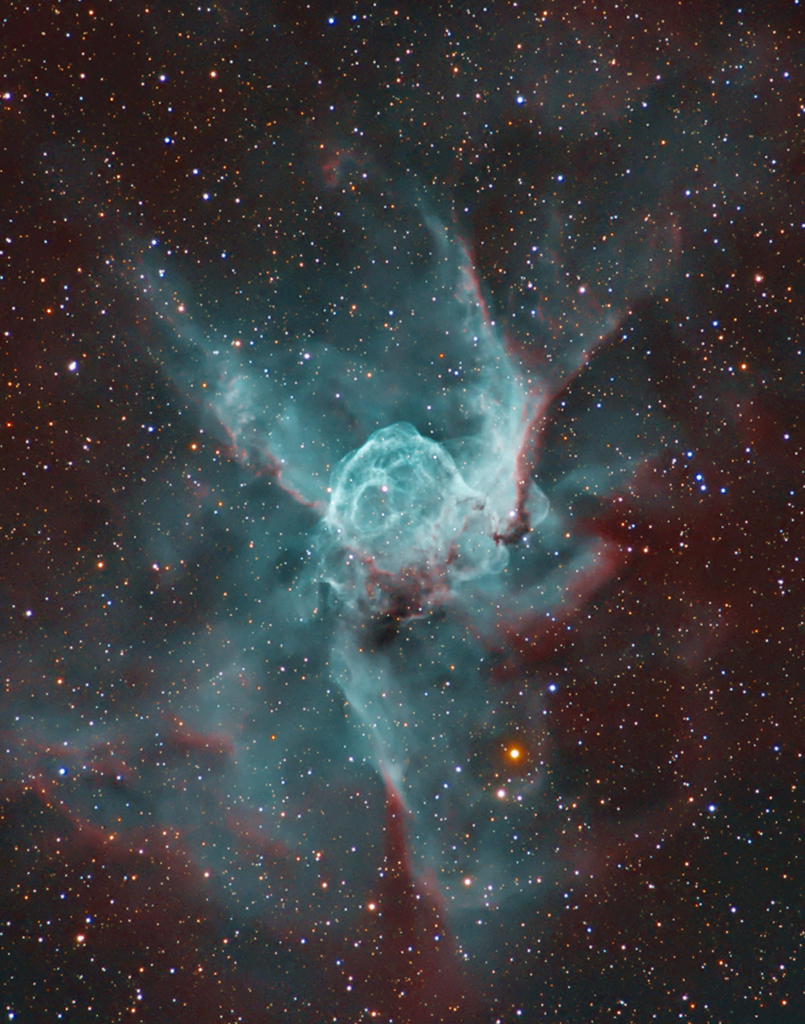
NGC 2359: Thor s Helmet NGC 2359: Thor s Helmet


NGC 2359 is a helmet-shaped cosmic cloud with wing-like appendages popularly called Thor's Helmet. Heroically sized even for a Norse god, Thor's Helmet is about 30 light-years across. In fact, the helmet is more like an interstellar bubble, blown as a fast wind from the bright, massive star near the bubble's center inflates a region within the surrounding molecular cloud. Known as a Wolf-Rayet star, the central star is an extremely hot giant thought to be in a brief, pre-supernova stage of evolution. NGC 2359 is located about 15,000 light-years away in the constellation Canis Major. The remarkably detailed image is a mixed cocktail of data from broadband and narrowband filters that captures natural looking stars and the glow of the nebula's filamentary structures. It highlights a blue-green color from strong emission due to oxygen atoms in the glowing gas. via NASA https://go.nasa.gov/2toqgcs