Pages

Nov 11, 2018

Astronaut Exploring: An Apollo 15 Panorama Astronaut Exploring: An Apollo 15 Panorama


What would it be like to explore the Moon? NASA's Apollo missions gave humans just this chance in the late 1960s and early 1970s. In particular, the Apollo 15 mission was dedicated to better understanding the surface of the Moon by exploring mountains, valleys, maria, and highlands. Astronauts David Scott and James Irwin spent nearly three days on the Moon while Alfred Worden orbited above in the Command Module. The mission, which blasted off from Earth on 1971 July 26, was the first to deploy a Lunar Roving Vehicle. Pictured in this digitally stitched mosaic panorama, David Scott, exploring his surroundings, examines a boulder in front of the summit of Mt. Hadley Delta. The shadow of James Irwin is visible to the right, while scrolling to the right will reveal a well-lit and diverse lunar terrain. The Apollo 15 mission returned about 76 kilograms of moon rocks for detailed study. In the future, NASA and other space agencies plan to continue to lead humanity's exploration of the Moon, Mars, and beyond. via NASA https://ift.tt/2QAyus6

Nov 10, 2018

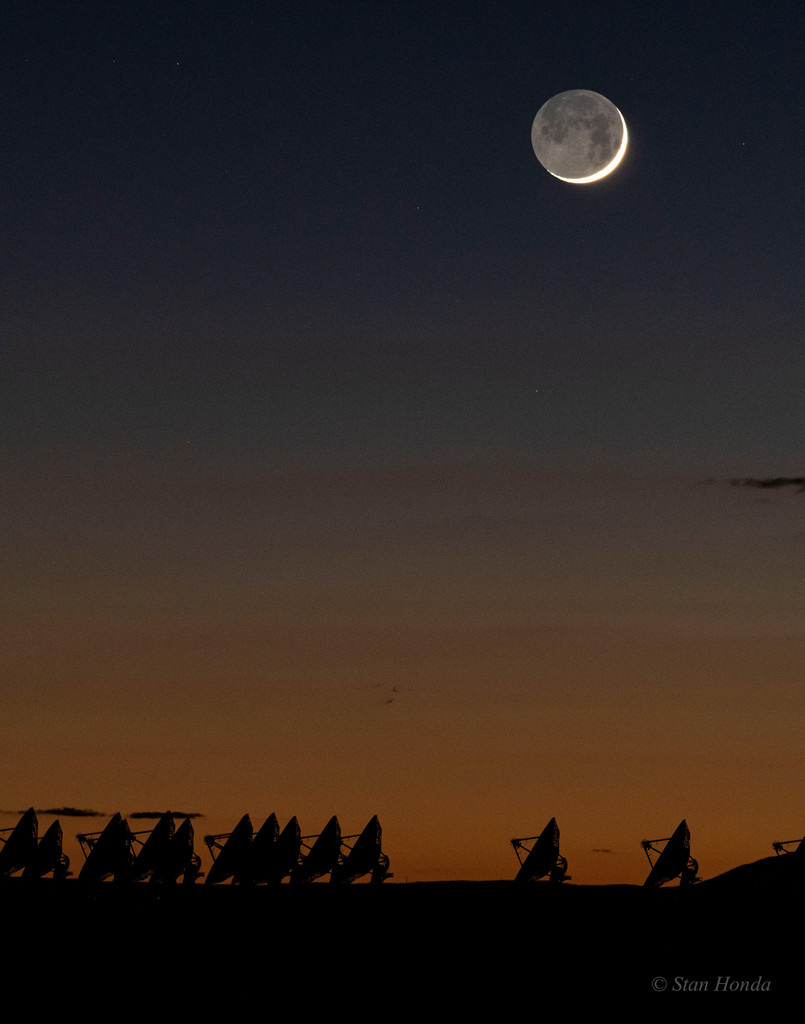
The Old Moon in the Young Moon s Arms The Old Moon in the Young Moon s Arms


Tonight the Moon is young again, but this stunning image of a young Moon near the western horizon was taken just after sunset on October 10. On the lunar disk Earthshine, earthlight reflected from the Moon's night side, is embraced by the slim, sunlit crescent just over 2 days old. Along the horizon fading colors of twilight silhouette the radio telescope dish antennas of the Very Large Array, New Mexico, planet Earth. The view from the Moon would be stunning, too. When the Moon appears in Earth's sky as a slender crescent, a dazzlingly bright, nearly full Earth would be seen from the lunar surface. A description of earthshine, in terms of sunlight reflected by Earth's oceans in turn illuminating the Moon's dark surface, was written 500 years ago by Leonardo da Vinci. via NASA https://ift.tt/2qEORID

Nov 8, 2018

Mars in the Loop Mars in the Loop


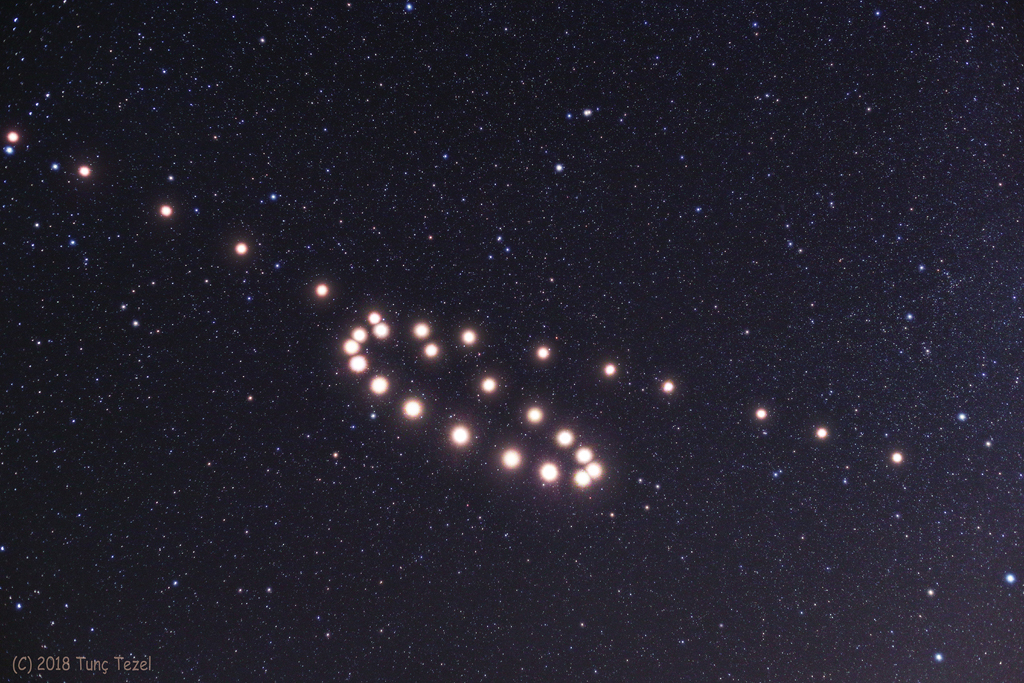
This composite of images spaced some 5 to 9 days apart, from late April (bottom right) through November 5 (top left), traces the retrograde motion of ruddy-colored Mars through planet Earth's night sky. To connect the dots and dates in this 2018 Mars retrograde loop, just slide your cursor over the picture (and check out this animation). But Mars didn't actually reverse the direction of its orbit. Instead, the apparent backwards motion with respect to the background stars is a reflection of the motion of the Earth itself. Retrograde motion can be seen each time Earth overtakes and laps planets orbiting farther from the Sun, the Earth moving more rapidly through its own relatively close-in orbit. On July 27, Mars was near its favorable 2018 parihelic opposition, when Mars was closest to the Sun in its orbit while also opposite the Sun in Earth's sky. For that date, the frame used in this composite was taken during the total lunar eclipse. via NASA https://ift.tt/2zzb9zN

Nov 7, 2018

NGC 6188: The Dragons of Ara NGC 6188: The Dragons of Ara


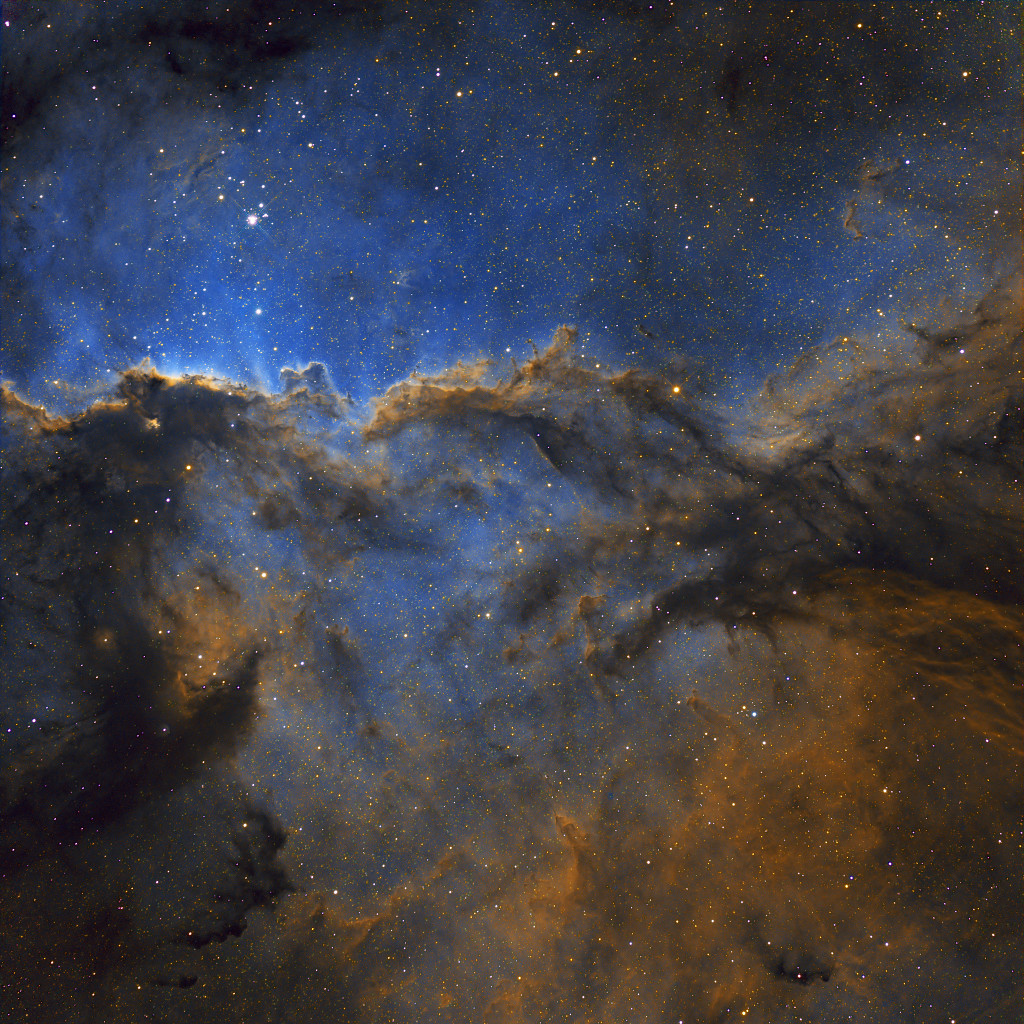
Dark shapes with bright edges winging their way through dusty NGC 6188 are tens of light-years long. The emission nebula is found near the edge of an otherwise dark large molecular cloud in the southern constellation Ara, about 4,000 light-years away. Born in that region only a few million years ago, the massive young stars of the embedded Ara OB1 association sculpt the fantastic shapes and power the nebular glow with stellar winds and intense ultraviolet radiation. The recent star formation itself was likely triggered by winds and supernova explosions, from previous generations of massive stars, that swept up and compressed the molecular gas. With image data from the Chilescope Observatory, a false-color Hubble palette was used to create this gorgeous wide-field image and shows emission from sulfur, hydrogen, and oxygen atoms in red, green, and blue hues. The field of view spans about four full Moons, corresponding to about 150 light years at the estimated distance of NGC 6188. via NASA https://ift.tt/2yXJ6ui

Nov 6, 2018

NGC 1499: The California Nebula NGC 1499: The California Nebula


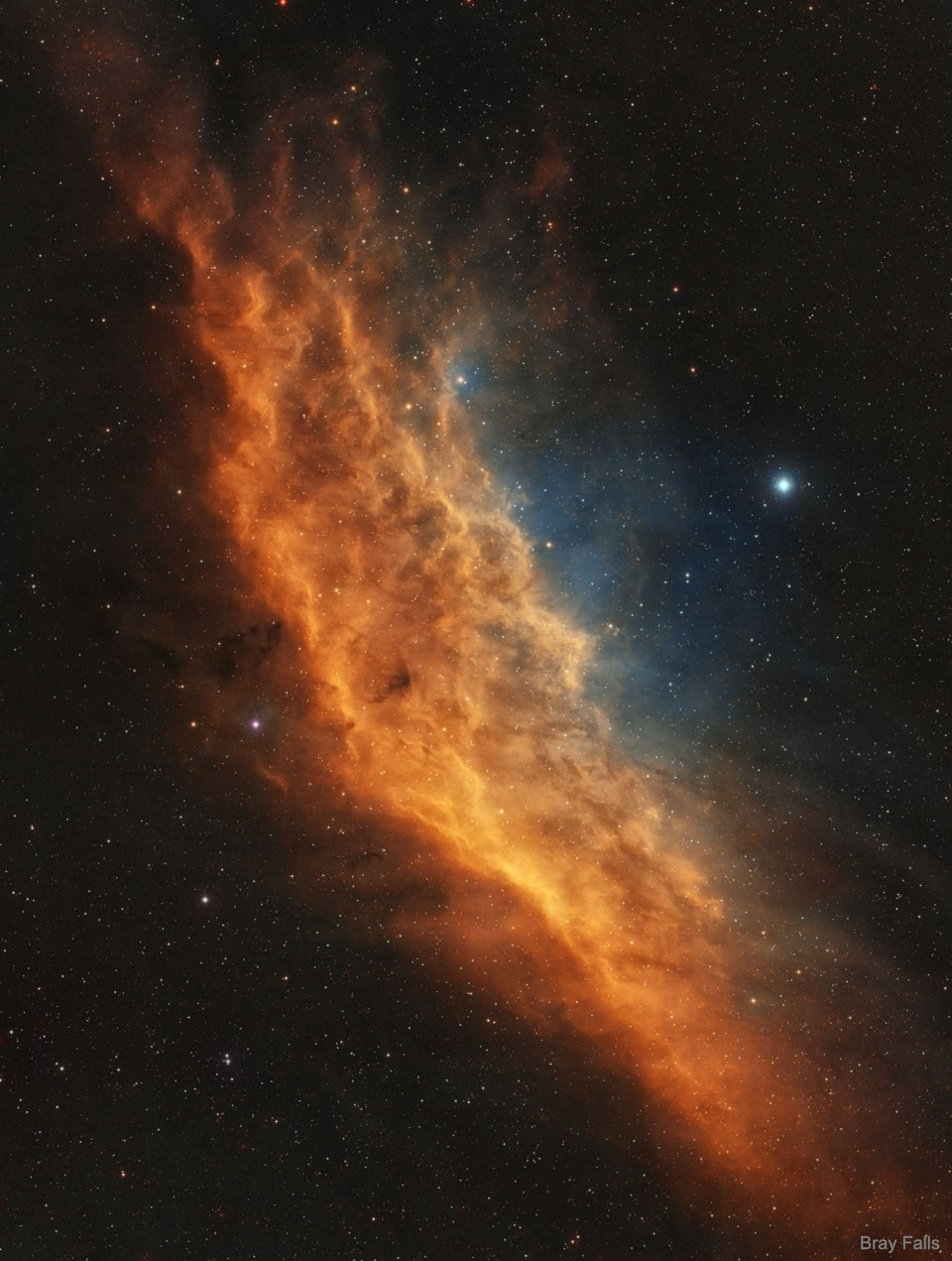
There's even a California in space. Drifting through the Orion Arm of the spiral Milky Way Galaxy, this cosmic cloud by chance echoes the outline of California on the west coast of the United States. Our own Sun also lies within the Milky Way's Orion Arm, only about 1,500 light-years from the California Nebula. Also known as NGC 1499, the classic emission nebula is around 100 light-years long. On the featured image, the most prominent glow of the California Nebula is the red light characteristic of hydrogen atoms recombining with long lost electrons, stripped away (ionized) by energetic starlight. The star most likely providing the energetic starlight that ionizes much of the nebular gas is the bright, hot, bluish Xi Persei just to the right of the nebula. A regular target for astrophotographers, the California Nebula can be spotted with a wide-field telescope under a dark sky toward the constellation of Perseus, not far from the Pleiades. via NASA https://ift.tt/2yUmn2i

Nov 5, 2018

IC 4592: The Blue Horsehead Reflection Nebula IC 4592: The Blue Horsehead Reflection Nebula


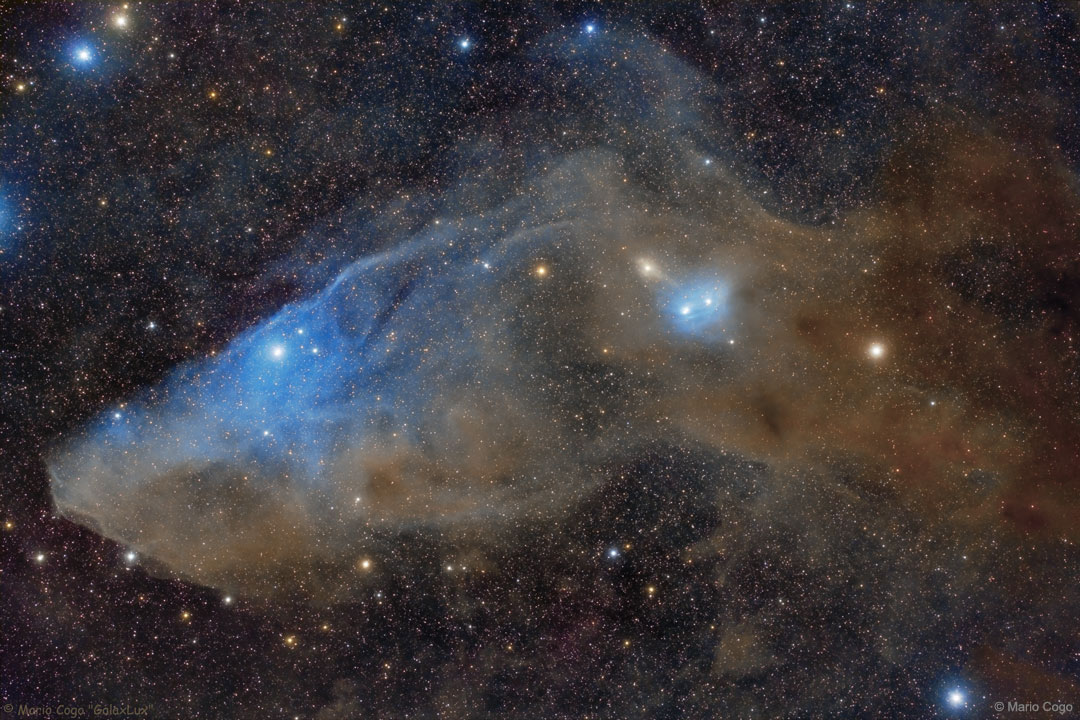
Do you see the horse's head? What you are seeing is not the famous Horsehead nebula toward Orion but rather a fainter nebula that only takes on a familiar form with deeper imaging. The main part of the here imaged molecular cloud complex is a reflection nebula cataloged as IC 4592. Reflection nebulas are actually made up of very fine dust that normally appears dark but can look quite blue when reflecting the light of energetic nearby stars. In this case, the source of much of the reflected light is a star at the eye of the horse. That star is part of Nu Scorpii, one of the brighter star systems toward the constellation of the Scorpion (Scorpius). A second reflection nebula dubbed IC 4601 is visible surrounding two stars to the right of the image center. via NASA https://ift.tt/2ztMlJp

Nov 4, 2018

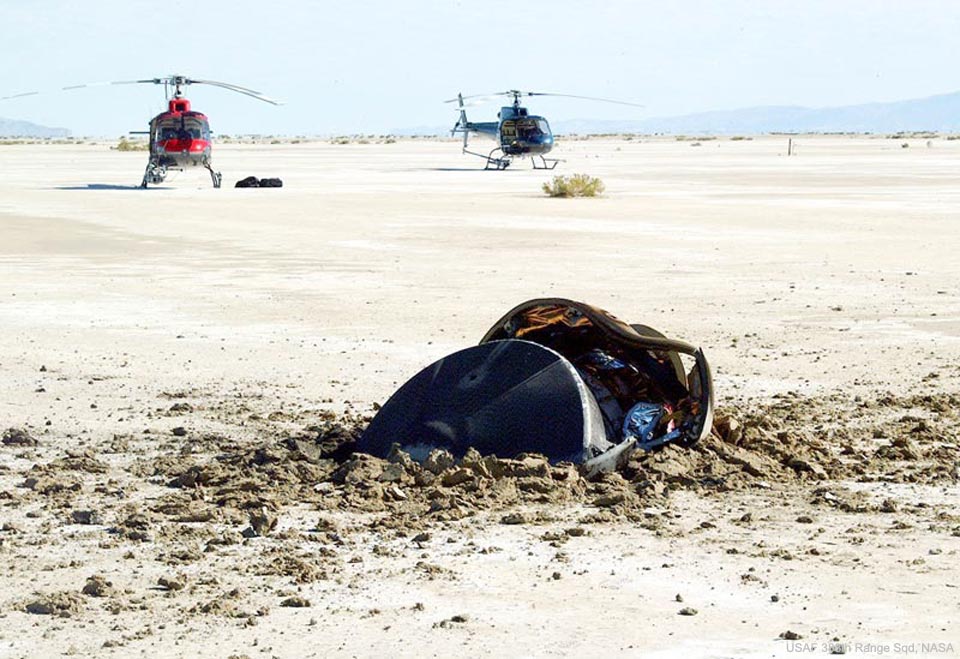
Flying Saucer Crash Lands in Utah Desert Flying Saucer Crash Lands in Utah Desert


A flying saucer from outer space crash-landed in the Utah desert after being tracked by radar and chased by helicopters. The year was 2004, and no space aliens were involved. The saucer, pictured here, was the Genesis sample return capsule, part of a human-made robot Genesis spaceship launched in 2001 by NASA itself to study the Sun. The unexpectedly hard landing at over 300 kilometers per hour occurred because the parachutes did not open as planned. The Genesis mission had been orbiting the Sun collecting solar wind particles that are usually deflected away by Earth's magnetic field. Despite the crash landing, many return samples remained in good enough condition to analyze. So far, Genesis-related discoveries include new details about the composition of the Sun and how the abundance of some types of elements differ across the Solar System. These results have provided intriguing clues into details of how the Sun and planets formed billions of years ago. via NASA https://ift.tt/2D1IdUr

Nov 3, 2018

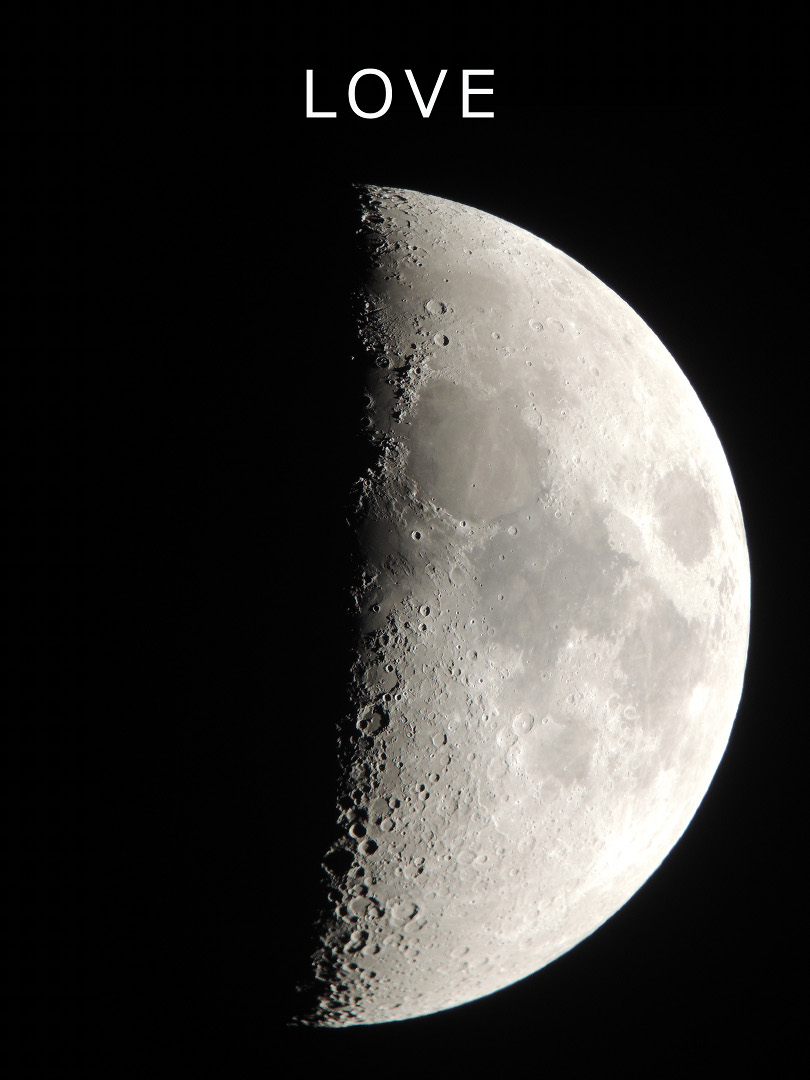
Lunar LOVE Lunar LOVE


A more creative search by a group of amateur astronomers in the Ehime Prefecture of Shikoku Island, Japan has found lunar L-O-V-E. Their secret was an examination of this sharp image of the First Quarter Moon. To discover it for yourself you'll need to look closely at details of the shadow and light along the terminator, the line between lunar night and day Created by the contrast of shadowed crater floors with sunlit walls and ridges, the letter V is not too hard to find near the center of the image. Letters L and E are a bit more challenging though, but can be teased out of shadow and light along the terminator at the bottom. Of course, on the cratered surface of the Moon the O is easy ... . Moonwatchers on planet Earth should understand that like the famous lunar X, also seen here, these lunar letters are transient and only appear along the terminator in the hours around the Moon's first quarter phase. So your next chance for lunar L-O-V-E is the first quarter Moon on November 15. via NASA https://ift.tt/2Op1UYp

Nov 2, 2018

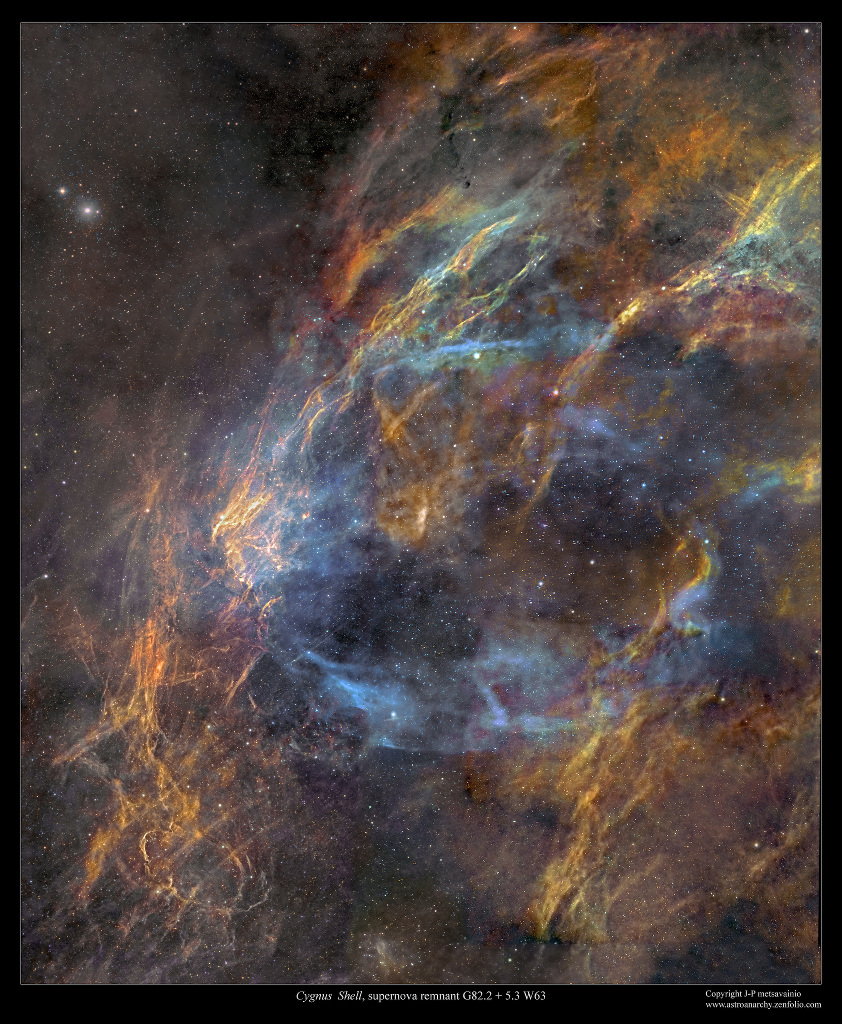
Cygnus Shell Supernova Remnant W63 Cygnus Shell Supernova Remnant W63


The ghost of a long-dead star, the W63 supernova remnant shines like a faint cosmic smoke-ring along the plane of the Milky Way galaxy toward the northern constellation Cygnus the swan. Its wraithlike appearance is traced against the region's rich complex of interstellar clouds and dust by an eerie blue glow. Spanning over four full moons on the sky, the beautiful image is a telescopic mosaic in twelve panels that combines 100 hours of exposure time using narrow band filters. It shows characteristic light from ionized atoms of sulfur, hydrogen and oxygen in red, green, and blue hues. Likely over 5,000 light-years away, the visible part of the still expanding shell supernova remnant is around 150 light-years in diameter. So far no source has been identified as with the remains of W63's original star. Light from the star's supernova explosion would have reached Earth over 15,000 years ago. via NASA https://ift.tt/2znmGCd

Nov 1, 2018

Hayabusa2 Ascends from Asteroid Ryugu Hayabusa2 Ascends from Asteroid Ryugu


Will spacecraft Hayabusa2 be able to land safely on asteroid Ryugu? Since arriving in June, pictures show that the surface of kilometer-sized Ryugu is covered with boulders, so that finding a flat enough area for the bus-sized spacecraft to touch down is proving a challenge. In the featured video, the shadow of Japan's robotic Hayabusa2 can be seen on the rugged face of Ryugu while ascending last week from a touchdown rehearsal only 20 meters over the surface. Previously, small frisbee-sized landers detached from Hayabusa2, made contact with the diamond-shaped asteroid's surface, and started hopping around. Studying Ryugu could tell humanity not only about the minor planet's surface and interior, but about what materials were available in the early Solar System for the development of life. The touchdown of the Hayabusa2 mother ship is slated for early next year, hopefully followed by a soil sample collection for return to Earth. via NASA https://ift.tt/2zgx3aM