Pages

Sep 12, 2018

Lunations Lunations


Our Moon's appearance changes nightly. As the Moon orbits the Earth, the half illuminated by the Sun first becomes increasingly visible, then decreasingly visible. The featured video animates images taken by NASA's Moon-orbiting Lunar Reconnaissance Orbiter to show all 12 lunations that appear this year, 2018. A single lunation describes one full cycle of our Moon, including all of its phases. A full lunation takes about 29.5 days, just under a month (moon-th). As each lunation progresses, sunlight reflects from the Moon at different angles, and so illuminates different features differently. During all of this, of course, the Moon always keeps the same face toward the Earth. What is less apparent night-to-night is that the Moon's apparent size changes slightly, and that a slight wobble called a libration occurs as the Moon progresses along its elliptical orbit. via NASA https://ift.tt/2x1jU52

Sep 11, 2018

Milky Way over Trolls Tongue Milky Way over Trolls Tongue


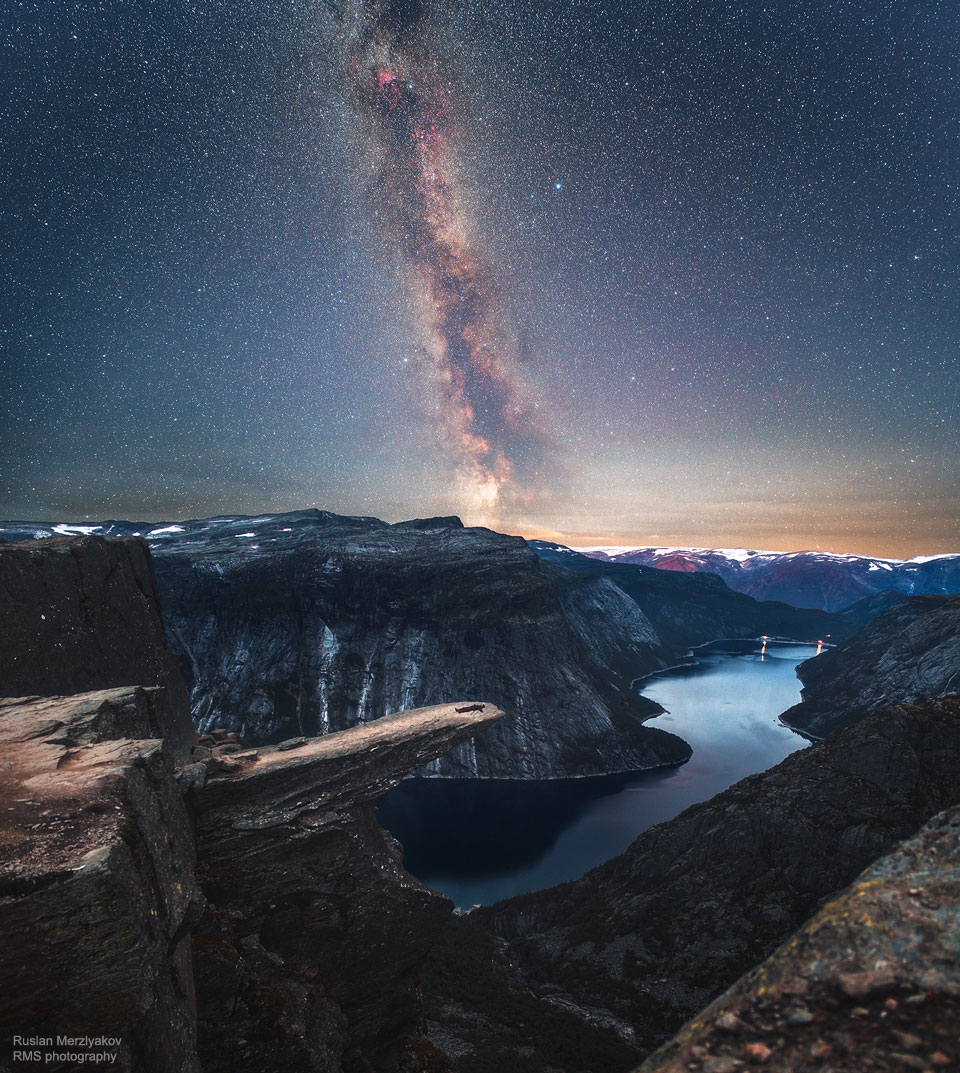
You have to take a long hike to see the Troll's Tongue -- ten hours over rocky terrain. And in this case, it took three trips to capture the landform below a clear night sky. Trolltunga itself is a picturesque rock protrusion extending about 700 meters over mountainous cliffs near Lake Ringedalsvatnet in Norway. The overhang is made of billion-year-old Precambrian bedrock that was carved out by glaciers during an ice-age about 10,000 years ago. The featured picture is a composite of two exposures, a 15-second image of the foreground Earth followed 40 minutes later by an 87-second exposure of the background sky. Thousands of discernable stars dot the backdrop starscape in addition to billions of unresolved stars in the nearly vertical band of our Milky Way Galaxy. via NASA https://ift.tt/2x4r0or

Sep 10, 2018

Curiosity Vista from Vera Rubin Ridge Curiosity Vista from Vera Rubin Ridge


If you could stand on Mars -- what might you see? If you were NASA's Curiosity rover, just last month you would have seen the view from Vera Rubin Ridge, an intriguing rock-strewn perch on the side of Mount Sharp. In the featured 360-degree panorama, you can spin around and take in the vista from all directions, in many browsers, just by pointing or tilting. In this virtual reality view, many instruments on the rover are labelled, including antennas, the robotic arm, and the radioisotope thermoelectric generator (RTG). Dark sand and light rock cover the ground nearby in a mixture called lakebed mudstone. Towering Mount Sharp is only barely visible in the distance due to airborne dust from a planet-wide storm just winding down. Among its many discoveries, Curiosity has found that the raw ingredients for life are present on Mars. Next on Mars will be NASA's Insight, on target to land in late November, which is scheduled to deploy a seismometer to better study the interior of the red planet. via NASA https://ift.tt/2oVTpcY

Sep 9, 2018

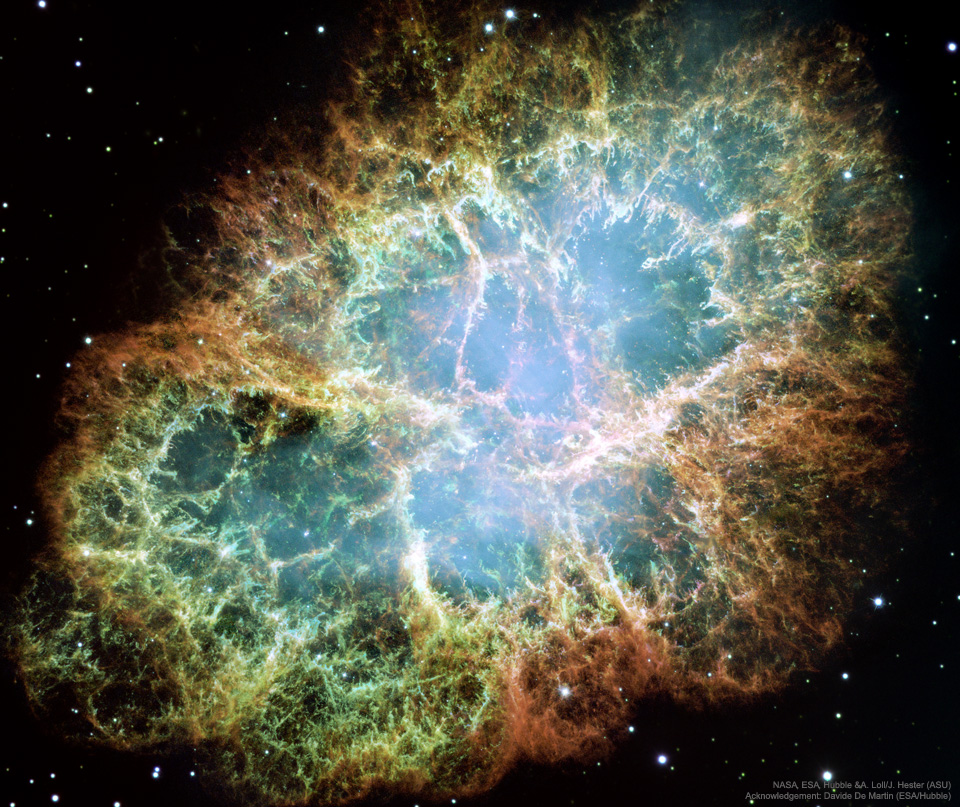
M1: The Crab Nebula from Hubble M1: The Crab Nebula from Hubble


This is the mess that is left when a star explodes. The Crab Nebula, the result of a supernova seen in 1054 AD, is filled with mysterious filaments. The filaments are not only tremendously complex, but appear to have less mass than expelled in the original supernova and a higher speed than expected from a free explosion. The featured image, taken by the Hubble Space Telescope, is presented in three colors chosen for scientific interest. The Crab Nebula spans about 10 light-years. In the nebula's very center lies a pulsar: a neutron star as massive as the Sun but with only the size of a small town. The Crab Pulsar rotates about 30 times each second. via NASA https://ift.tt/2NXDR35

Sep 7, 2018

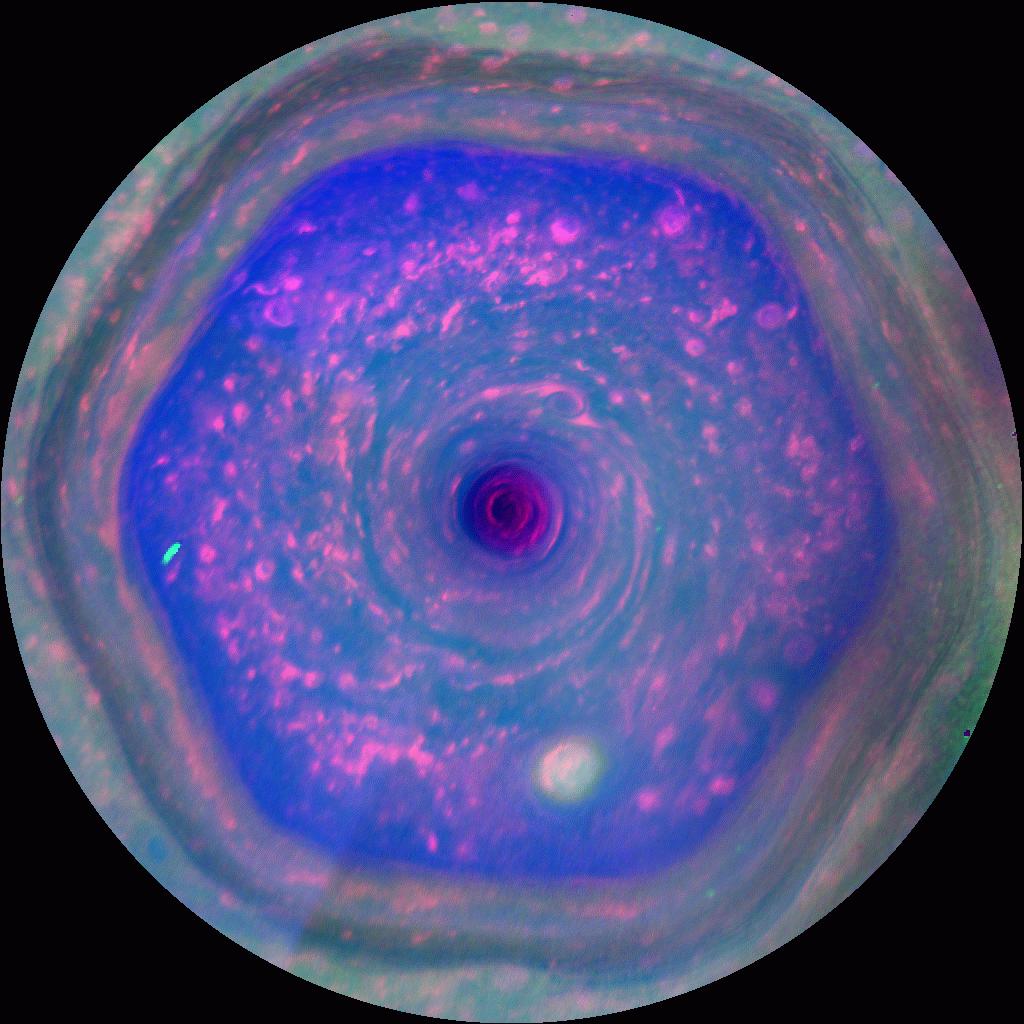
Saturn s North Polar Hexagon Saturn s North Polar Hexagon


In full view, the amazing six-sided jet stream known as Saturn's north polar hexagon is shown in this colorful Cassini image. Extending to 70 degrees north latitude, the false-color video frame is map-projected, based on infrared, visible, and ultraviolet image data recorded by the Saturn-orbiting spacecraft in late 2012. First found in the outbound Voyager flyby images from the 1980s, the bizarre, long-lived feature tied to the planet's rotation is about 30,000 kilometers across. At its center lies the ringed gas giant's hurricane-like north polar storm. A new long term study of Cassini data has found a remarkable higher-altitude vortex, exactly matching the outlines of the north polar hexagon, that formed as summer approached the planet's northern hemisphere. It appears to reach hundreds of kilometers above these deeper cloud tops, into Saturn's stratosphere. via NASA https://ift.tt/2Q6nP8y

Sep 6, 2018

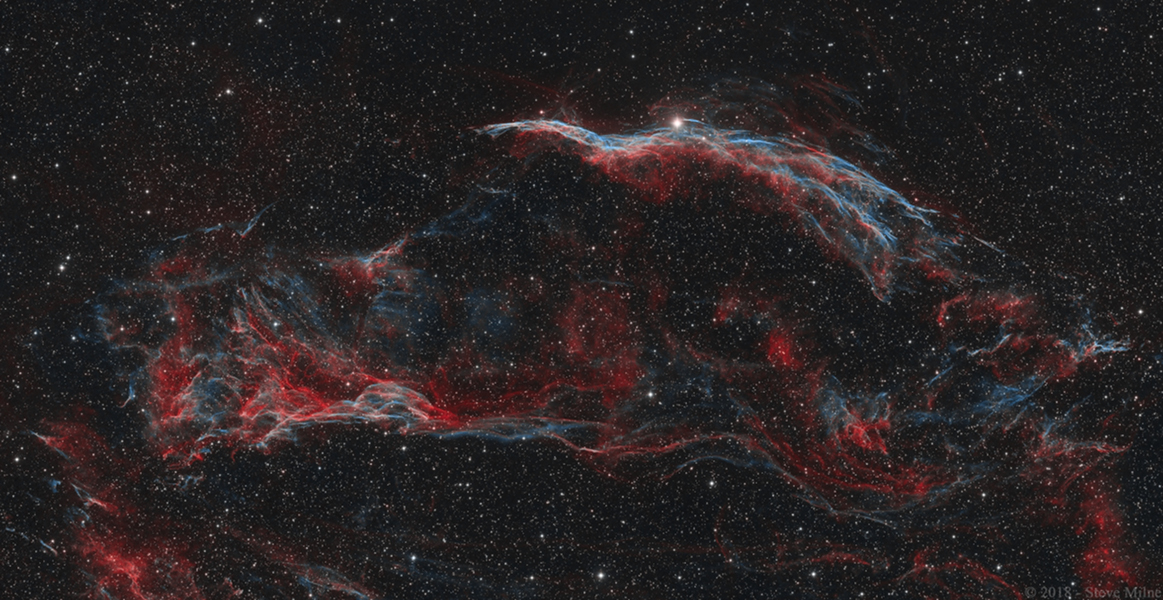
Along the Western Veil Along the Western Veil


Delicate in appearance, these filaments of shocked, glowing gas, are draped across planet Earth's sky toward the constellation of Cygnus. They form the western part of the Veil Nebula. The Veil Nebula itself is a large supernova remnant, an expanding cloud born of the death explosion of a massive star. Light from the original supernova explosion likely reached Earth over 5,000 years ago. Blasted out in the cataclysmic event, the interstellar shock wave plows through space sweeping up and exciting interstellar material. The glowing filaments are really more like long ripples in a sheet seen almost edge on, remarkably well separated into atomic hydrogen (red) and oxygen (blue-green) gas. Also known as the Cygnus Loop, the Veil Nebula now spans nearly 3 degrees or about 6 times the diameter of the full Moon. While that translates to over 70 light-years at its estimated distance of 1,500 light-years, this telescopic two panel mosaic image of the western portion spans about half that distance. Brighter parts of the western Veil are recognized as separate nebulae, including The Witch's Broom (NGC 6960) along the top of this view and Pickering's Triangle (NGC 6979) below and left. via NASA https://ift.tt/2NlbeQf

Sep 5, 2018

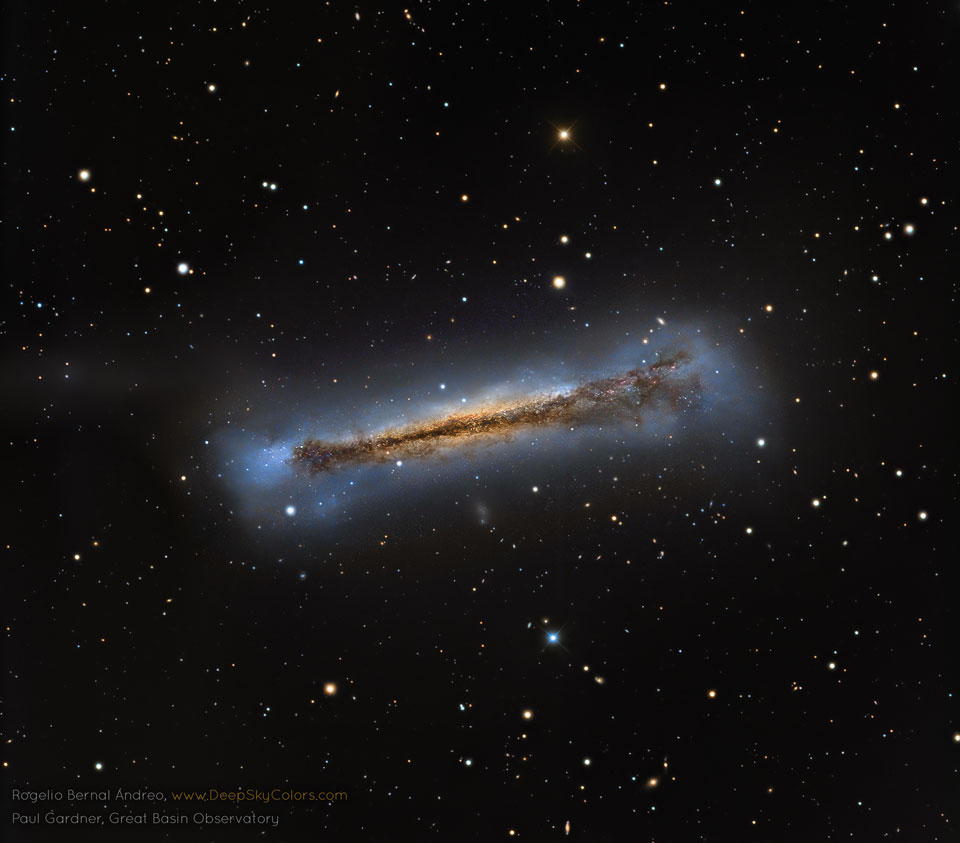
NGC 3682: Sideways Spiral Galaxy NGC 3682: Sideways Spiral Galaxy


What do spiral galaxies look like sideways? Featured is a sharp telescopic view of a magnificent edge-on spiral galaxy NGC 3628, a puffy galactic disk divided by dark dust lanes. Of course, this deep galactic portrait puts some astronomers in mind of its popular moniker, The Hamburger Galaxy. The tantalizing island universe is about 100,000 light-years across and 35 million light-years away in the northern springtime constellation Leo. NGC 3628 shares its neighborhood in the local Universe with two other large spirals M65 and M66 in a grouping otherwise known as the Leo Triplet. Gravitational interactions with its cosmic neighbors are likely responsible for the extended flare and warp of this spiral's disk. via NASA https://ift.tt/2wHNYmi

Sep 3, 2018

Aurora around Saturns North Pole Aurora around Saturns North Pole


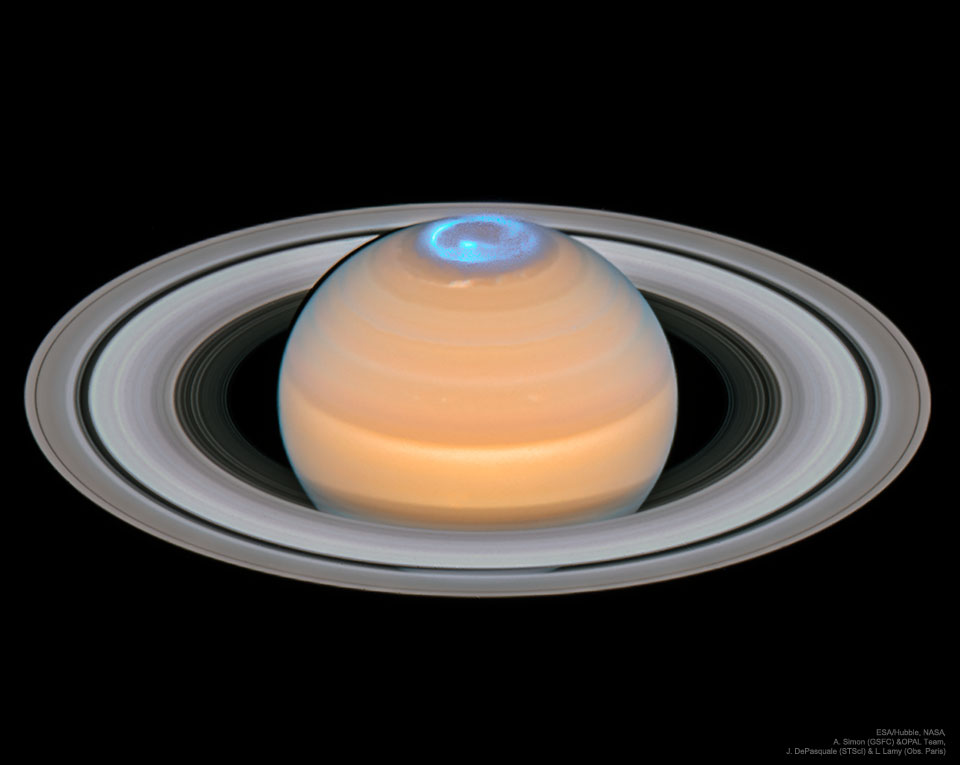
Are Saturn's auroras like Earth's? To help answer this question, the Hubble Space Telescope and the Cassini spacecraft monitored Saturn's North Pole simultaneously during Cassini's final orbits around the gas giant in September 2017. During this time, Saturn's tilt caused its North Pole to be clearly visible from Earth. The featured image is a composite of ultraviolet images of aurora and optical images of Saturn's clouds and rings, all taken recently by Hubble. Like on Earth, Saturn's northern auroras can make total or partial rings around the pole. Unlike on Earth, however, Saturn's auroras are frequently spirals -- and more likely to peak in brightness just before midnight and dawn. In contrast to Jupiter's auroras, Saturn's auroras appear better related to connecting Saturn's internal magnetic field to the nearby, variable, solar wind. Saturn's southern auroras were similarly imaged back in 2004 when the planet's South Pole was clearly visible to Earth. via NASA https://ift.tt/2NIcNox

Sep 2, 2018

A Powerful Solar Flare A Powerful Solar Flare


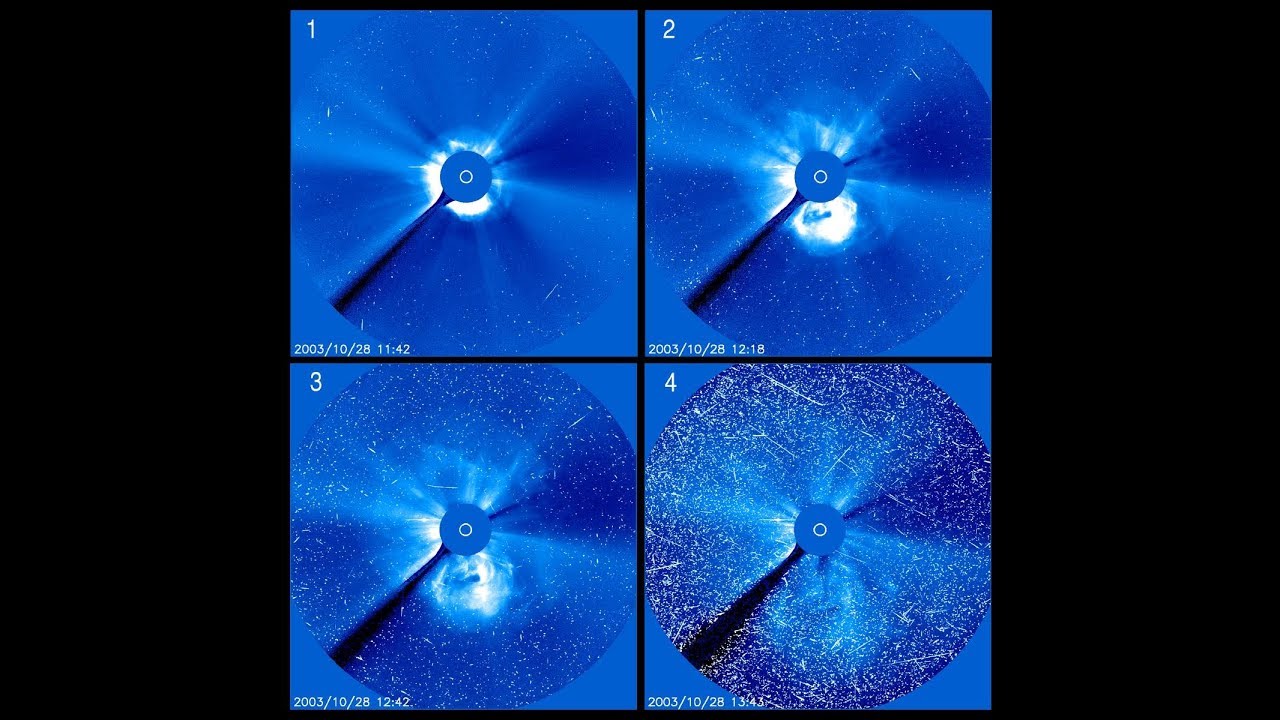
It was one of the most powerful solar flares in recorded history. Occurring in 2003 and seen across the electromagnetic spectrum, the Sun briefly became over 100 times brighter in X-rays than normal. The day after this tremendous X 17 solar flare -- and subsequent Coronal Mass Ejection (CME) -- energetic particles emitted from the explosions struck the Earth, creating auroras and affecting satellites. The spacecraft that took these frames -- SOHO -- was put in a turtle-like safe mode to avoid further damage from this and subsequent solar particle storms. The featured time-lapse movie condenses into 10 seconds events that occurred over 4 hours. The CME, visible around the central sun-shade, appears about three-quarters of the way through the video, while frames toward the very end are progressively noisier as protons from the explosions strike SOHO's LASCO detector. One this day in 1859, the effects of an even more powerful solar storm caused telegraphs on Earth to spark in what is known as the Carrington Event. Powerful solar storms such as these may create beautiful aurora-filled skies, but they also pose a real danger as they can damage satellites and even power grids across the Earth. via NASA https://ift.tt/2NEaX8a

Sep 1, 2018


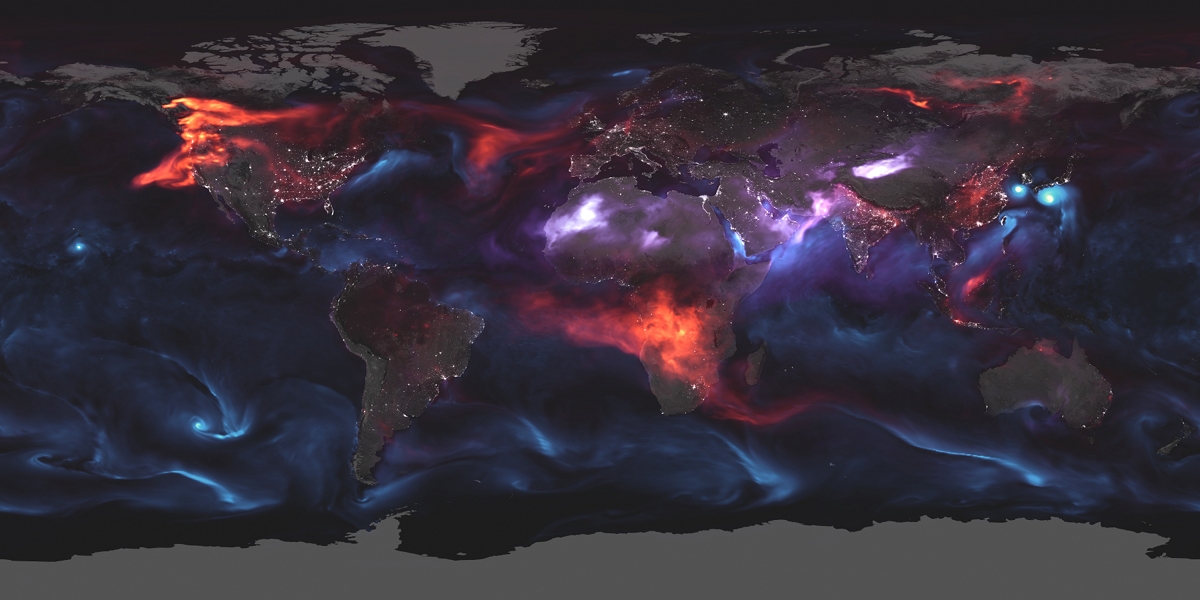
On August 23, 2018 the identification and distribution of aerosols in the Earth's atmosphere is shown in this dramatic, planet-wide visualization. Produced in real time, the Goddard Earth Observing System Forward Processing (GEOS FP) model relies on a combination of Earth-observing satellite and ground-based data to calculate the presence of types of aerosols, tiny solid particles and liquid droplets, as they circulate above the entire planet. This August 23rd model shows black carbon particles in red from combustion processes, like smoke from the fires in the United States and Canada, spreading across large stretches of North America and Africa. Sea salt aerosols are in blue, swirling above threatening typhoons near South Korea and Japan, and the hurricane looming near Hawaii. Dust shown in purple hues is blowing over African and Asian deserts. The location of cities and towns can be found from the concentrations of lights based on satellite image data of the Earth at night. via NASA https://ift.tt/2orIqHS