Pages

Jun 23, 2018

Curiosity s Dusty Self Curiosity s Dusty Self


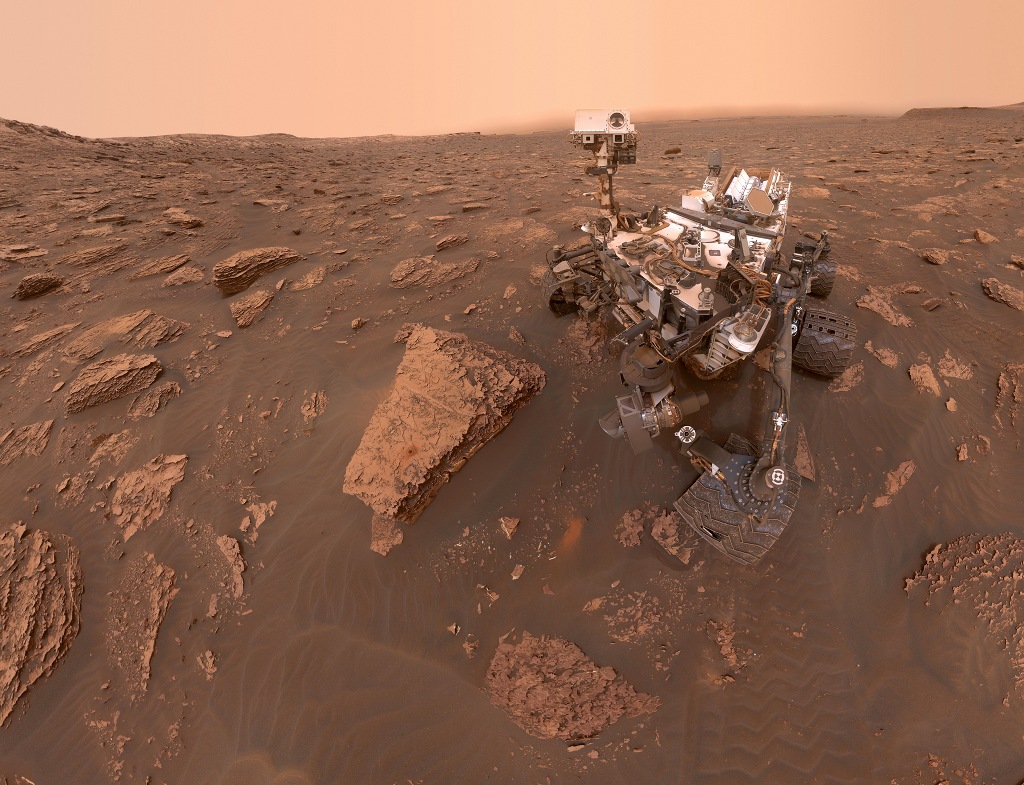
Winds on Mars can't actually blow spacecraft over. But in the low gravity, martian winds can loft fine dust particles in planet-wide storms, like the dust storm now raging on the Red Planet. From the martian surface on sol 2082 (June 15), this self-portrait from the Curiosity rover shows the effects of the dust storm, reducing sunlight and visibility at the rover's location in Gale crater. Made with the Mars Hand Lens Imager, its mechanical arm is edited out of the mosaicked images. Curiosity's recent drill site Duluth can be seen on the rock just in front of the rover on the left. The east-northeast Gale crater rim fading into the background is about 30 kilometers away. Curiosity is powered by a radioisotope thermoelectric generator and is expected to be unaffected by the increase in dust at Gale crater. On the other side of Mars, the solar-powered Opportunity rover has ceased its operations due to the even more severe lack of sunlight at its location on the west rim of Endeavour crater. via NASA https://ift.tt/2KavwXV

Jun 22, 2018

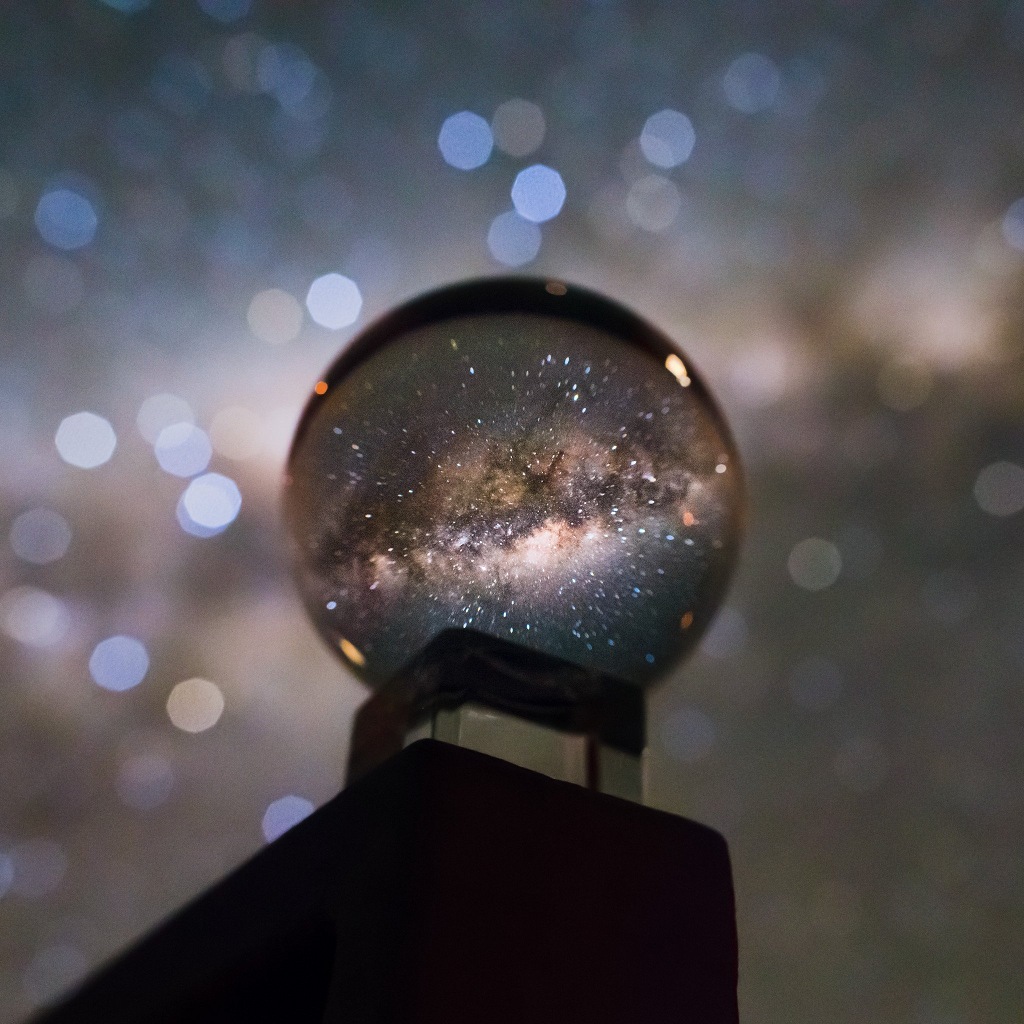
Galaxy in a Crystal Ball Galaxy in a Crystal Ball


A small crystal ball seems to hold a whole galaxy in this creative snapshot. Of course, the galaxy is our own Milky Way. Its luminous central bulge marked by rifts of interstellar dust spans thousands of light-years. On this long southern hemisphere night it filled dark Chilean skies over Paranal Observatory. The single exposure image did not require a Very Large Telescope, though. Experiments with a digital camera on a tripod and crystal ball perched on a handrail outside the Paranal Residencia produced the evocative, cosmic marble portrait of our home galaxy. via NASA https://ift.tt/2If0Ov0

Jun 21, 2018

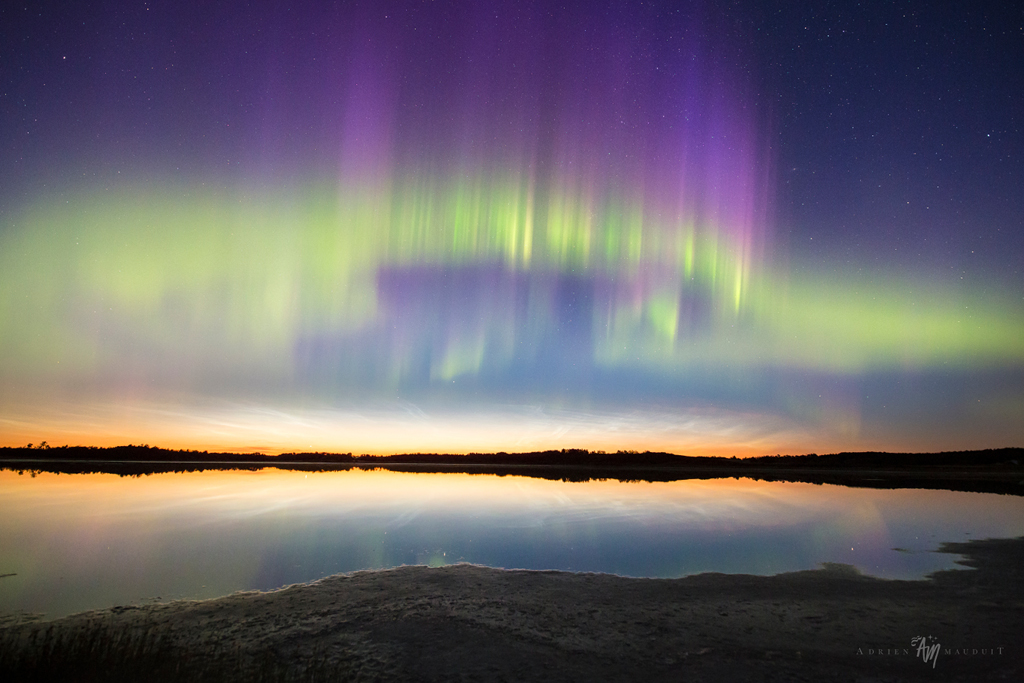
Northern Lights and Noctilucent Clouds Northern Lights and Noctilucent Clouds


Skies after the near-solstice sunset on June 17 are reflected in this calm lake. The tranquil twilight scene was captured near Bashaw, Alberta, Canada, northern planet Earth. Usually spotted at high latitudes in summer months, night shining or noctilucent clouds hang just above the horizon, transfusing light into a darker sky. Near the edge of space, the icy apparitions are condensations on meteoric dust or volcanic ash still in sunlight at extreme altitudes. Also near the edge of space on this short northern night, solar activity triggered the lovely apparition of aurora borealis or northern lights. via NASA https://ift.tt/2JTcUzv

Jun 20, 2018

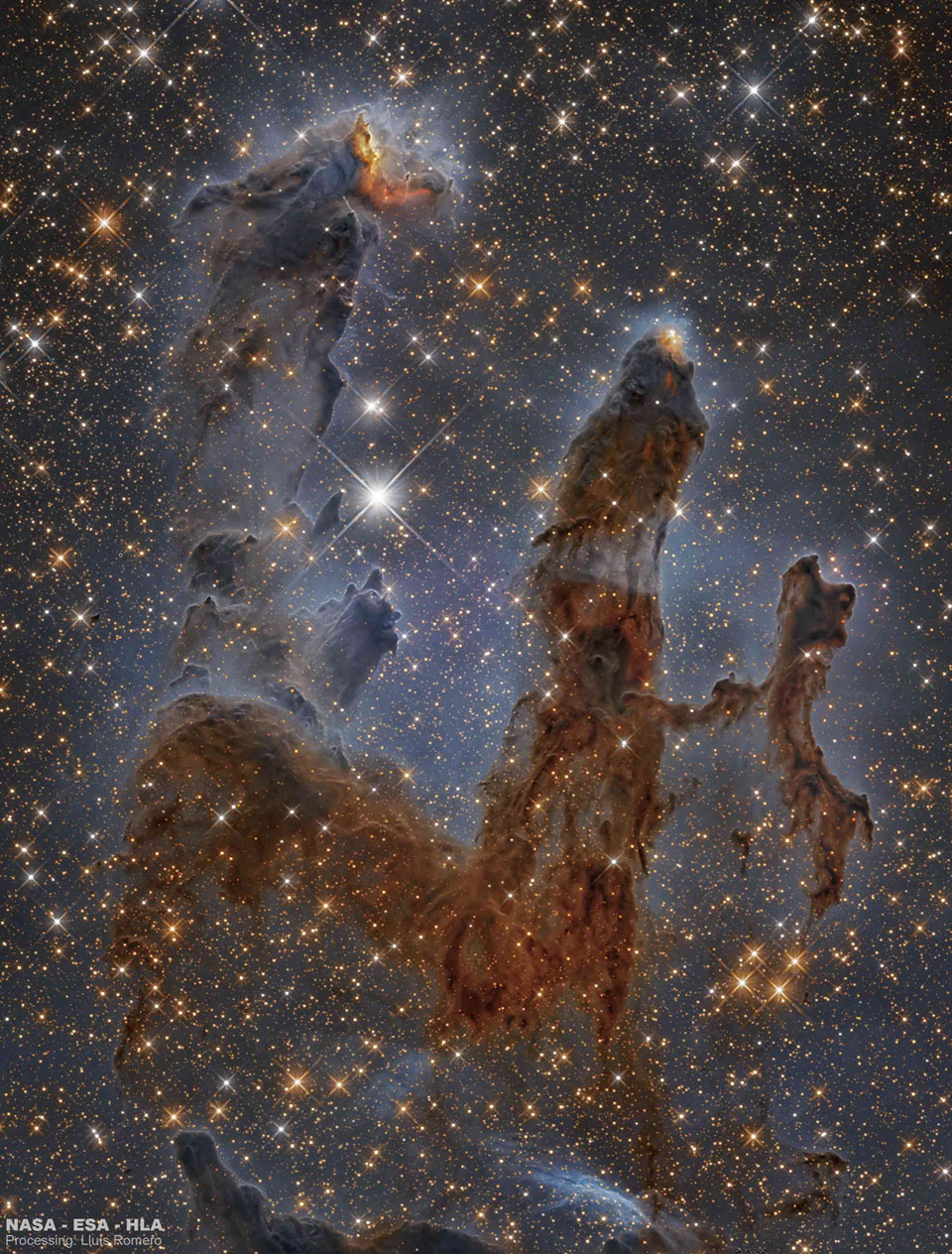
Pillars of the Eagle Nebula in Infrared Pillars of the Eagle Nebula in Infrared


Newborn stars are forming in the Eagle Nebula. Gravitationally contracting in pillars of dense gas and dust, the intense radiation of these newly-formed bright stars is causing surrounding material to boil away. This image, taken with the Hubble Space Telescope in near infrared light, allows the viewer to see through much of the thick dust that makes the pillars opaque in visible light. The giant structures are light years in length and dubbed informally the Pillars of Creation. Associated with the open star cluster M16, the Eagle Nebula lies about 6,500 light years away. The Eagle Nebula is an easy target for small telescopes in a nebula-rich part of the sky toward the split constellation Serpens Cauda (the tail of the snake). via NASA https://ift.tt/2K9n4vy

Jun 19, 2018

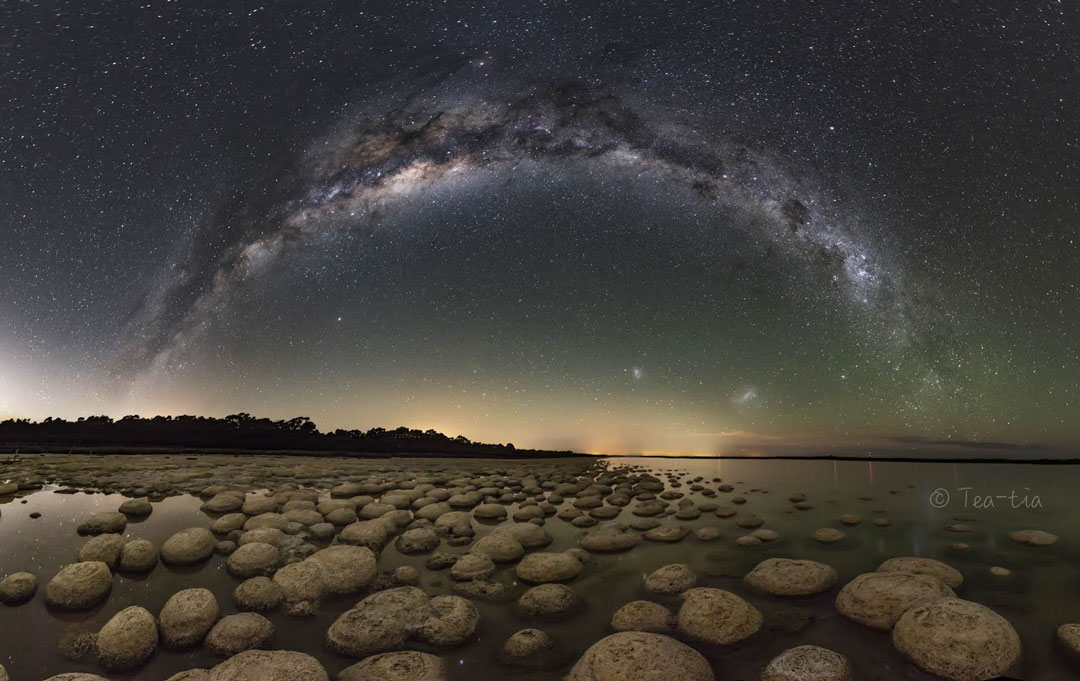
Ancients of Sea and Sky Ancients of Sea and Sky


They may look like round rocks, but they're alive. Moreover, they are modern versions of one of the oldest known forms of life: stromatolites. Fossils indicate that stromatolites appeared on Earth about 3.7 billion years ago -- even before many of the familiar stars in the modern night sky were formed. In the featured image taken in Western Australia, only the ancient central arch of our Milky Way Galaxy formed earlier. Even the Magellanic Clouds, satellite galaxies of our Milky Way and visible in the featured image below the Milky Way's arch, didn't exist in their current form when stromatolites first grew on Earth. Stromatolites are accreting biofilms of billions of microorganisms that can slowly move toward light. Using this light to liberate oxygen into the air, ancient stromatolites helped make Earth hospitable to other life forms including, eventually, humans. via NASA https://ift.tt/2K7CvV3

Jun 18, 2018

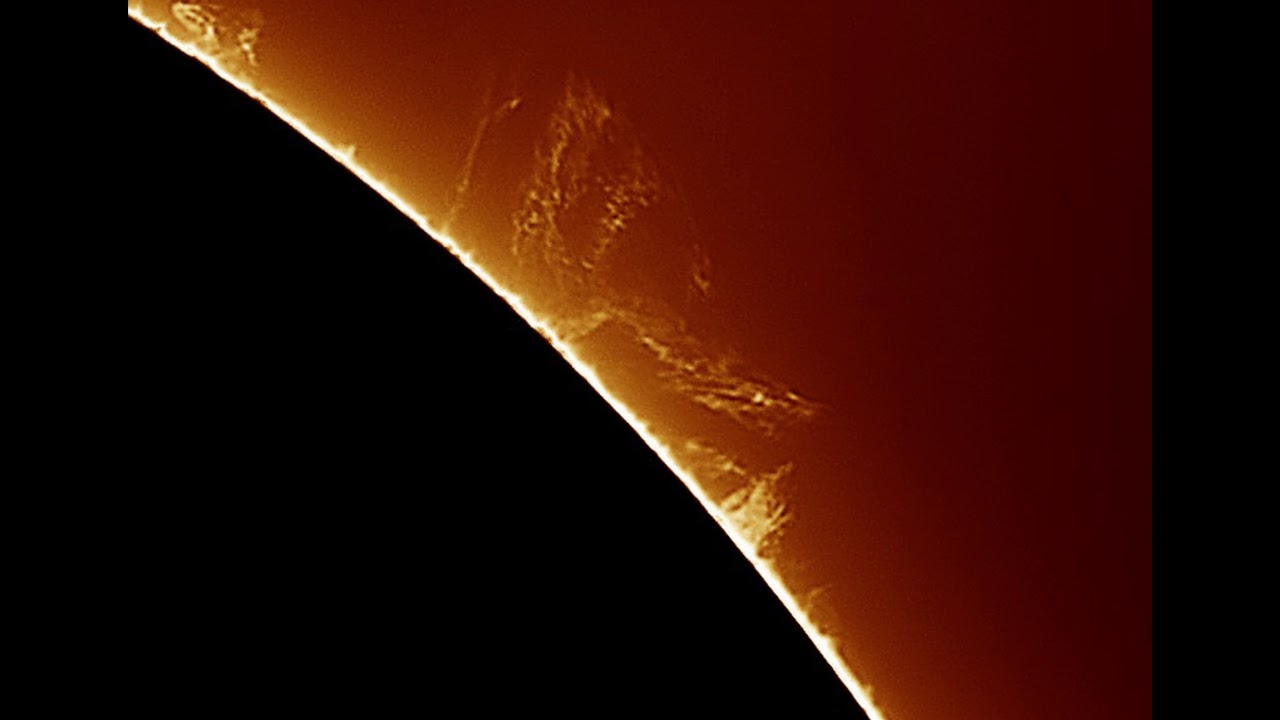
An Active Prominence on the Sun An Active Prominence on the Sun


Sometimes the Sun's surface becomes a whirlwind of activity. Pictured is a time-lapse video of the Sun's surface taken over a two hour period in early May, run both forwards and backwards. The Sun's surface was blocked out so that details over the edge could be imaged in greater detail. Hot plasma is seen swirling over the solar limb in an ongoing battle between changing magnetic fields and constant gravity. The featured prominence rises about one Earth-diameter over the Sun's surface. Energetic events like this are becoming less common as the Sun nears a minimum in its 11-year activity cycle. via NASA https://ift.tt/2JX9Luy

Jun 17, 2018

Mars Engulfed Mars Engulfed


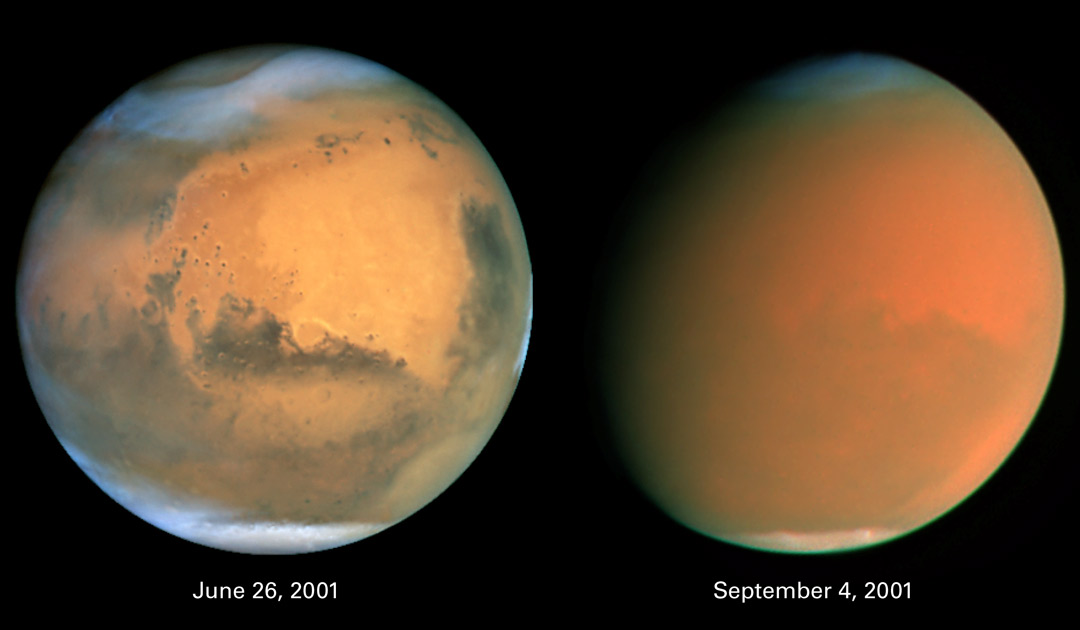
What's happened to Mars? In 2001, Mars underwent a tremendous planet-wide dust storm -- one of the largest ever recorded from Earth. To show the extent, these two Hubble Space Telescope storm watch images from late June and early September (2001) offer dramatically contrasting views of the martian surface. At left, the onset of smaller "seed" storms can be seen near the Hellas basin (lower right edge of Mars) and the northern polar cap. A similar surface view at right, taken over two months later, shows the fully developed extent of the obscuring global storm. Although this storm eventually waned, in recent days a new large dust storm has been taking hold of the red planet. via NASA https://ift.tt/2MzmyFo

Jun 16, 2018

Dusty With a Chance of Dust Dusty With a Chance of Dust


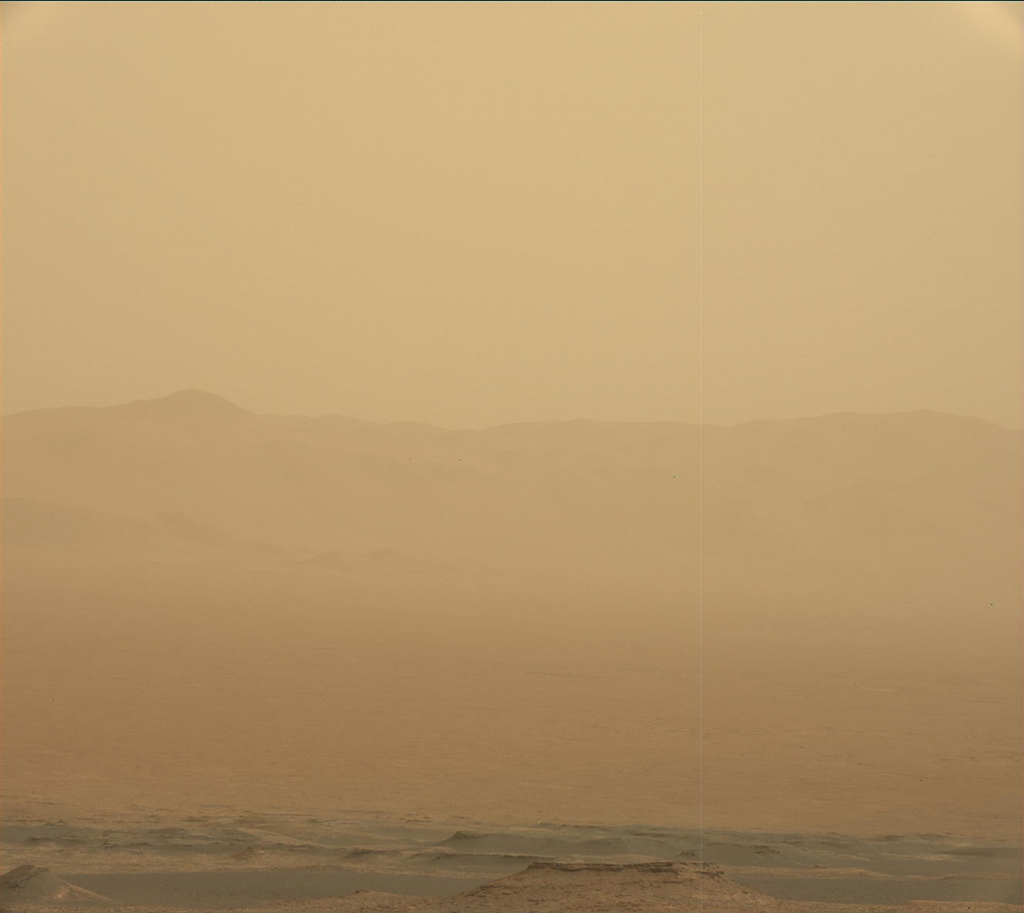
It's storm season on Mars. Dusty with a chance of dust is the weather report for Gale crater as a recent planet-scale dust storm rages. On June 10 looking toward the east-northeast crater rim, the Curiosity rover's Mastcam captured this image of its local conditions so far. Meanwhile over 2,000 kilometers away, the Opportunity rover ceased science operations as the storm grew thicker at its location on the west rim of Endeavour crater, and has stopped communicating, waiting out the storm for now. Curiosity is powered by a radioisotope thermoelectric generator, but the smaller Opportunity rover uses solar panels to charge its batteries. For Opportunity, the increasingly severe lack of sunlight has caused its batteries to run low. via NASA https://ift.tt/2ybKDii

Jun 15, 2018

Little Planet Soyuz Little Planet Soyuz


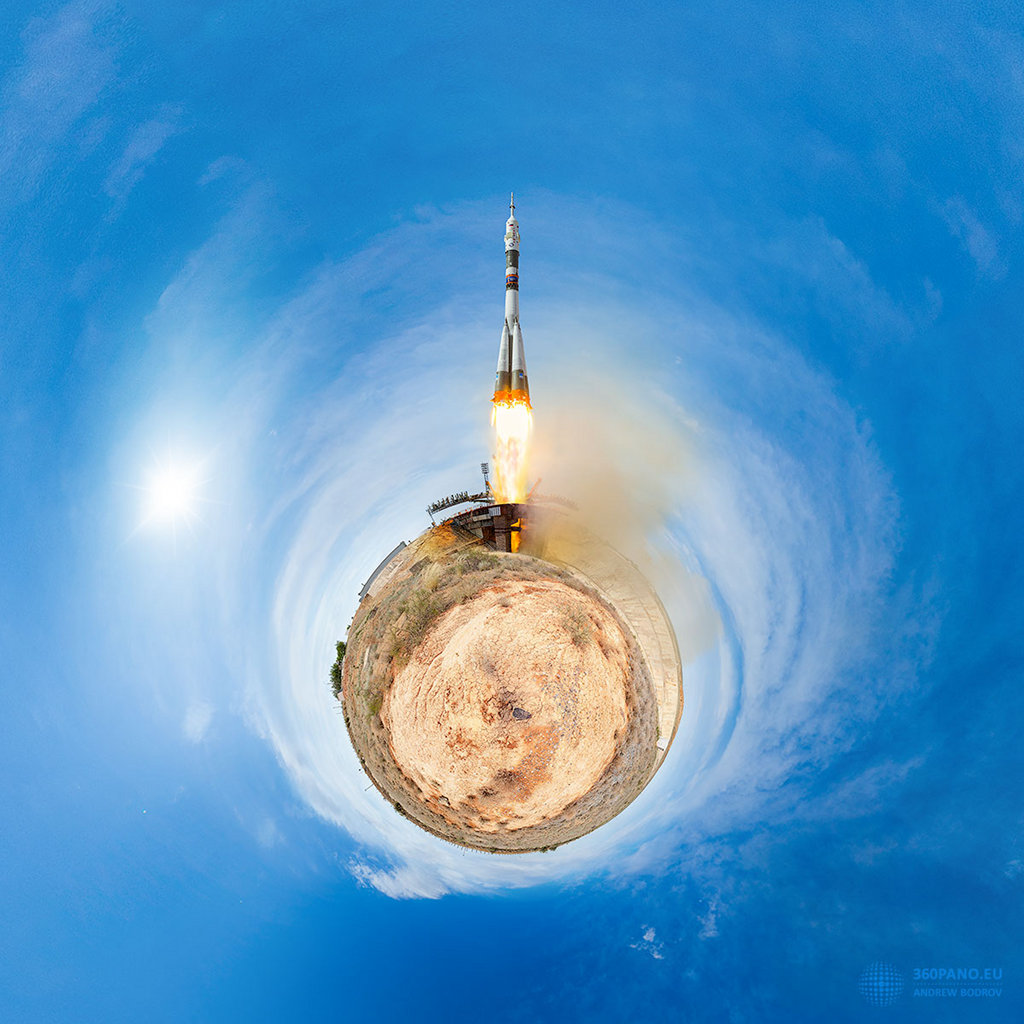
Engines blazing, a large rocket bids farewell to this little planet. Of course, the little planet is really planet Earth and the large rocket is a Soyuz-FG rocket. Launched from the Baikonur Cosmodrome in Kazakhstan on June 6 it carried a Soyuz MS-09 spacecraft into orbit. On board were International Space Station Expedition 56-57 crew members Sergey Prokopyev of Roscosmos, Serena Aunon-Chancellor of NASA and Alexander Gerst of ESA. Their spacecraft successfully docked with humanity's orbiting outpost just two days later. The little planet projection is the digitally warped and stitched mosaic of images covering 360 by 180 degrees, captured during the 2018 Star Trek car expedition. via NASA https://ift.tt/2JQphs3

Jun 14, 2018

Six Planets from Yosemite Six Planets from Yosemite


The five naked-eye planets, Mercury, Venus, Mars, Jupiter and Saturn, have been seen since ancient times to wander the night skies of planet Earth. So it could be remarkable that on this night, standing at the side of a clear, calm lake, six planets can be seen with the unaided eye. Have a look. Very bright and easy to spot for skygazers, yellowish Mars is left of a pale Milky Way. Saturn is immersed in the glow of the Milky Way's diffuse starlight. Jupiter is very near the horizon on the right, shining beyond the trees against the glow of distant city lights. Last weekend, while admiring this night time view across beautiful, high-altitude Lake Tanaya in Yosemite National Park, a thoughtful and reflective observer could probably see three planets more. via NASA https://ift.tt/2JJ38fi