Pages

Jun 13, 2018

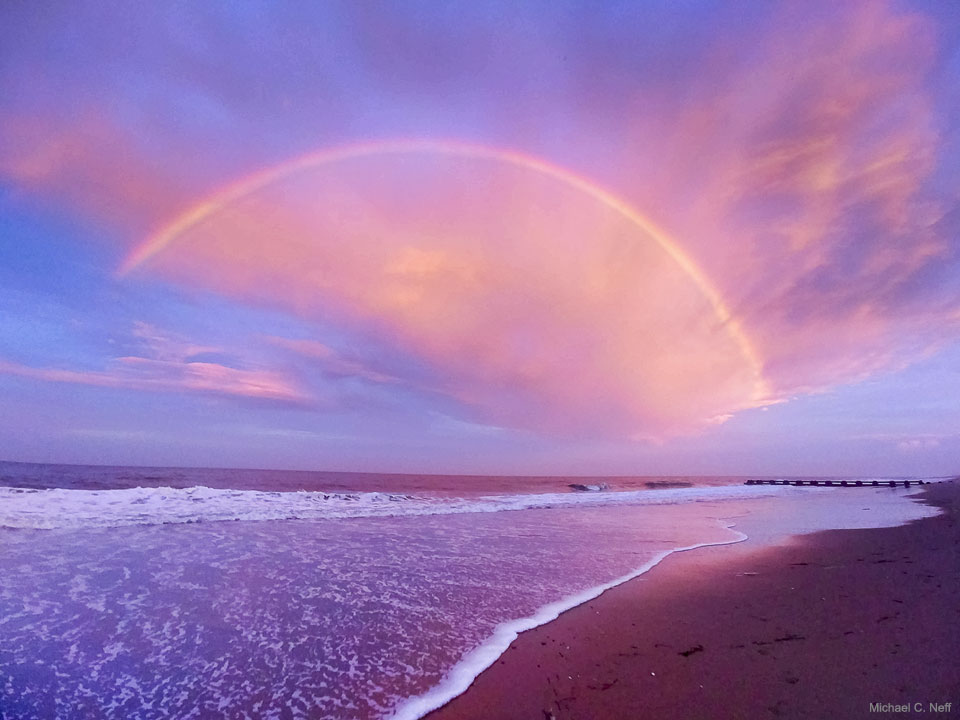
Red Cloudbow over Delaware Red Cloudbow over Delaware


What kind of rainbow is this? In this case, no rain was involved -- what is pictured is actually a red cloudbow. The unusual sky arc was spotted last month during sunset in Rehoboth Beach, Delaware, USA. When the photographer realized that what he was seeing was extraordinary, he captured it with the only camera available -- a cell phone. Clouds are made of water droplets, and in a cloudbow a cloud-droplet group reflects back light from the bright Sun (or Moon) on the opposite side of the sky. Similar phenomena include fogbows and airplane glories. Here, the red color was caused by atmospheric air preferentially scattering away blue light -- which simultaneously makes most of the sky appear blue. A careful inspection reveals a supernumery bow just inside the outermost arc, a bow caused by quantum diffraction. via NASA https://ift.tt/2JwjLPn

Jun 12, 2018

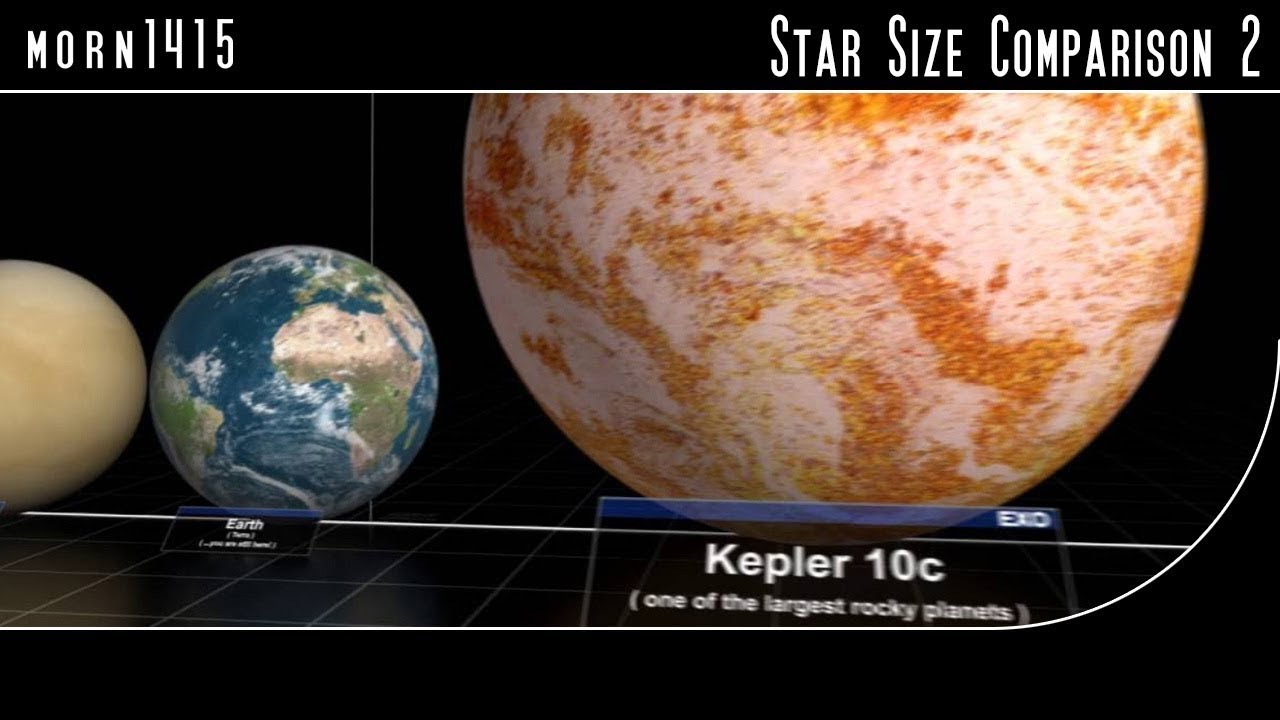
Star Size Comparison 2 Star Size Comparison 2


How big is our Sun compared to other stars? In dramatic and popular videos featured on YouTube, the relative sizes of planets, stars, and even the universe are shown from smallest to largest. The featured video begins with Earth's Moon and progresses through increasingly larger moons and planets in our Solar System. Soon, the Sun is shown and compared to many of the brighter stars in our neighborhood of the Milky Way Galaxy. Finally, star sizes are shown in comparison with the Milky Way Galaxy, galaxies across the observable universe, and speculatively, regions of a potentially greater multiverse. Note that the true sizes of most stars outside of the Sun and Betelgeuse are not known by direct observation, but rather inferred by measurements of their perceived brightness, temperature, and distance. Although an inspiring learning tool that is mostly accurate, APOD readers are encouraged to complete the learning experience -- and possibly help make future versions more accurate -- by pointing out slight inaccuracies in the video. via NASA https://ift.tt/2y5NR70

Jun 10, 2018

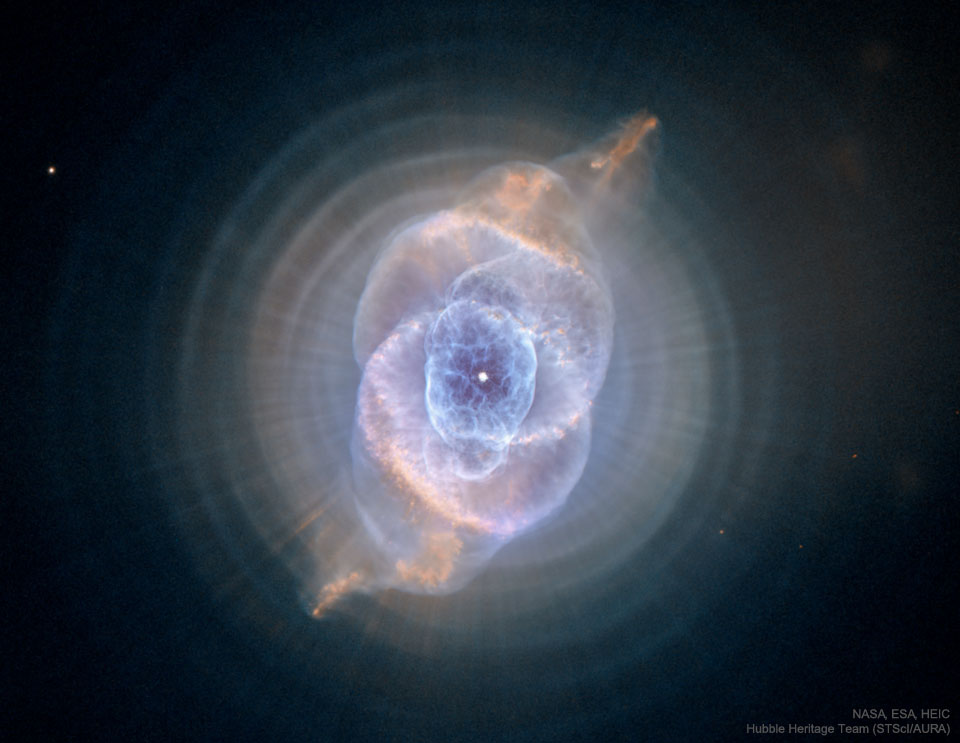
The Cats Eye Nebula from Hubble The Cats Eye Nebula from Hubble


To some, it may look like a cat's eye. The alluring Cat's Eye nebula, however, lies three thousand light-years from Earth across interstellar space. A classic planetary nebula, the Cat's Eye (NGC 6543) represents a final, brief yet glorious phase in the life of a sun-like star. This nebula's dying central star may have produced the simple, outer pattern of dusty concentric shells by shrugging off outer layers in a series of regular convulsions. But the formation of the beautiful, more complex inner structures is not well understood. Seen so clearly in this digitally sharpened Hubble Space Telescope image, the truly cosmic eye is over half a light-year across. Of course, gazing into this Cat's Eye, astronomers may well be seeing the fate of our sun, destined to enter its own planetary nebula phase of evolution ... in about 5 billion years. via NASA https://ift.tt/2JFjQzw

Jun 9, 2018

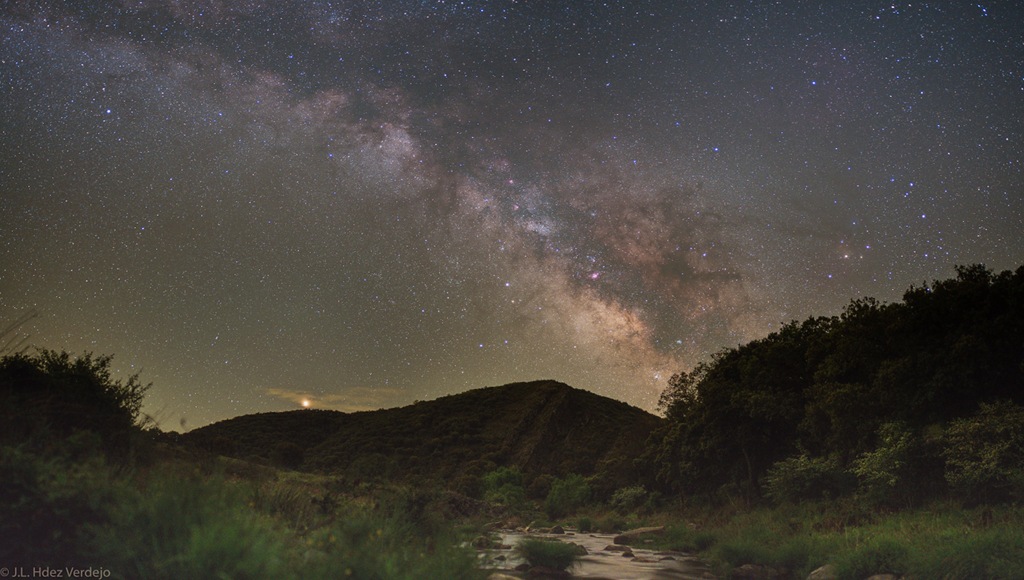
Countryside Mars and Milky Way Countryside Mars and Milky Way


Mars shines brightly now in planet Earth's sky. Seen with a yellowish hue it rises over the hills and far away in this serene night skyscape, a countryside panorama recorded last month from Parque Nacional de Cabaneros in Spain. The Milky Way too extends above the distant hills into a starry sky. Its faint pinkish nebulae, cosmic rifts and rivers of dust are mingled with the pale, diffuse glow of starlight. Mimicking Mars' yellow tint, bright star Antares shines to the right of the central Milky Way starclouds. Of course, CubeSats from Earth are on their way to the Red Planet. via NASA https://ift.tt/2JJK589

Jun 8, 2018

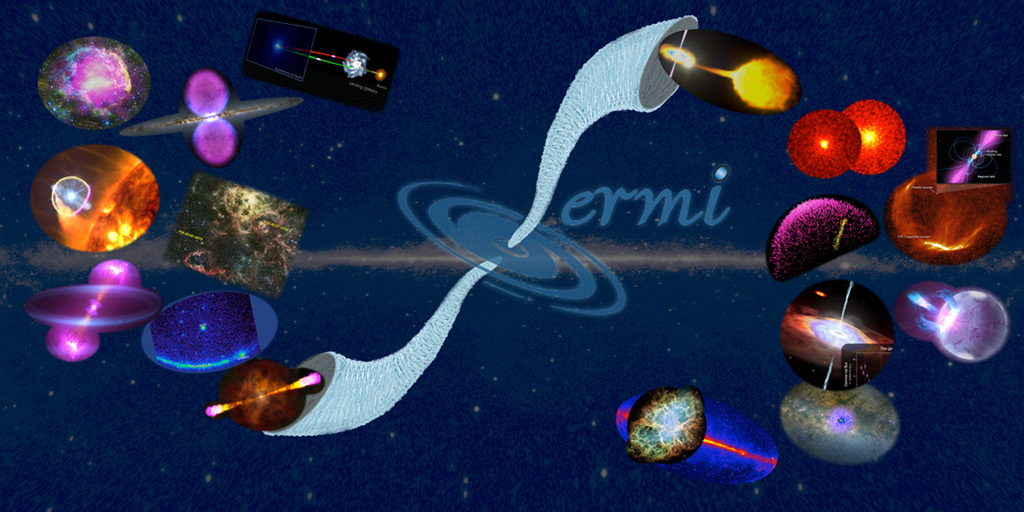
Fermi Science Playoffs Fermi Science Playoffs


NASA's Fermi Gamma-ray Space Telescope was launched into orbit on June 11th, 2008. Its instruments detect gamma-rays -- light that is thousands to hundreds of billions of times more energetic than what we see with our eyes. In the last decade Fermi's high-energy voyage of exploration has resulted in a cornucopia of astonishing discoveries, from extreme environments above our fair planet and across the distant Universe. Now you can vote for Fermi's best result so far. To mark Fermi's 10th anniversary, images representing 16 scientific results have been selected and seeded to create brackets. Follow this link to cast your first round vote for your favorite out of each pair and then return every two weeks to vote in the next round. The winner of the Fermi Final will be announced on August 6, the 10th anniversary of the first science data from Fermi. via NASA https://ift.tt/2kTc07c

Jun 7, 2018

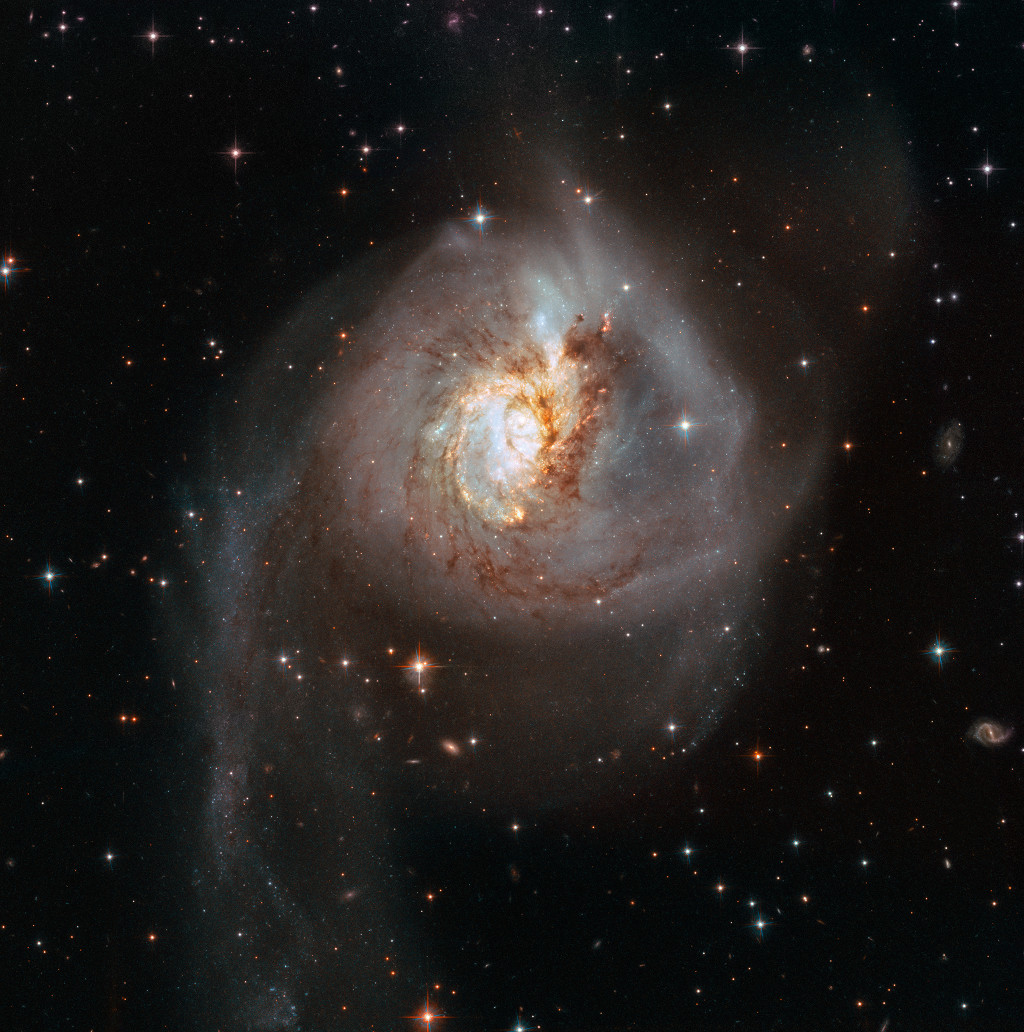
The Clash of NGC 3256 The Clash of NGC 3256


Marked by an unusually bright central region, swirling dust lanes, and far flung tidal tails, peculiar NGC 3256 is the aftermath of a truly cosmic collision. The 500 million year old clash of two separate galaxies spans some 100 thousand light-years in this sharp Hubble view. Of course when two galaxies collide, individual stars rarely do. Giant galactic clouds of molecular gas and dust do interact though, and produce spectacular bursts of star formation. In this galaxy clash, the two original spiral galaxies had similar masses. Their disks are no longer distinct and the two galactic nuclei are hidden by obscuring dust. On the timescale of a few hundred million years the nuclei will likely also merge as NGC 3256 becomes a single large elliptical galaxy. NGC 3256 itself is nearly 100 million light-years distant toward the southern sailing constellation Vela. The frame includes many even more distant background galaxies and spiky foreground stars. via NASA https://ift.tt/2sNJlUK

Jun 5, 2018

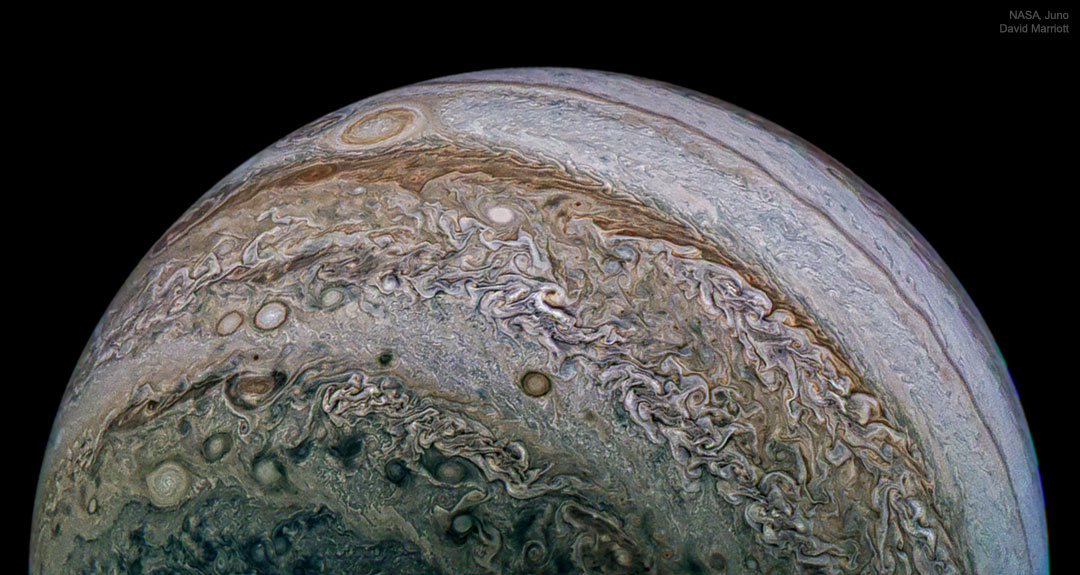
Complex Jupiter Complex Jupiter


How complex is Jupiter? NASA's Juno mission to Jupiter is finding the Jovian giant to be more complicated than expected. Jupiter's magnetic field has been discovered to be much different from our Earth's simple dipole field, showing several poles embedded in a complicated network more convoluted in the north than the south. Further, Juno's radio measurements show that Jupiter's atmosphere shows structure well below the upper cloud deck -- even hundreds of kilometers deep. Jupiter's newfound complexity is evident also in southern clouds, as shown in the featured image. There, planet-circling zones and belts that dominate near the equator decay into a complex miasma of continent-sized storm swirls. Juno continues in its looping elliptical orbit, swooping near the huge planet every 53 days and exploring a slightly different sector each time around. via NASA https://ift.tt/2sDDDot

Jun 4, 2018

Moon Setting Behind Teide Volcano Moon Setting Behind Teide Volcano


These people are not in danger. What is coming down from the left is just the Moon, far in the distance. Luna appears so large here because she is being photographed through a telescopic lens. What is moving is mostly the Earth, whose spin causes the Moon to slowly disappear behind Mount Teide, a volcano in the Canary Islands off the northwest coast of Africa. The people pictured are 16 kilometers away and many are facing the camera because they are watching the Sun rise behind the photographer. It is not a coincidence that a full moon rises just when the Sun sets because the Sun is always on the opposite side of the sky from a full moon. The featured video was made last week during the full Milk Moon. The video is not time-lapse -- this was really how fast the Moon was setting. via NASA https://ift.tt/2xDDY0a

Jun 2, 2018

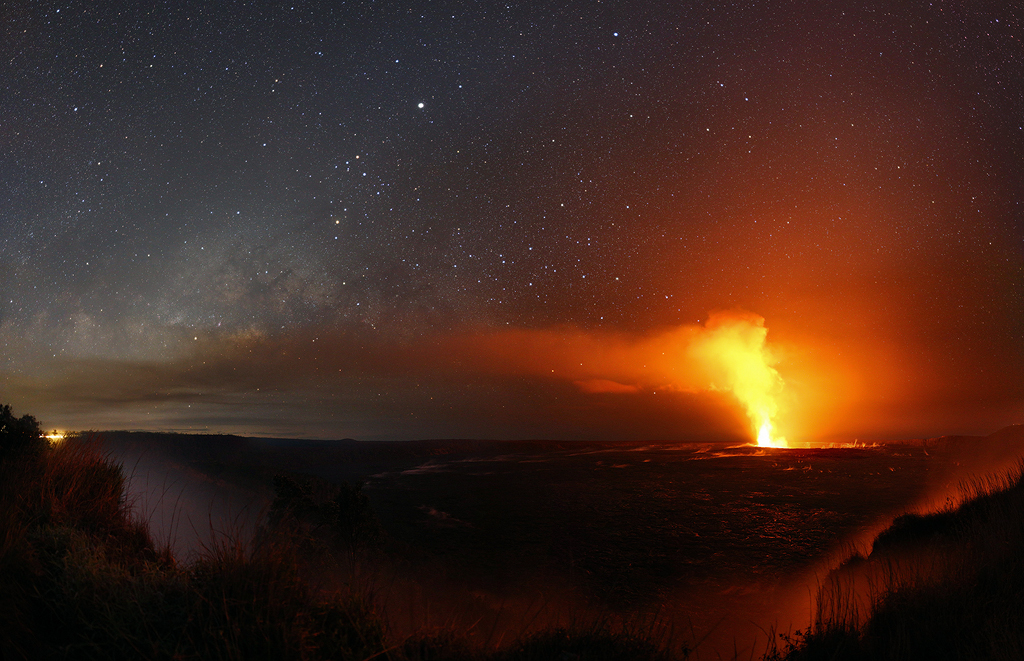
Jupiter Season, Hawaiian Sky Jupiter Season, Hawaiian Sky


Volcanic activity on the Big Island of Hawaii has increased since this Hawaiian night skyscape was recorded earlier this year. Recent vents and lava flows are about 30 kilometers to the east, the direction of the blowing smoke and steam in the panoramic view of the Kilauea caldera with Halemaumau crater taken from Volcanoes National Park. Still, this year Jupiter is bright in late spring to early summer skies. High in the south it is easily the brightest celestial beacon in the scene where the central bulge of the Milky Way seems to rise above vapors and clouds. Yellowish Antares is the bright star near the end of the dark rivers of dust seen toward the center of our galaxy. Near the horizon, stars Alpha and Beta Centauri and the compact Southern Cross shine through the almost too bright volcanic smoke. via NASA https://ift.tt/2JaxfMv

Jun 1, 2018

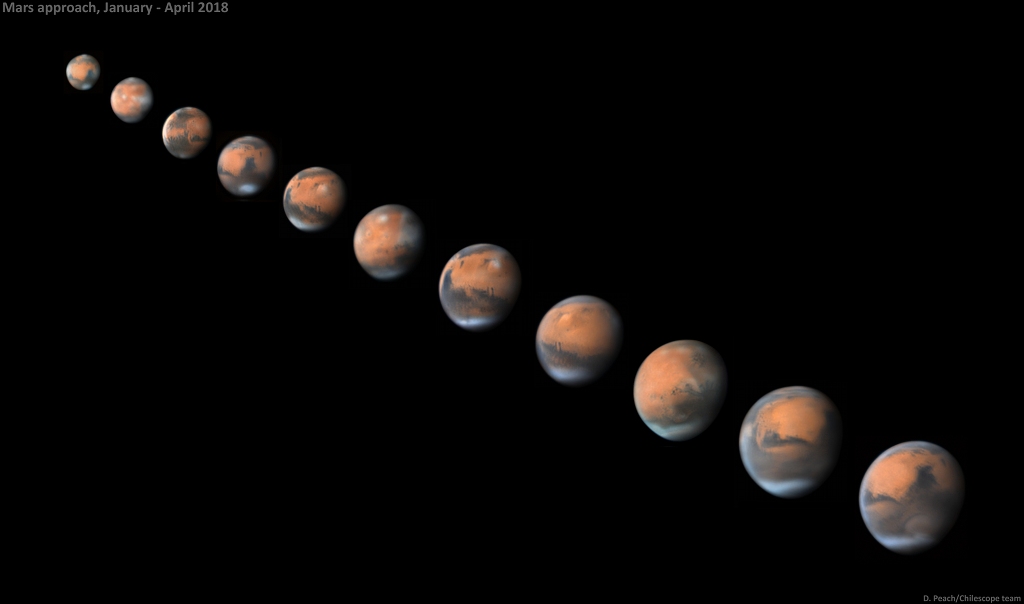
Mars Approach Mars Approach


Since the distance from Earth to Mars changes drastically as the planets orbit the Sun, Mars' appearance changes dramaticaly. Mars is bright now, and it's getting closer and brighter still as it orbits toward its 2018 opposition and closest approach to Earth in late July. This sequence of sharp telescopic images records the Red Planet's steady increase in apparent size for the months of January (top left) through April. During that time its distance from Earth went from 284 million kilometers in January to 129 million kilometers in April, and so its apparent size more than doubled. At closest approach Mars will be about 58 million kilometers distant, more than doubling in apparent size compared to the disk at the lower right. By then it will rival the brightness of Jupiter in planet Earth's night sky, but don't believe the claims of the inevitable internet hoax. via NASA https://ift.tt/2xyLzgq