Pages

Jan 5, 2018

Carina over Lake Ballard Carina over Lake Ballard


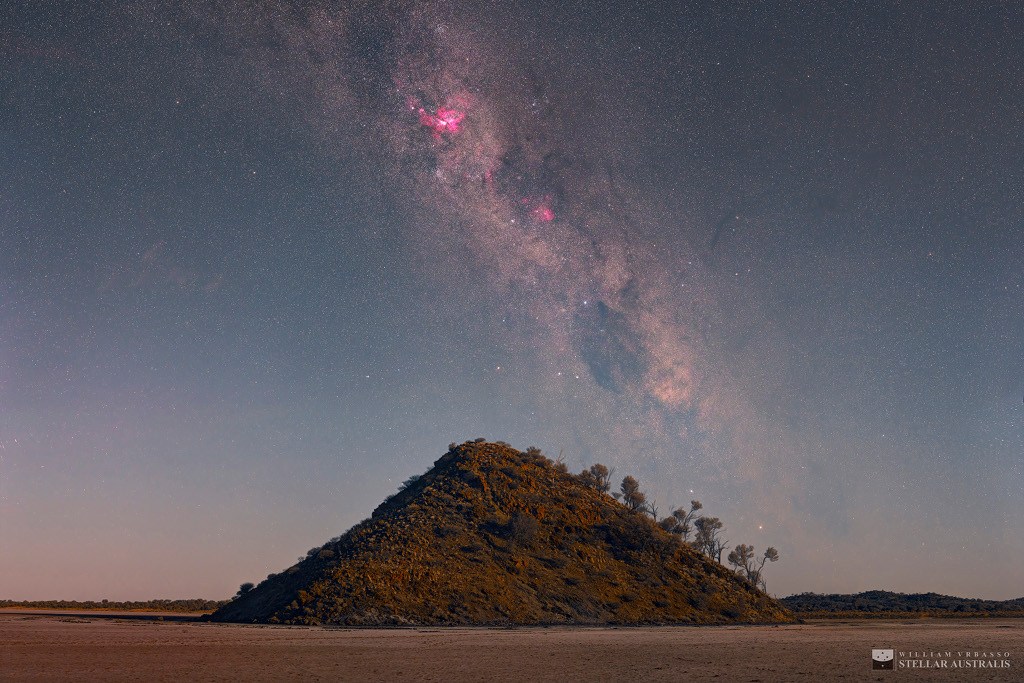
A jewel of the southern sky, the Great Carina Nebula, also known as NGC 3372, is one of our galaxy's largest star forming regions. Easily visible to the unaided eye it stands high above the signature hill of Lake Ballard, ephemeral salt lake of Western Australia, in this serene night skyscape from December 25, 2017. The Milky Way itself stretches beyond the southern horizon. Along the Milky Way, bright stars Alpha and Beta Centauri lie just above the hill's right flank, with the Southern Cross and dark Coalsack Nebula above the hill top. Based on a 22 panel mosaic, the scene was cropped to reveal more closely the beauty of this region of the southern Milky Way. On that short summer night, a star tracking camera mount was used to record the mosaic images of the sky, but turned off to image the foreground in moonlight. via NASA http://ift.tt/2AllL3u

Jan 4, 2018

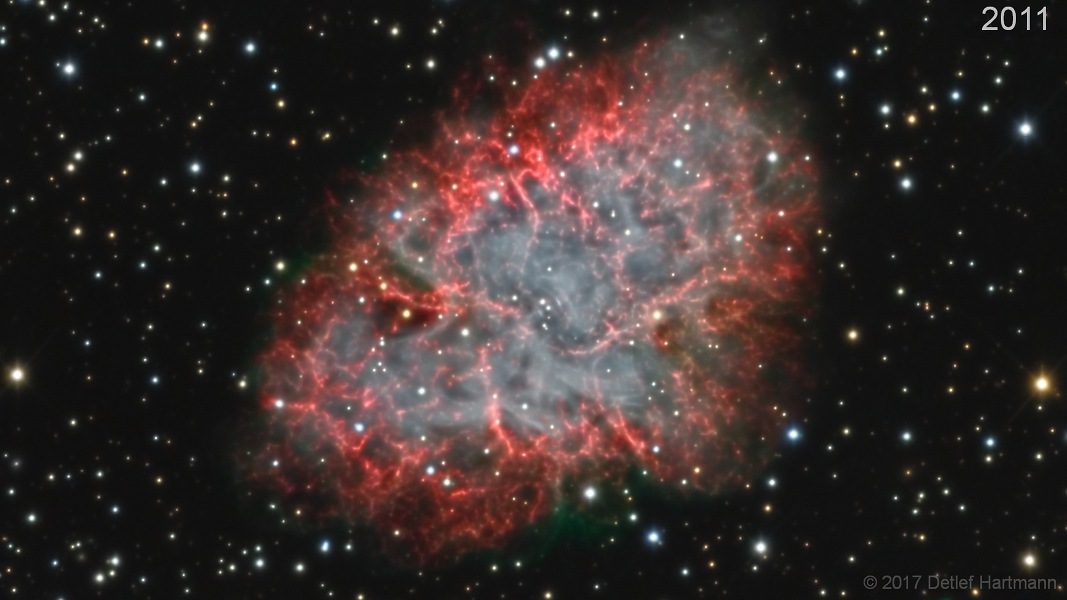
M1: The Incredible Expanding Crab M1: The Incredible Expanding Crab


The Crab Nebula is cataloged as M1, the first on Charles Messier's famous list of things which are not comets. In fact, the Crab is now known to be a supernova remnant, an expanding cloud of debris from the explosion of a massive star. The violent birth of the Crab was witnessed by astronomers in the year 1054. Roughly 10 light-years across today, the nebula is still expanding at a rate of over 1,000 kilometers per second. Over the past decade, its expansion has been documented in this stunning time-lapse movie. In each year from 2008 to 2017, an image was produced with the same telescope and camera from a remote observatory in Austria. Combined in the time-lapse movie, the 10 images represent 32 hours of total integration time. The sharp, processed frames even reveal the dynamic energetic emission within the incredible expanding Crab. The Crab Nebula lies about 6,500 light-years away in the constellation Taurus. via NASA http://ift.tt/2lPMoZZ

Jan 2, 2018

Unexpected X Rays from Perseus Galaxy Cluster Unexpected X Rays from Perseus Galaxy Cluster


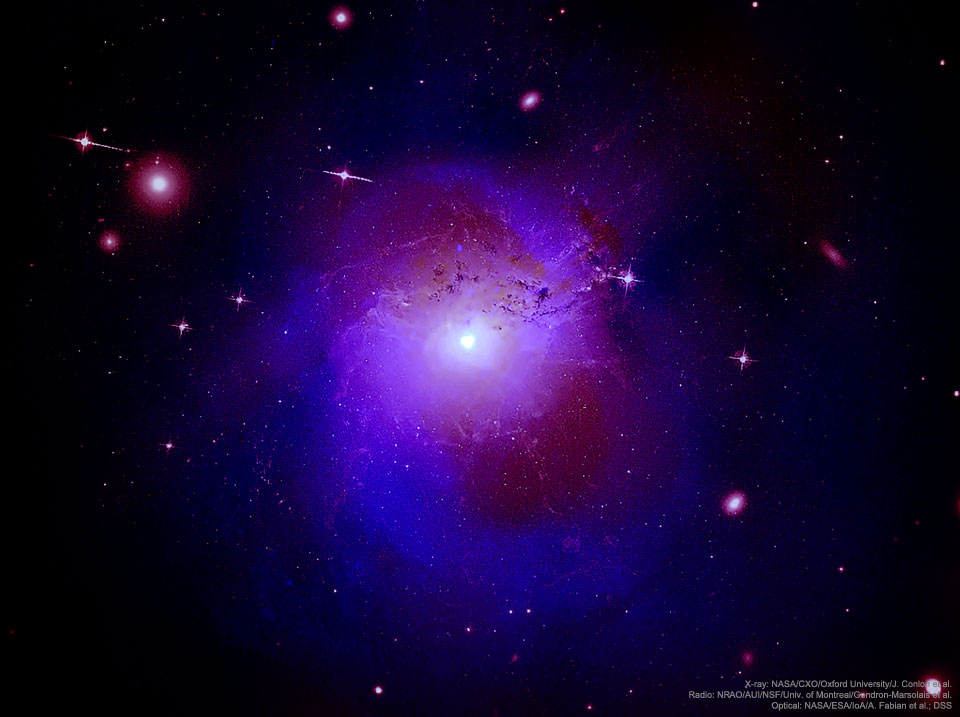
Why does the Perseus galaxy cluster shine so strangely in one specific color of X-rays? No one is sure, but a much-debated hypothesis holds that these X-rays are a clue to the long-sought identity of dark matter. At the center of this mystery is a 3.5 Kilo-electronvolt (KeV) X-ray color that appears to glow excessively only when regions well outside the cluster center are observed, whereas the area directly surrounding a likely central supermassive black hole is actually deficient in 3.5 KeV X-rays. One proposed resolution -- quite controversial -- is that something never seen before might be present: florescent dark matter (FDM). This form of particle dark matter might be able to absorb 3.5 KeV X-radiation. If operating, FDM, after absorption, might later emit these X-rays from all over the cluster, creating an emission line. However, when seen superposed in front of the central region surrounding the black hole, FDM's absorption would be more prominent, creating an absorption line. Pictured, a composite image of the Perseus galaxy cluster shows visible and radio light in red, and X-ray light from the Earth-orbiting Chandra Observatory in blue. via NASA http://ift.tt/2q7I6BP

Dec 31, 2017

To Fly Free in Space To Fly Free in Space


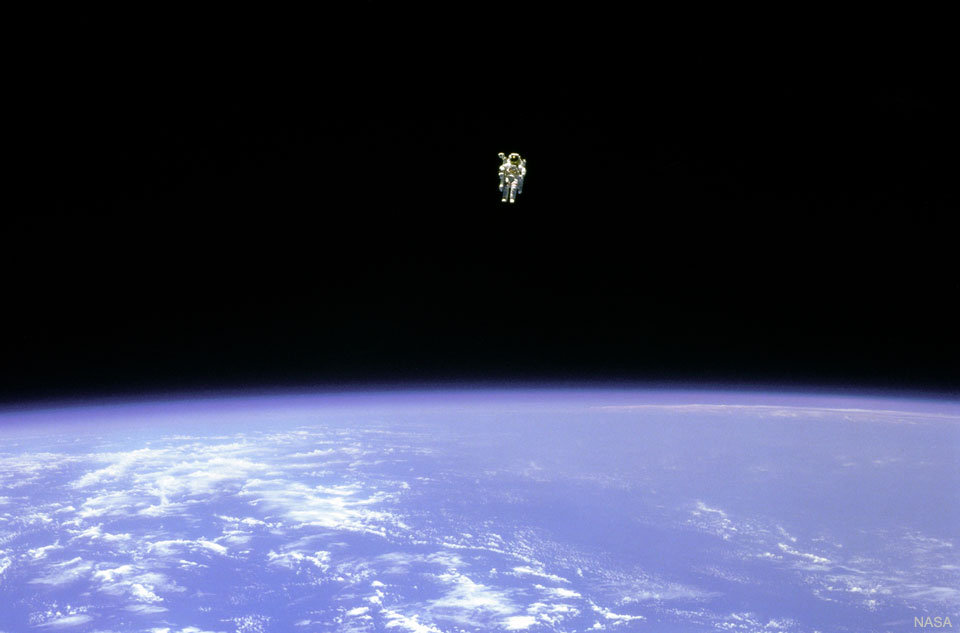
What would it be like to fly free in space? At about 100 meters from the cargo bay of the space shuttle Challenger, Bruce McCandless II was living the dream -- floating farther out than anyone had ever been before. Guided by a Manned Maneuvering Unit (MMU), astronaut McCandless, pictured, was floating free in space. McCandless and fellow NASA astronaut Robert Stewart were the first to experience such an "untethered space walk" during Space Shuttle mission 41-B in 1984. The MMU worked by shooting jets of nitrogen and was used to help deploy and retrieve satellites. With a mass over 140 kilograms, an MMU is heavy on Earth, but, like everything, is weightless when drifting in orbit. The MMU was replaced with the SAFER backpack propulsion unit. via NASA http://ift.tt/2BTtHdT

Dec 30, 2017

Apollo 17 VIP Site Anaglyph Apollo 17 VIP Site Anaglyph


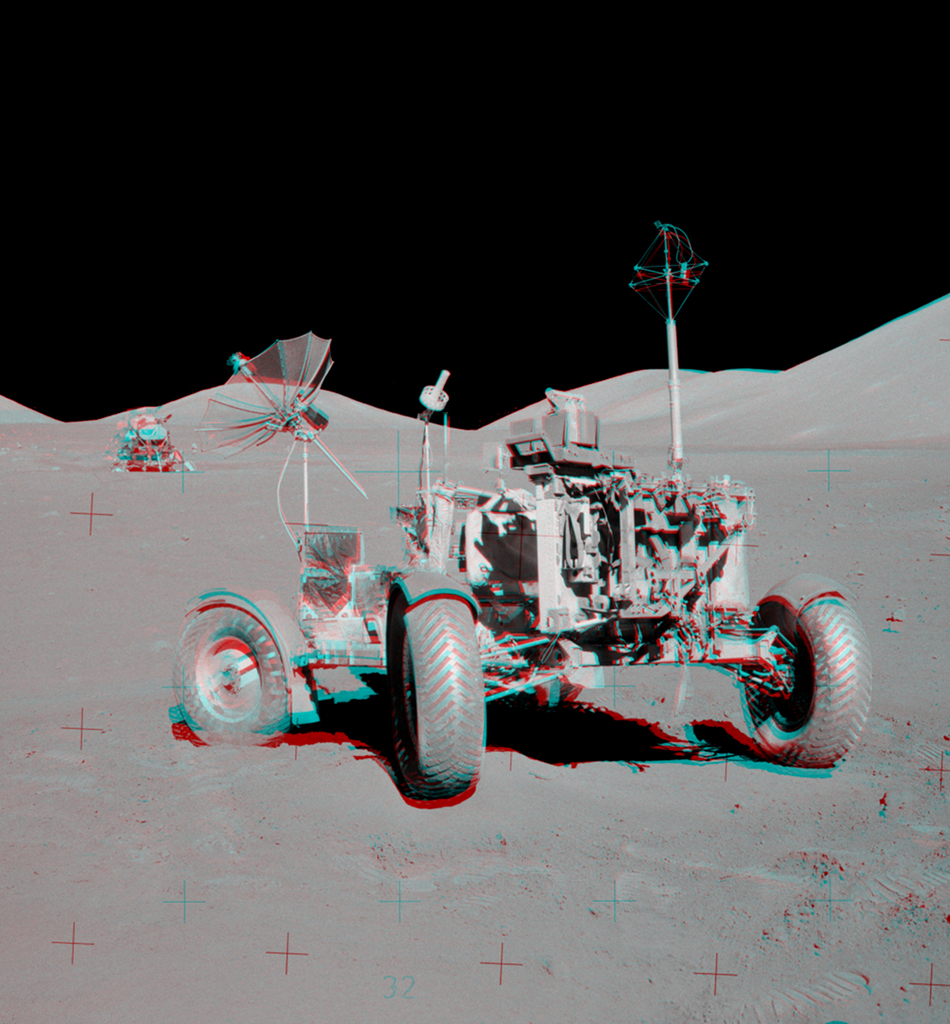
Get out your red/blue glasses and check out this stereo scene from Taurus-Littrow valley on the Moon! The color anaglyph features a detailed 3D view of Apollo 17's Lunar Rover in the foreground -- behind it lies the Lunar Module and distant lunar hills. Because the world was going to be able to watch the Lunar Module's ascent stage liftoff via the rover's TV camera, this parking place was also known as the VIP Site. In December of 1972, Apollo 17 astronauts Eugene Cernan and Harrison Schmitt spent about 75 hours on the Moon, while colleague Ronald Evans orbited overhead. The crew returned with 110 kilograms of rock and soil samples, more than from any of the other lunar landing sites. Cernan and Schmitt are still the last to walk (or drive) on the Moon. via NASA http://ift.tt/2pRX9zr

Dec 29, 2017

M78 Wide Field M78 Wide Field


Interstellar dust clouds and glowing nebulae abound in the fertile constellation of Orion. One of the brightest, M78, is centered in this colorful, wide field view, covering an area north of Orion's belt. At a distance of about 1,500 light-years, the bluish reflection nebula is around 5 light-years across. Its tint is due to dust preferentially reflecting the blue light of hot, young stars. Reflection nebula NGC 2071 is just to the left of M78. To the right, and much more compact in appearance, the intriguing McNeil's Nebula is a recently recognized variable nebula associated with a young sun-like star. Deeper red flecks of emission from Herbig-Haro objects, energetic jets from stars in the process of formation, stand out against the dark dust lanes. The exposure also brings out the region's fainter pervasive glow of atomic hydrogen gas. via NASA http://ift.tt/2BMGHC6

Dec 28, 2017

Recycling Cassiopeia A Recycling Cassiopeia A


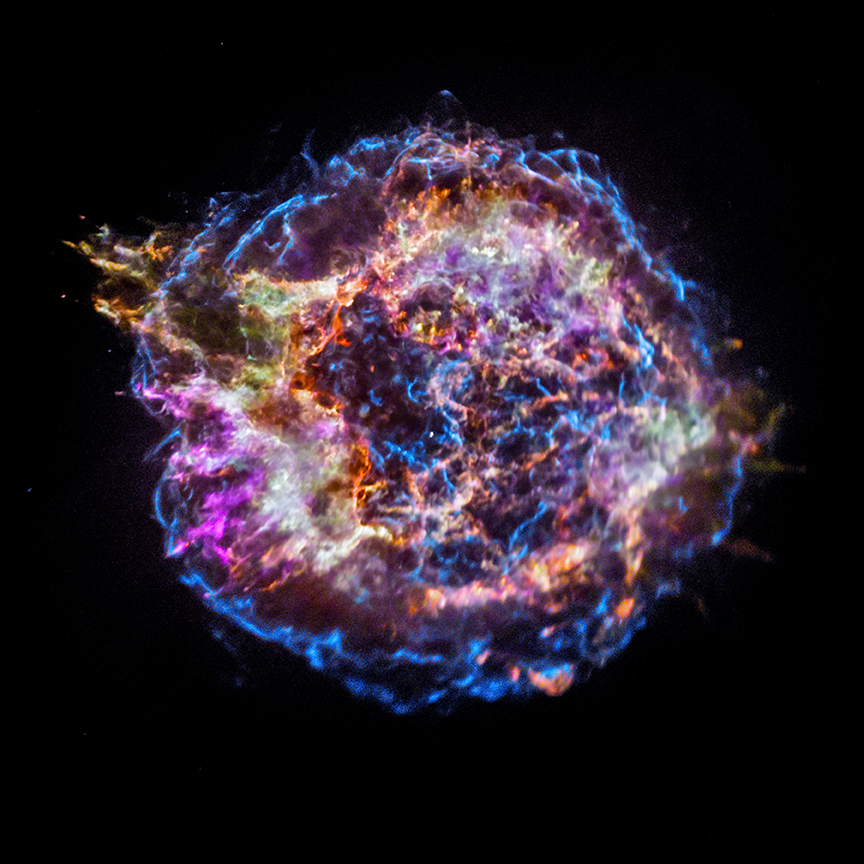
Massive stars in our Milky Way Galaxy live spectacular lives. Collapsing from vast cosmic clouds, their nuclear furnaces ignite and create heavy elements in their cores. After a few million years, the enriched material is blasted back into interstellar space where star formation can begin anew. The expanding debris cloud known as Cassiopeia A is an example of this final phase of the stellar life cycle. Light from the explosion which created this supernova remnant would have been first seen in planet Earth's sky about 350 years ago, although it took that light about 11,000 years to reach us. This false-color Chandra X-ray Observatory image shows the still hot filaments and knots in the Cassiopeia A remnant. High-energy emission from specific elements has been color coded, silicon in red, sulfur in yellow, calcium in green and iron in purple, to help astronomers explore the recycling of our galaxy's star stuff - Still expanding, the blast wave is seen as the blue outer ring. The sharp X-ray image, spans about 30 light-years at the estimated distance of Cassiopeia A. The bright speck near the center is a neutron star, the incredibly dense, collapsed remains of the massive stellar core. via NASA http://ift.tt/2BGOfpP

Dec 27, 2017

The Horsehead Nebula The Horsehead Nebula


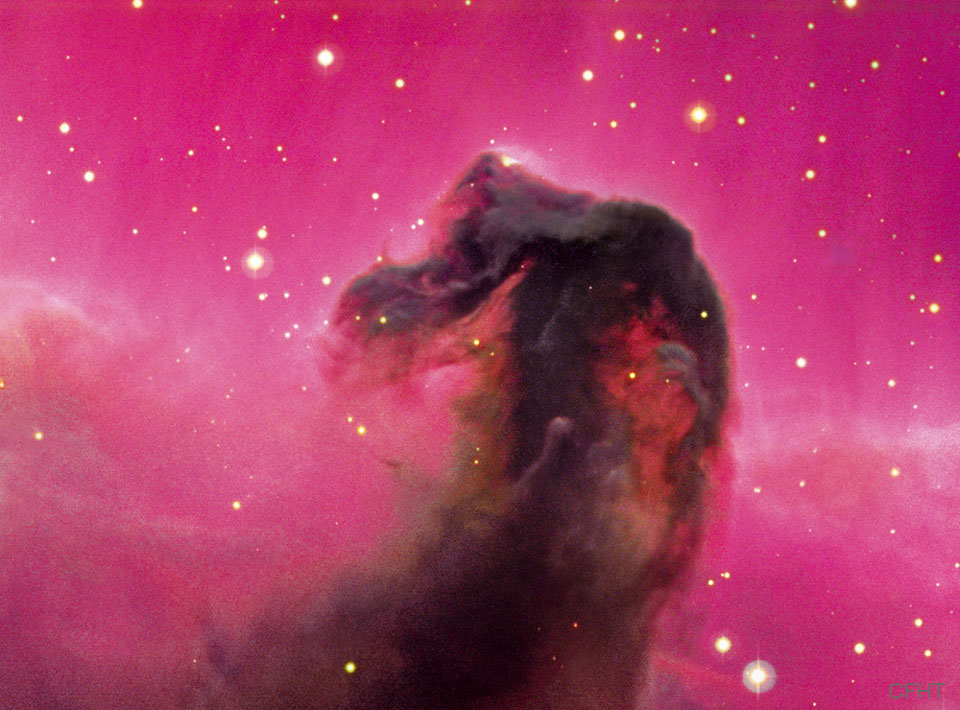
One of the most identifiable nebulae in the sky, the Horsehead Nebula in Orion, is part of a large, dark, molecular cloud. Also known as Barnard 33, the unusual shape was first discovered on a photographic plate in the late 1800s. The red glow originates from hydrogen gas predominantly behind the nebula, ionized by the nearby bright star Sigma Orionis. The darkness of the Horsehead is caused mostly by thick dust, although the lower part of the Horsehead's neck casts a shadow to the left. Streams of gas leaving the nebula are funneled by a strong magnetic field. Bright spots in the Horsehead Nebula's base are young stars just in the process of forming. Light takes about 1,500 years to reach us from the Horsehead Nebula. The featured image was taken with the large 3.6-m Canada-France-Hawaii Telescope in Hawaii, USA. via NASA http://ift.tt/2lcxtbl

Dec 25, 2017

Fireball in the Arctic Fireball in the Arctic


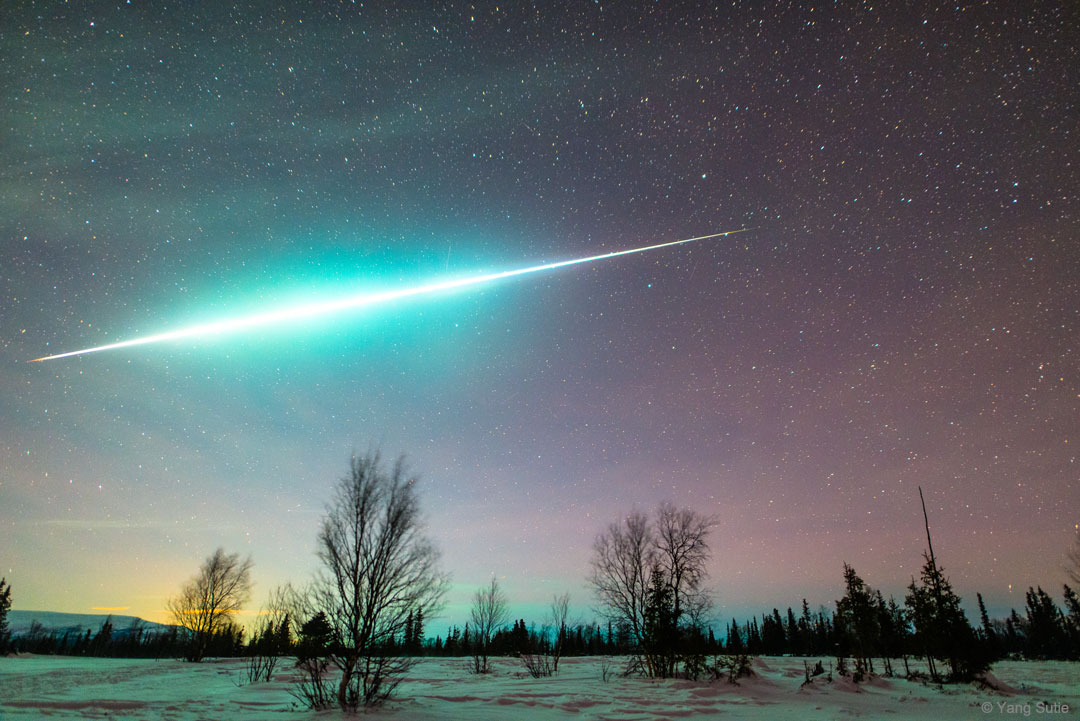
Something very bright suddenly lit up the arctic -- what was it? The original idea was to take a series of aurora images that could be made into a time-lapse video. But when night suddenly turned into day, the astrophotographer quickly realized that he was seeing something even more spectacular. Moving through the sky -- in front of the Big Dipper no less -- was a Geminid meteor so bright it could be called a fireball. The meteor brightened and flashed for several seconds as it went. By a stroke of good fortune, the aurora camera was able to capture the whole track. Taken the night after the Geminids Meteor Shower peaked, the astrophotographer's location was near Lovozero Lake in Murmansk, Russia, just north of the Arctic Circle. via NASA http://ift.tt/2kNYpyw

Dec 24, 2017

SpaceX Rocket Launch Plume over California SpaceX Rocket Launch Plume over California


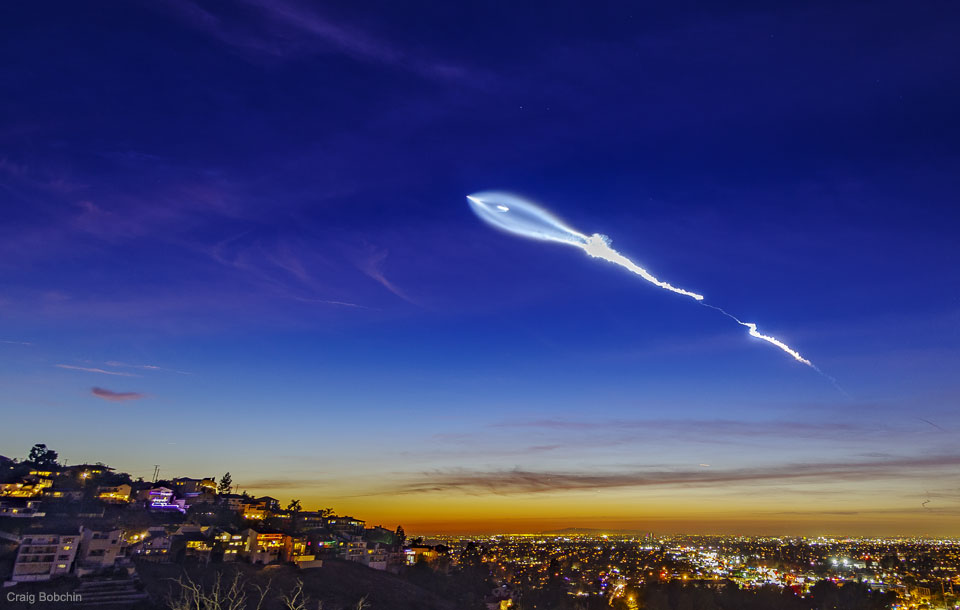
What's happened to the sky? On Friday, the photogenic launch plume from a SpaceX rocket launch created quite a spectacle over parts of southern California and Arizona. Looking at times like a giant space fish, the impressive rocket launch from Vandenberg Air Force Base near Lompoc, California, was so bright because it was backlit by the setting Sun. Lifting off during a minuscule one-second launch window, the Falcon 9 Heavy rocket successfully delivered to low Earth orbit ten Iridium NEXT satellites that are part of a developing global communications network. The plume from the first stage is seen on the right, while the soaring upper stage rocket is seen at the apex of the plume toward the left. Several good videos of the launch were taken. The featured image was captured from Orange County, California, in a 2.5 second duration exposure. via NASA http://ift.tt/2BCAwEL