Pages

Nov 13, 2017

Comet Machholz Approaches the Sun Comet Machholz Approaches the Sun


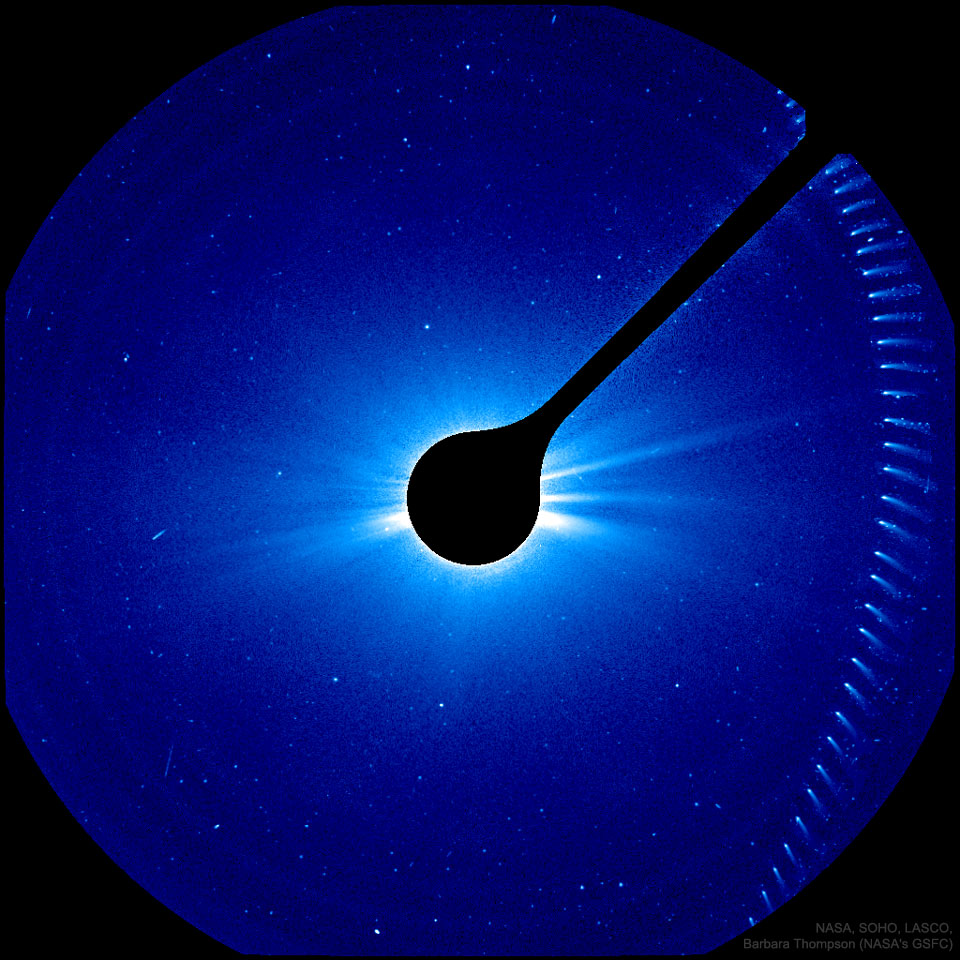
Why is Comet Maccholz so depleted of carbon-containing chemicals? Comet 96P/Machholz's original fame derives from its getting closer to the Sun than any other short period comet -- half as close as Mercury -- and doing so every five years. To better understand this unusual comet, NASA's Sun-monitoring SOHO spacecraft tracked the comet during its latest approach to the Sun in October. The featured image composite shows the tail-enhanced comet swooping past the Sun. The Sun's bright surface is hidden from view behind a dark occulter, although parts of the Sun's extended corona are visible. Neighboring stars dot the background. One hypothesis holds that these close solar approaches somehow cause Comet Machholz to shed its carbon, while another hypothesis posits that the comet formed with this composition far away -- possibly even in another star system. via NASA http://ift.tt/2iOfVAW

Nov 10, 2017

Williamina Fleming s Triangular Wisp Williamina Fleming s Triangular Wisp


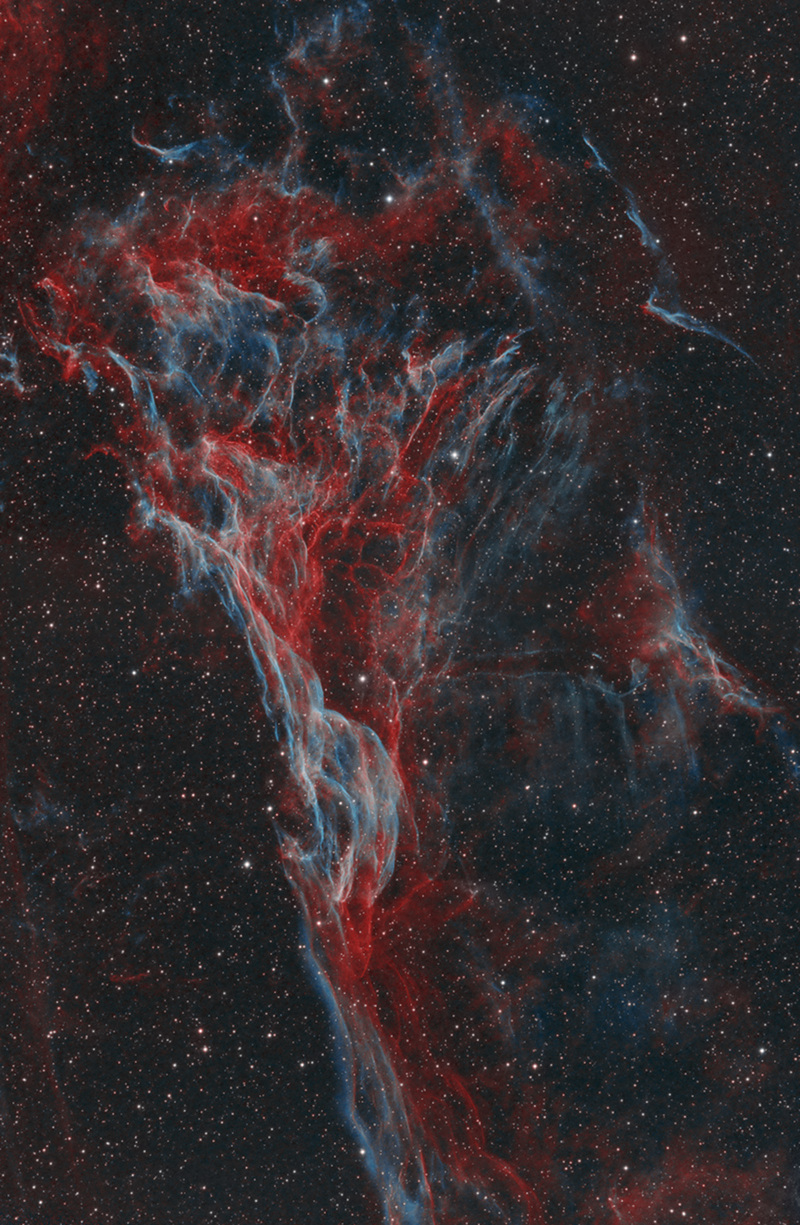
Chaotic in appearance, these tangled filaments of shocked, glowing gas are spread across planet Earth's sky toward the constellation of Cygnus as part of the Veil Nebula. The Veil Nebula itself is a large supernova remnant, an expanding cloud born of the death explosion of a massive star. Light from the original supernova explosion likely reached Earth over 5,000 years ago. Blasted out in the cataclysmic event, the interstellar shock waves plow through space sweeping up and exciting interstellar material. The glowing filaments are really more like long ripples in a sheet seen almost edge on, remarkably well separated into the glow of ionized hydrogen atoms shown in red and oxygen in blue hues. Also known as the Cygnus Loop, the Veil Nebula now spans nearly 3 degrees or about 6 times the diameter of the full Moon. While that translates to over 70 light-years at its estimated distance of 1,500 light-years, this field of view spans less than one third that distance. Often identified as Pickering's Triangle for a director of Harvard College Observatory, the the complex of filaments is cataloged as NGC 6979. It is also known for its discoverer, astronomer Williamina Fleming, as Fleming's Triangular Wisp. via NASA http://ift.tt/2zIS7cI

Nov 9, 2017

NGC 1055 Close up NGC 1055 Close up


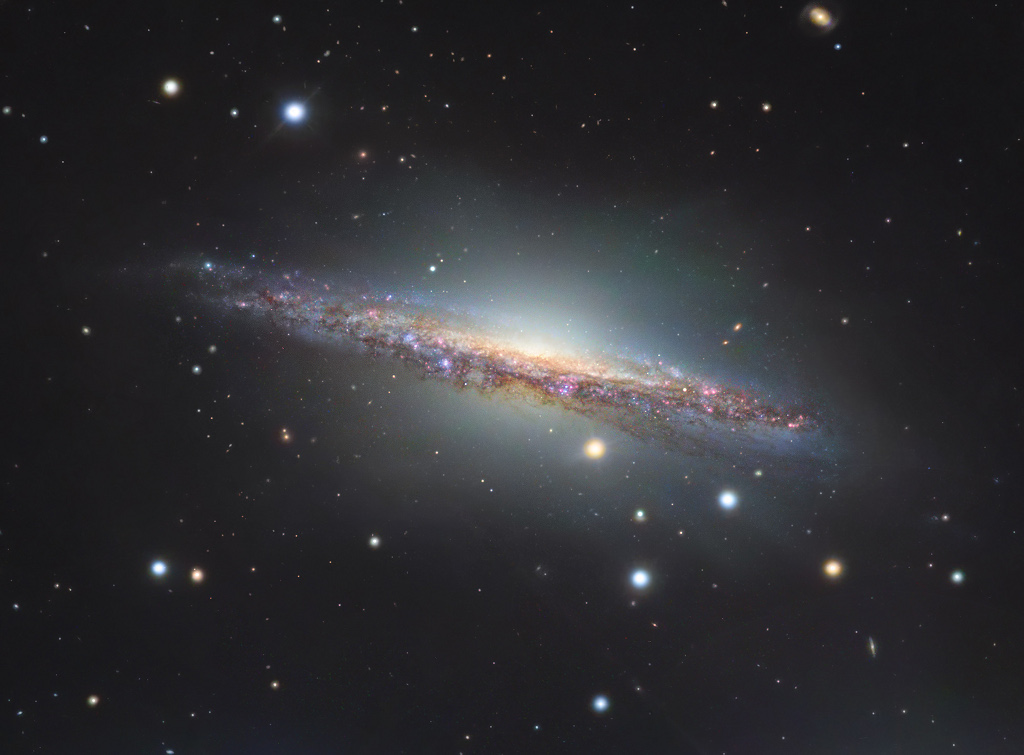
Big, beautiful spiral galaxy NGC 1055 is a dominant member of a small galaxy group a mere 60 million light-years away toward the aquatically intimidating constellation Cetus. Seen edge-on, the island universe spans over 100,000 light-years, a little larger than our own Milky Way. The colorful stars in this cosmic close-up of NGC 1055 are in the foreground, well within the Milky Way. But the telltale pinkish star forming regions are scattered through winding dust lanes along the distant galaxy's thin disk. With a smattering of even more distant background galaxies, the deep image also reveals a boxy halo that extends far above and below the central bluge and disk of NGC 1055. The halo itself is laced with faint, narrow structures, and could represent the mixed and spread out debris from a satellite galaxy disrupted by the larger spiral some 10 billion years ago. via NASA http://ift.tt/2AsB3oa

Nov 8, 2017

NGC 2261: Hubble s Variable Nebula NGC 2261: Hubble s Variable Nebula


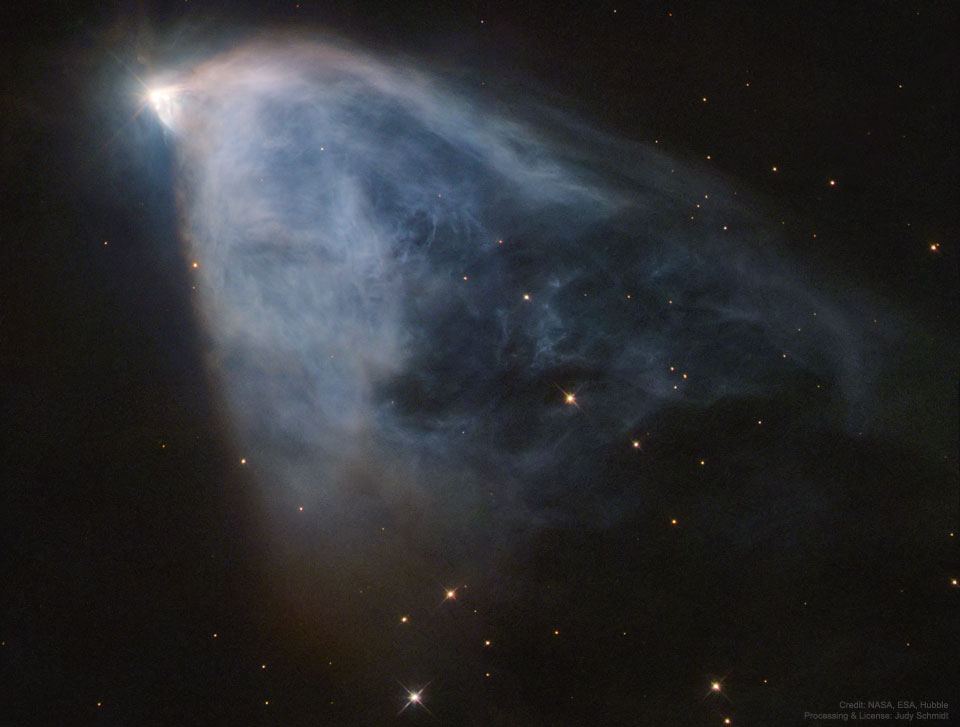
What causes Hubble's Variable Nebula to vary? The unusual nebula featured here changes its appearance noticeably in just a few weeks. Discovered over 200 years ago and subsequently cataloged as NGC 2661, the remarkable nebula is named for Edwin Hubble, who studied it early last century. Fitting, perhaps, the featured image was taken by another namesake of Hubble: the Space Telescope. Hubble's Variable Nebula is a reflection nebula made of gas and fine dust fanning out from the star R Monocerotis. The faint nebula is about one light-year across and lies about 2500 light-years away towards the constellation of the Unicorn (Monocerotis). The leading variability explanation for Hubble's Variable Nebula holds that dense knots of opaque dust pass close to R Mon and cast moving shadows onto the reflecting dust seen in the rest of the nebula. via NASA http://ift.tt/2hNWlVH

Nov 7, 2017

The Prague Astronomical Clock The Prague Astronomical Clock


In the center of Prague there's a clock the size of a building. During the day, crowds gather to watch the show when it chimes in a new hour. The Prague Astronomical Clock's face is impressively complex, giving not only the expected time with respect to the Sun (solar time), but the time relative to the stars (sidereal time), the times of sunrise and sunset, the time at the equator, the phase of the Moon, and much more. The clock began operation in 1410, and even though much of its inner workings have been modernized several times, original parts remain. Below the clock is a nearly-equal sized, but static, solar calendar. Pictured, the Prague Astronomical Clock was photographed alone during an early morning in 2009 March. The Prague Astronomical Clock and the Old Town Tower behind it are currently being renovated once again, with the clock expected to be restarted in 2018 June. via NASA http://ift.tt/2ixnLyT

Nov 6, 2017

A Year of Full Moons A Year of Full Moons


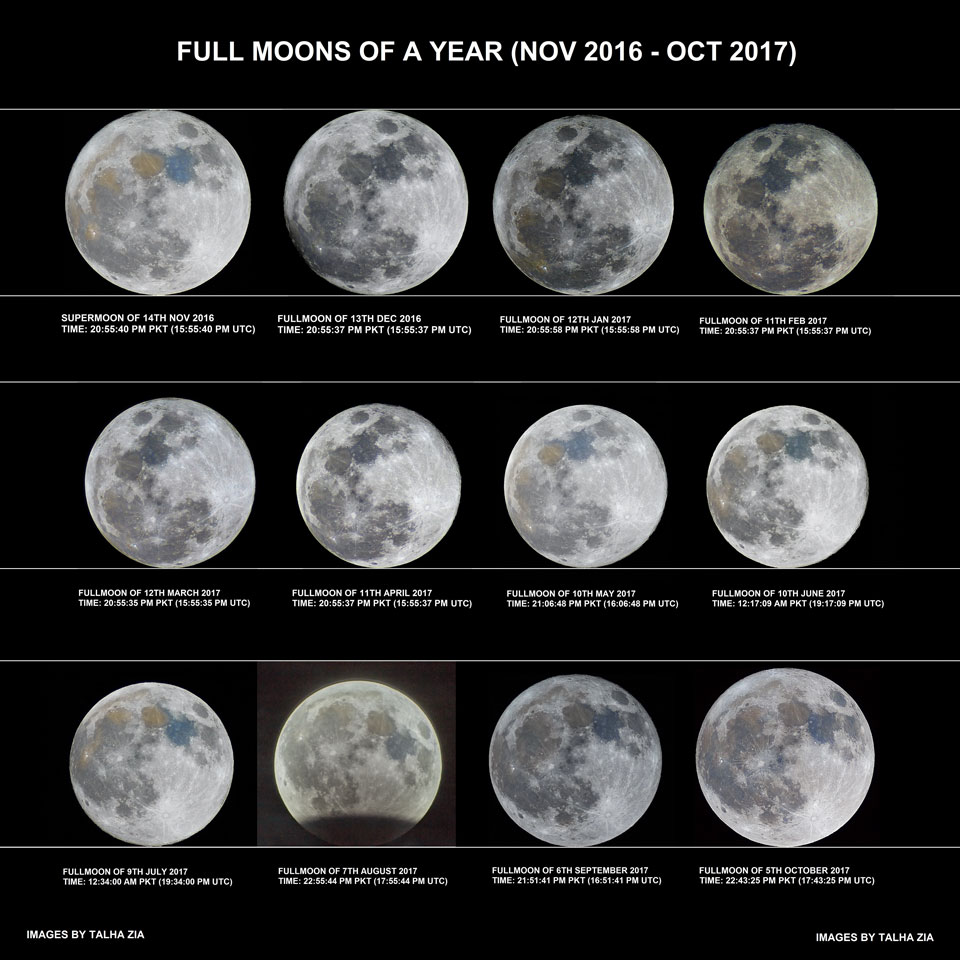
Do all full moons look the same? No. To see the slight differences, consider this grid of twelve full moons. From upper left to lower right, the images represent every lunation from 2016 November through 2017 October, as imaged from Pakistan. The consecutive full moons are all shown at the same scale, so unlike the famous Moon Illusion, the change in apparent size seen here is real. The change is caused by the variation in lunar distance due to the Moon's significantly non-circular orbit. The dark notch at the bottom of the full moon of 2017 August is the shadow of the Earth -- making this a partial lunar eclipse. Besides the sometimes exaggerated coloring, a subtler change in appearance can also be noticed on close examination, as the Moon seems to wobble slightly from one full moon to the next. This effect, known as libration, is more dramatic and easier to see in this lunation video highlighting all of the ways that the Moon appears to change over a month (moon-th). via NASA http://ift.tt/2lPBaHp

Nov 5, 2017

A Year of Full Moons A Year of Full Moons


Do all full moons look the same? No. To see the slight differences, consider this grid of twelve full moons. From upper left to lower right, the images represent every lunation from 2016 November through 2017 October, as imaged from Pakistan. The consecutive full moons are all shown at the same scale, so unlike the famous Moon Illusion, the change in apparent size seen here is real. The change is caused by the variation in lunar distance due to the Moon's significantly non-circular orbit. The dark notch at the bottom of the full moon of 2017 August is the shadow of the Earth -- making this a partial lunar eclipse. Besides the sometimes exaggerated coloring, a subtler change in appearance can also be noticed on close examination, as the Moon seems to wobble slightly from one full moon to the next. This effect, known as libration, is more dramatic and easier to see in this lunation video highlighting all of the ways that the Moon appears to change over a month (moon-th). via NASA http://ift.tt/2lPBaHp

Nov 3, 2017

A 2017 U1: An Interstellar Visitor A 2017 U1: An Interstellar Visitor


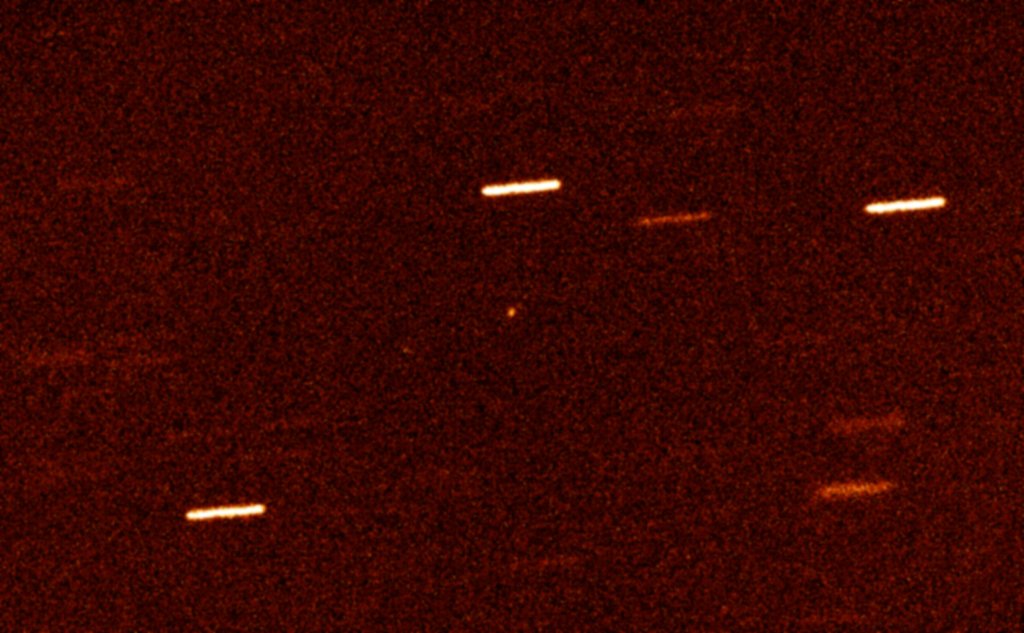
Traveling at high velocity along an extreme hyperbolic orbit and making a hairpin turn as it swung past the Sun, the now designated A/2017 U1 is the first known small body from interstellar space. A point of light centered in this 5 minute exposure recorded with the William Herschel Telescope in the Canary Islands on October 28, the interstellar visitor is asteroid-like with no signs of cometary activity. Faint background stars appear streaked because the massive 4.2 meter diameter telescope is tracking the rapidly moving A/2017 U1 in the field of view. Astronomer Rob Weryk (IfA) first recognized the moving object in nightly Pan-STARRS sky survey data on October 19. A/2017 is presently outbound, never to return to the Solar System, and already only visible from planet Earth in large optical telescopes. Though an interstellar origin has been established based on its orbit, it is still unknown how long the object could have drifted among the stars of the Milky Way. But its interstellar cruise speed would be about 26 kilometers per second. By comparison humanity's Voyager 1 spacecraft travels about 17 kilometers per second through interstellar space. via NASA http://ift.tt/2A8SLNC

Nov 2, 2017

NGC 891 vs Abell 347 NGC 891 vs Abell 347


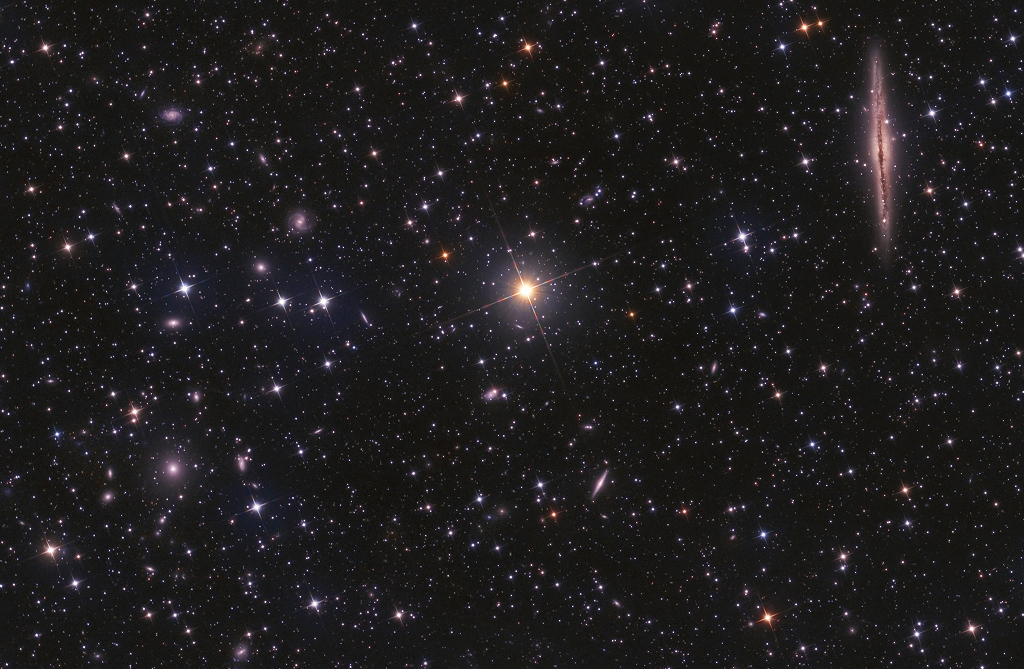
Distant galaxies lie beyond a foreground of spiky Milky Way stars in this telescopic field of view. Centered on yellowish star HD 14771, the scene spans about 1 degree on the sky toward the northern constellation Andromeda. At top right is large spiral galaxy NGC 891, 100 thousand light-years across and seen almost exactly edge-on. About 30 million light-years distant, NGC 891 looks a lot like our own Milky Way with a flattened, thin, galactic disk. Its disk and central bulge are cut along the middle by dark, obscuring dust clouds. Scattered toward the lower left are members of galaxy cluster Abell 347. Nearly 240 million light-years away, Abell 347 shows off its own large galaxies in the sharp image. They are similar to NGC 891 in physical size but located almost 8 times farther away, so Abell 347 galaxies have roughly one eighth the apparent size of NGC 891. via NASA http://ift.tt/2z7NZBY

Nov 1, 2017

Thors Helmet Emission Nebula Thors Helmet Emission Nebula


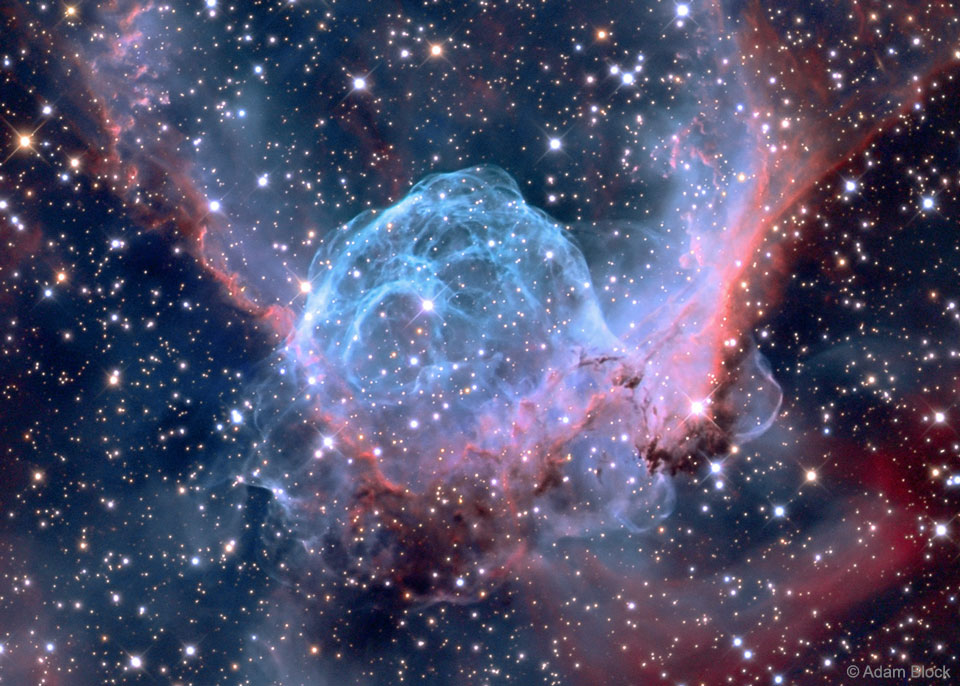
This helmet-shaped cosmic cloud with wing-like appendages is popularly called Thor's Helmet. Heroically sized even for a Norse god, Thor's Helmet spans about 30 light-years across. In fact, the helmet is more like an interstellar bubble, blown as a fast wind -- from the bright star near the center of the bubble's blue-hued region -- sweeps through a surrounding molecular cloud. This star, a Wolf-Rayet star, is a massive and extremely hot giant star thought to be in a brief, pre-supernova stage of evolution. Cataloged as NGC 2359, the emission nebula is located about 12,000 light-years away toward the constellation of the Big Dog (Canis Major). The sharp image, made using broadband and narrowband filters, captures striking details of the nebula's filamentary gas and dust structures. The blue color originates from strong emission from oxygen atoms in the nebula. via NASA http://ift.tt/2zS1WkA