Pages

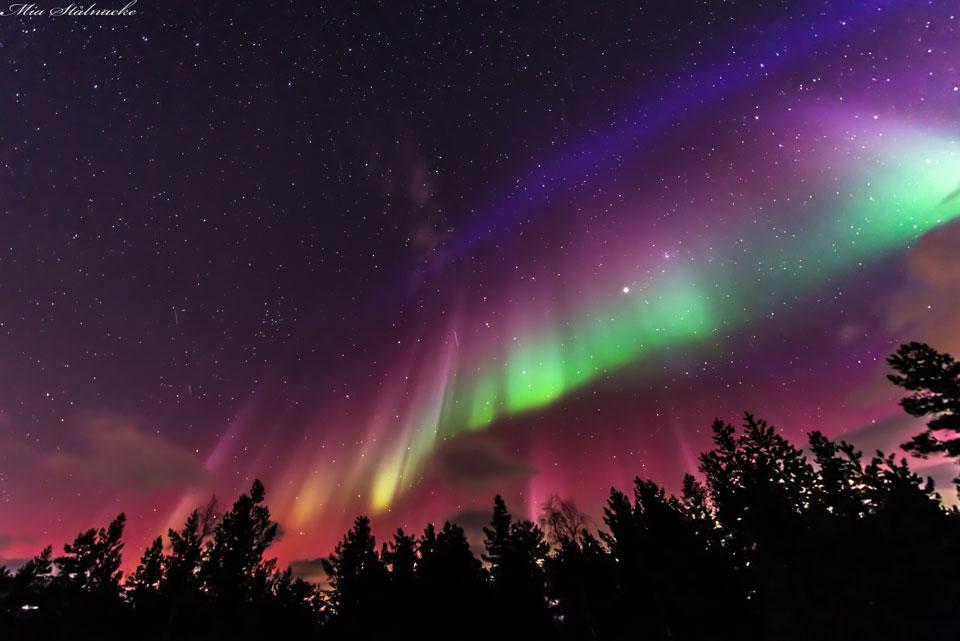
A Flag Shaped Aurora over Sweden A Flag Shaped Aurora over Sweden


It appeared, momentarily, like a 50-km tall banded flag. In mid-March, an energetic Coronal Mass Ejection directed toward a clear magnetic channel to Earth led to one of the more intense geomagnetic storms of recent years. A visual result was wide spread auroras being seen over many countries near Earth's magnetic poles. Captured over Kiruna, Sweden, the image features an unusually straight auroral curtain with the green color emitted low in the Earth's atmosphere, and red many kilometers higher up. It is unclear where the rare purple aurora originates, but it might involve an unusual blue aurora at an even lower altitude than the green, seen superposed with a much higher red. As the Sun continues near its top level of surface activity, colorful nights of auroras over Earth are likely to continue. via NASA http://ift.tt/1Db5Svb

Shadow of a Martian Robot Shadow of a Martian Robot


What if you saw your shadow on Mars and it wasn't human? Then you might be the Opportunity rover currently exploring Mars. Opportunity has been exploring the red planet since early 2004, finding evidence of ancient water, and sending breathtaking images across the inner Solar System. Pictured above in 2004, Opportunity looks opposite the Sun into Endurance Crater and sees its own shadow. Two wheels are visible on the lower left and right, while the floor and walls of the unusual crater are visible in the background. Opportunity is continuing on its long trek exploring unusual terrain in Meridiani Planum which continues to yield clues to the ancient history of Mars, our Solar System, and even humanity. via NASA http://ift.tt/1Mi7EAh

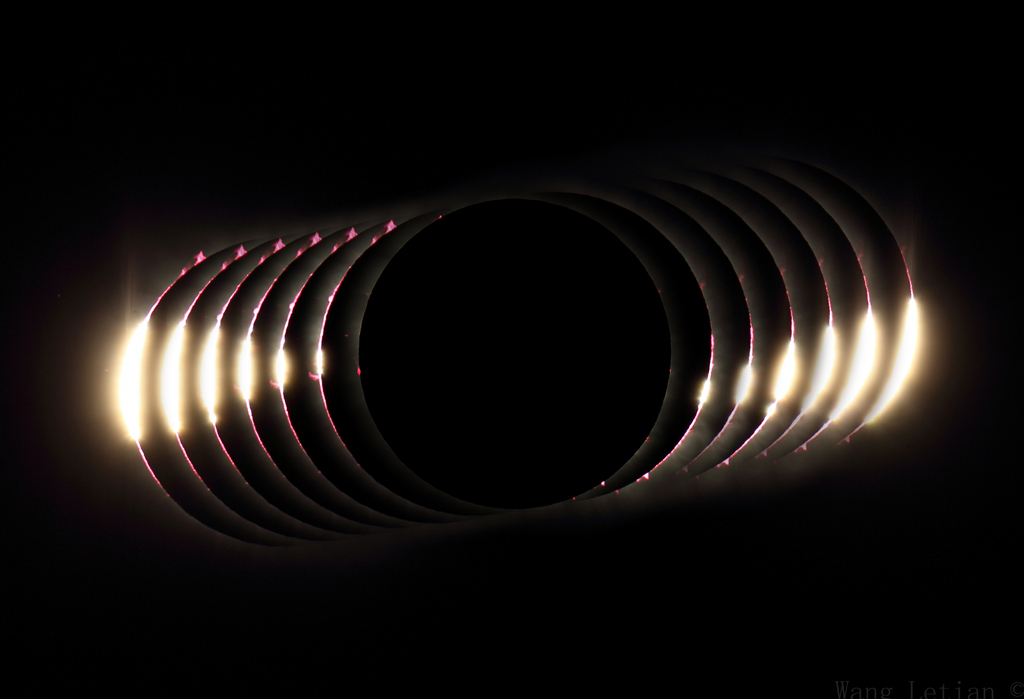
Diamond Rings and Baily s Beads Diamond Rings and Baily s Beads


Near the March 20 equinox the cold clear sky over Longyearbyen, Norway, planet Earth held an engaging sight, a total eclipse of the Sun. The New Moon's silhouette at stages just before and after the three minute long total phase seems to sprout glistening diamonds and bright beads in this time lapse composite of the geocentric celestial event. The last and first glimpses of the solar disk with the lunar limb surrounded by the glow of the Sun's inner corona give the impression of a diamond ring in the sky. At the boundaries of totality, sunlight streaming through valleys in the irregular terrain along the Moon's edge, produces an effect known as Baily's Beads, named after English astronomer Francis Baily who championed an explanation for the phenomenon in 1836. This sharp composition also shows off the array of pinkish solar prominences lofted above the edge of the eclipsed Sun. via NASA http://ift.tt/1CWwX5e

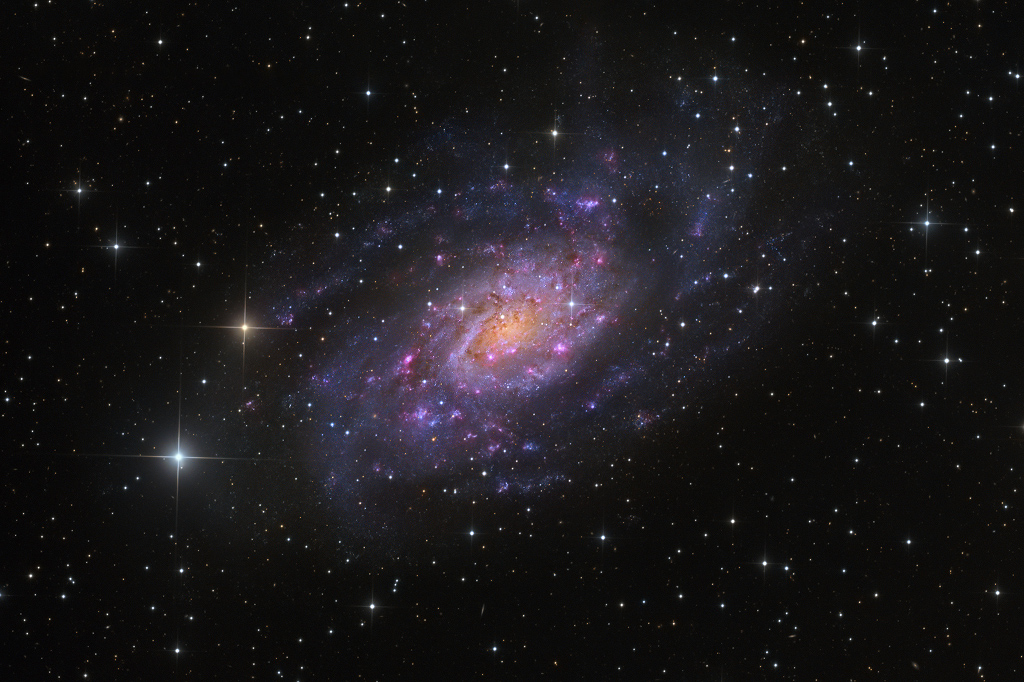
NGC 2403 in Camelopardalis NGC 2403 in Camelopardalis


Magnificent island universe NGC 2403 stands within the boundaries of the long-necked constellation Camelopardalis. Some 10 million light-years distant and about 50,000 light-years across, the spiral galaxy also seems to have more than its fair share of giant star forming HII regions, marked by the telltale reddish glow of atomic hydrogen gas. The giant HII regions are energized by clusters of hot, massive stars that explode as bright supernovae at the end of their short and furious lives. A member of the M81 group of galaxies, NGC 2403 closely resembles another galaxy with an abundance of star forming regions that lies within our own local galaxy group, M33 the Triangulum Galaxy. Spiky in appearance, bright stars in this colorful galaxy portrait of NGC 2403 lie in the foreground, within our own Milky Way. via NASA http://ift.tt/1xjt5KD

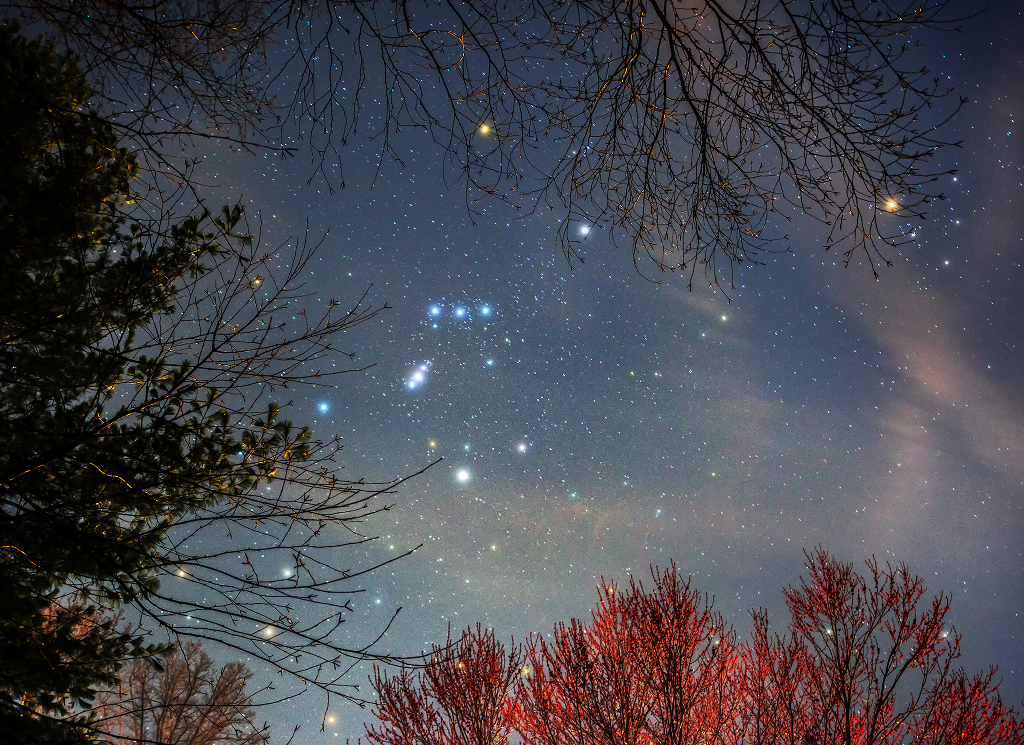
Orion Spring Orion Spring


As spring comes to planet Earth's northern hemisphere, familiar winter constellation Orion sets in early evening skies and budding trees frame the Hunter's stars. The yellowish hue of cool red supergiant Alpha Orionis, the great star Betelgeuse, mingles with the branches at the top of this colorful skyscape. Orion's alpha star is joined on the far right by Alpha Tauri. Also known as Aldebaran and also a giant star cooler than the Sun, it shines with a yellow light at the head of Taurus, the Bull. Contrasting blue supergiant Rigel, Beta Orionis, is Orion's other dominant star though, and marks the Hunter's foot below center. Of course, the sword of Orion hangs from the Hunter's three blue belt stars near picture center, but the middle star in the sword is not a star at all. A slightly fuzzy pinkish glow hints at its true nature, a nearby stellar nursery visible to the unaided eye known as the Orion Nebula. via NASA http://ift.tt/1xAz1PR

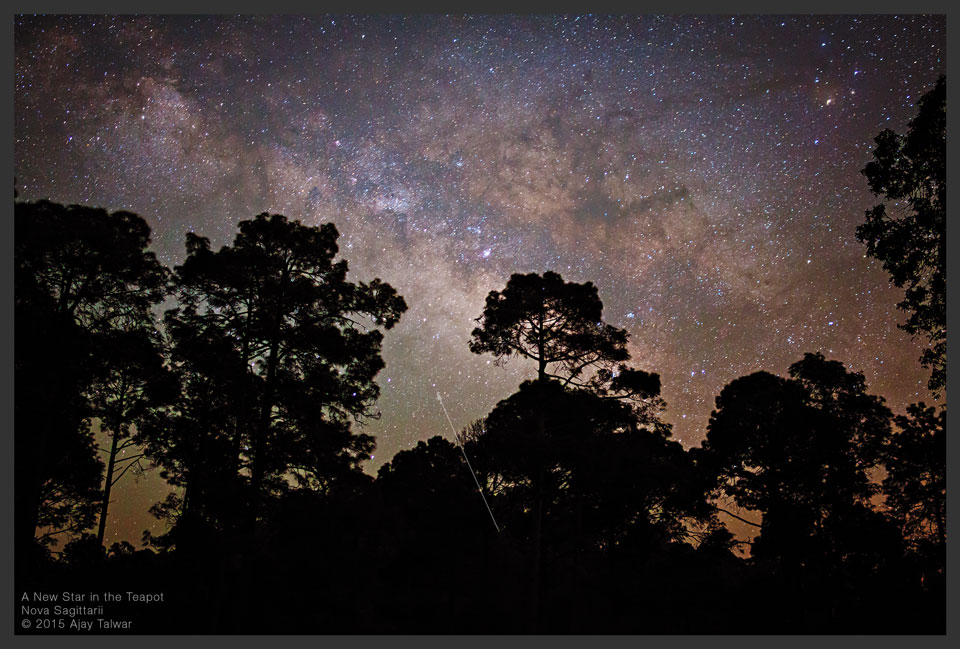
Naked Eye Nova Sagittarii 2015 No 2 Naked Eye Nova Sagittarii 2015 No 2


It quickly went from obscurity to one of the brighter stars in Sagittarius -- but it's fading. Named Nova Sagittarii 2015 No. 2, the stellar explosion is the brightest nova visible from Earth in over a year. The featured image was captured four days ago from Ranikhet in the Indian Himalayas. Several stars in western Sagittarius make an asterism known as the Teapot, and the nova, indicated by the arrow, now appears like a new emblem on the side of the pot. As of last night, Nova Sag has faded from brighter than visual magnitude 5 to the edge of unaided visibility. Even so, the nova should still be easily findable with binoculars in dark skies before sunrise over the next week. via NASA http://ift.tt/1ER0tIx

Atlas V Launches MMS Atlas V Launches MMS


Birds don't fly this high. Airplanes don't go this fast. The Statue of Liberty weighs less. No species other than human can even comprehend what is going on, nor could any human just a millennium ago. The launch of a rocket bound for space is an event that inspires awe and challenges description. Pictured above, an Atlas V rocket lifts off carrying NASA's Magnetospheric Multiscale Mission into Earth orbit 10 days ago to study the workings of the magnetosphere that surrounds and protects the Earth. From a standing start, the 300,000 kilogram rocket ship left to circle the Earth where the outside air is too thin to breathe. Rockets bound for space are now launched from somewhere on Earth about once a week. via NASA http://ift.tt/18S1QeP

A Double Eclipse of the Sun A Double Eclipse of the Sun


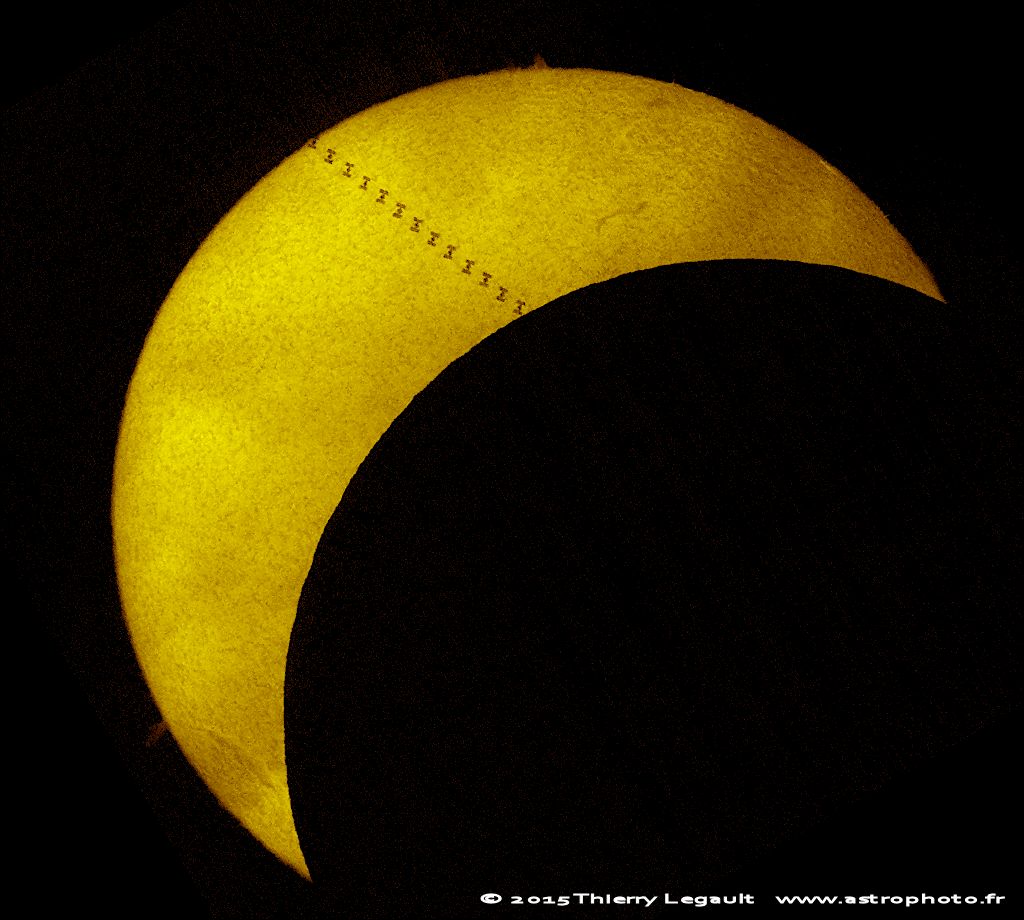
Can the Sun be eclipsed twice at the same time? Last Friday was noteworthy because part of the Earth was treated to a rare total eclipse of the Sun. But also on Friday, from a part of the Earth that only saw part of the Sun eclipsed, a second object appeared simultaneously in front of the Sun: the Earth-orbiting International Space Station. Although space station eclipses are very quick -- in this case only 0.6 seconds, they are not so rare. Capturing this composite image took a lot of planning and a little luck, as the photographer had to dodge a series of third objects that kept, annoyingly, also lining up in front of the Sun: clouds. The above superposed time-lapse sequence was taken from Fregenal de la Sierra in southern Spain. The dark disk of the Moon dominates the lower right, while the Sun's textured surface shows several filaments and, over an edge, a prominence. via NASA http://ift.tt/1blw2k8

Northern Equinox Eclipse Northern Equinox Eclipse


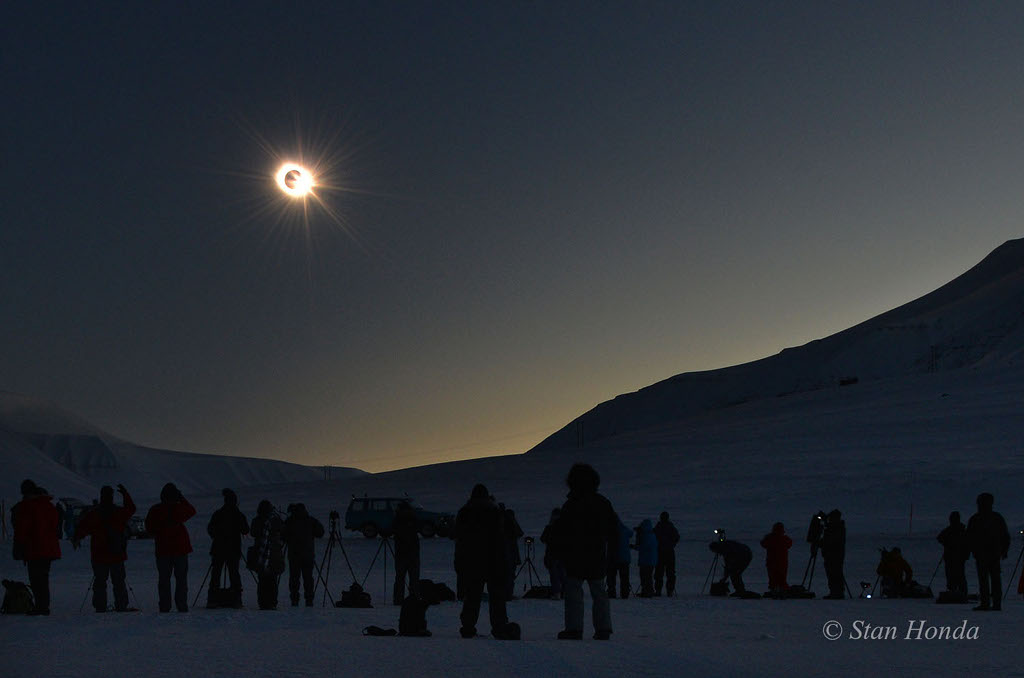
Snowy and cold is weather you might expect at the start of spring for Longyearbyen on the Arctic archipelago of Svalbard, Norway. But that turned out to be good weather for watching the Moon's umbral shadow race across northern planet Earth. The region was plunged into darkness for 3 minutes during the March 20 total solar eclipse while insulated eclipse chasers witnessed the dark Sun in the cold clear sky. In this well-timed snapshot captured near the end of totality, the Moon's shadow sweeps away from the horizon and the solar corona fades as the lunar disk just begins to uncover the Sun. Streaming past the Moon's edge, direct rays of sunlight create the fleeting appearance of a glistening diamond ring. via NASA http://ift.tt/1LCFEHi

Sunshine, Earthshine Sunshine, Earthshine


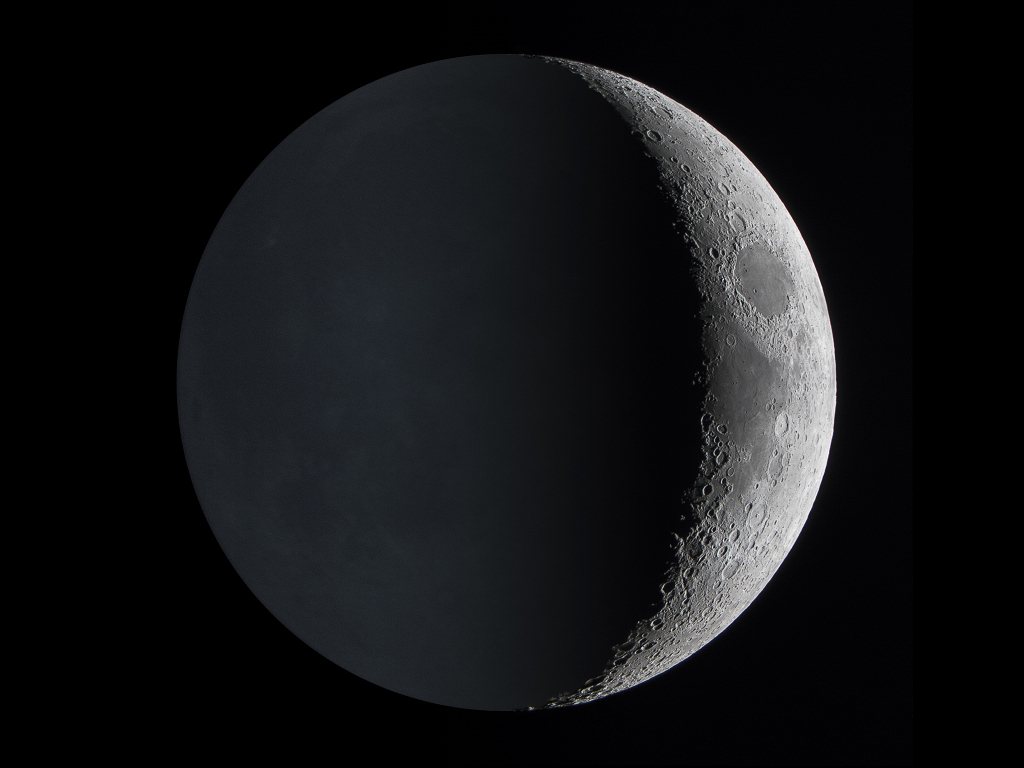
Today's date marks an Equinox and a New Moon. Remarkably, while the exact timing of both geocentric events occur within a span of only 13 hours, the moon also reaches its new phase only 14 hours after perigee, the closest point in its orbit. That makes the Equinox New Moon the largest New Moon of 2015, though hard to see since that lunar phase presents the Moon's dark, night side to planet Earth. Still, in this well composed image of a young lunar phase from late January you can glimpse both night and day on the lunar surface, the night side faintly illuminated by Earthshine next to the day side's brightly sunlit crescent. But some will see today's Equinox New Moon in silhouette! The Equinox Solar Eclipse will be total across stretches of the Arctic Ocean, visible in partial phases from Europe, northern Africa and western Asia. via NASA http://ift.tt/1AMvSbk

Aurora in the Backyard Aurora in the Backyard


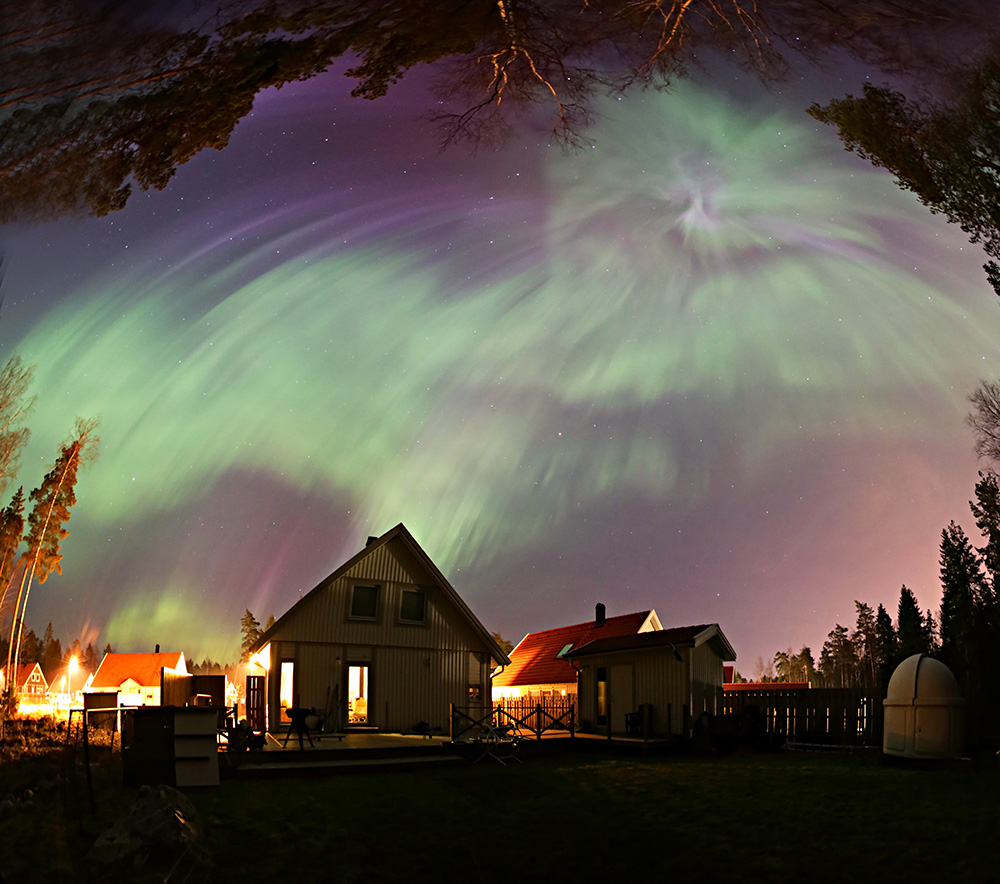
On the night of March 17/18 this umbrella of northern lights unfolded over backyards in Vallentuna, Sweden about 30 kilometers north of Stockholm. A result of the strongest geomagnetic storm of this solar cycle, auroral displays were captured on that night from back and front yards at even lower latitudes, including sightings in the midwestern United States. A boon for aurora hunting skywatchers, the space storm began building when a coronal mass ejection, launched by solar activity some two days earlier, struck planet Earth's magnetosphere. So what's the name of the backyard observatory on the right of the wide field view? That's Carpe Noctem Observatory, of course. via NASA http://ift.tt/1x2KfMg

Earth During a Total Eclipse of the Sun Earth During a Total Eclipse of the Sun


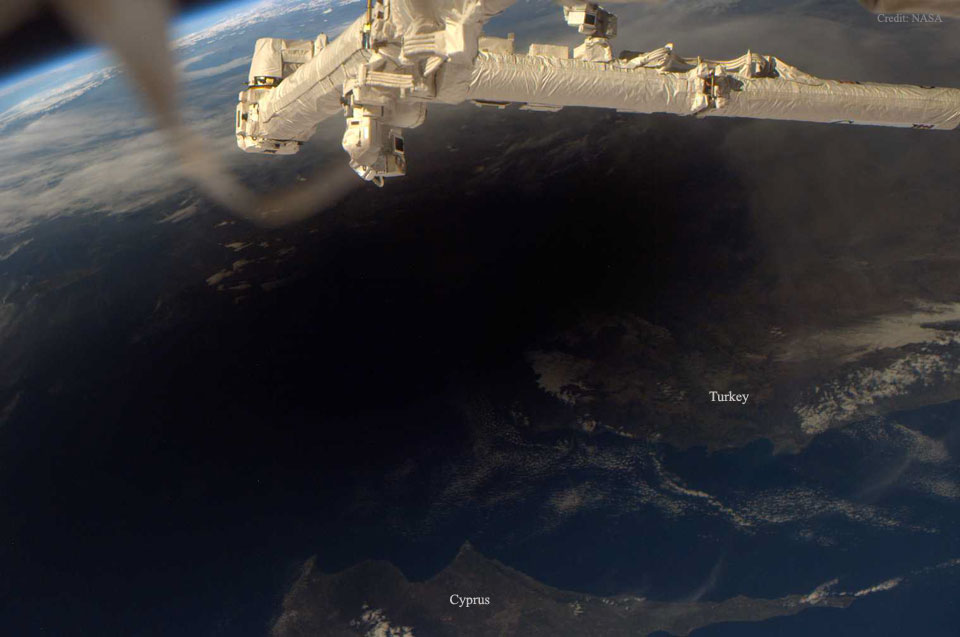
What does the Earth look like during a total solar eclipse? It appears dark in the region where people see the eclipse, because that's where the shadow of the Moon falls. The shadow spot actually shoots across the Earth at nearly 2,000 kilometers per hour, darkening locations in its path for only a few minutes before moving on. The featured image shows the Earth during the total solar eclipse of 2006 March, as seen from the International Space Station. On Friday the Moon will move in front of the Sun once again, casting another distorted circular shadow that, this time, will zip over part of the north Atlantic Ocean. via NASA http://ift.tt/1Ls9Bty

The Big Dipper Enhanced The Big Dipper Enhanced


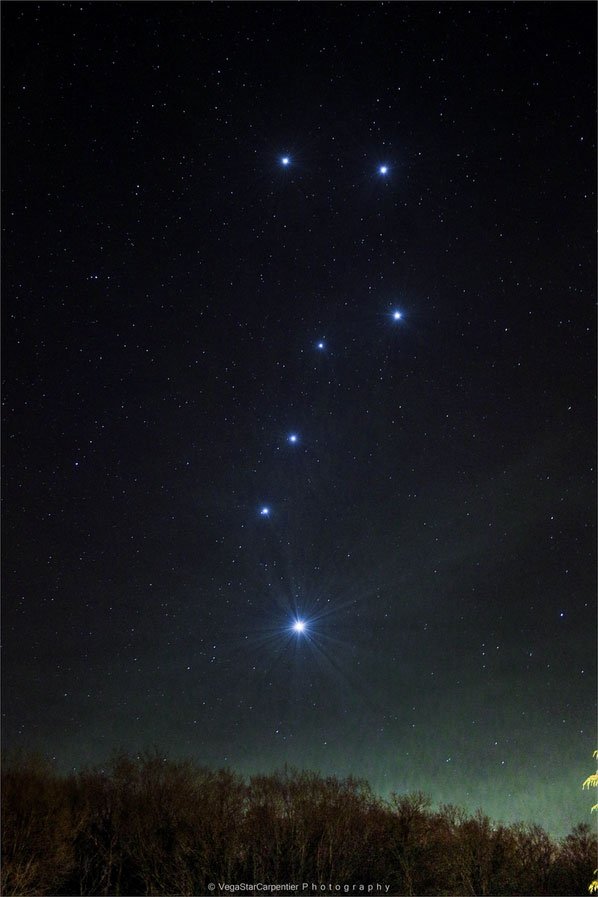
Do you see it? This common question frequently precedes the rediscovery of one of the most commonly recognized configurations of stars on the northern sky: the Big Dipper. This grouping of stars is one of the few things that has likely been seen, and will be seen, by every human generation. In this featured image, however, the stars of the Big Dipper have been digitally enhanced -- they do not really appear this much brighter than nearby stars. The image was taken earlier this month from France. The Big Dipper is not by itself a constellation. Although part of the constellation of the Great Bear (Ursa Major), the Big Dipper is an asterism that has been known by different names to different societies. Five of the Big Dipper stars are actually near each other in space and were likely formed at nearly the same time. Relative stellar motions will cause the Big Dipper to slowly change its apparent configuration over the next 100,000 years. via NASA http://ift.tt/1Cob4LJ

The Clouds of Orion the Hunter The Clouds of Orion the Hunter


Cradled in cosmic dust and glowing hydrogen, stellar nurseries in Orion the Hunter lie at the edge of giant molecular clouds some 1,500 light-years away. Spanning about 30 degrees, this breath-taking vista stretches across the well-known constellation from head to toe (left to right) and beyond. At 1,500 light years away, the Great Orion Nebula is the closest large star forming region, here visible just right and below center. To its left are the Horsehead Nebula, M78, and Orion's belt stars. Sliding your cursor over the picture will also find red giant Betelgeuse at the hunter's shoulder, bright blue Rigel at his foot, the Witch Head Nebula above -- and illuminated by -- Rigel, and the glowing Lambda Orionis (Meissa) nebula on the left, near Orion's head. Of course, the Orion Nebula and bright stars are easy to see with the unaided eye, but dust clouds and emission from the extensive interstellar gas in this nebula-rich complex, are too faint and much harder to record. In this mosaic of broadband telescopic images, additional image data acquired with a narrow hydrogen alpha filter was used to bring out the pervasive tendrils of energized atomic hydrogen gas like in the arc of the giant Barnard's Loop. via NASA http://ift.tt/19q5Eoz

A Total Eclipse at the End of the World A Total Eclipse at the End of the World


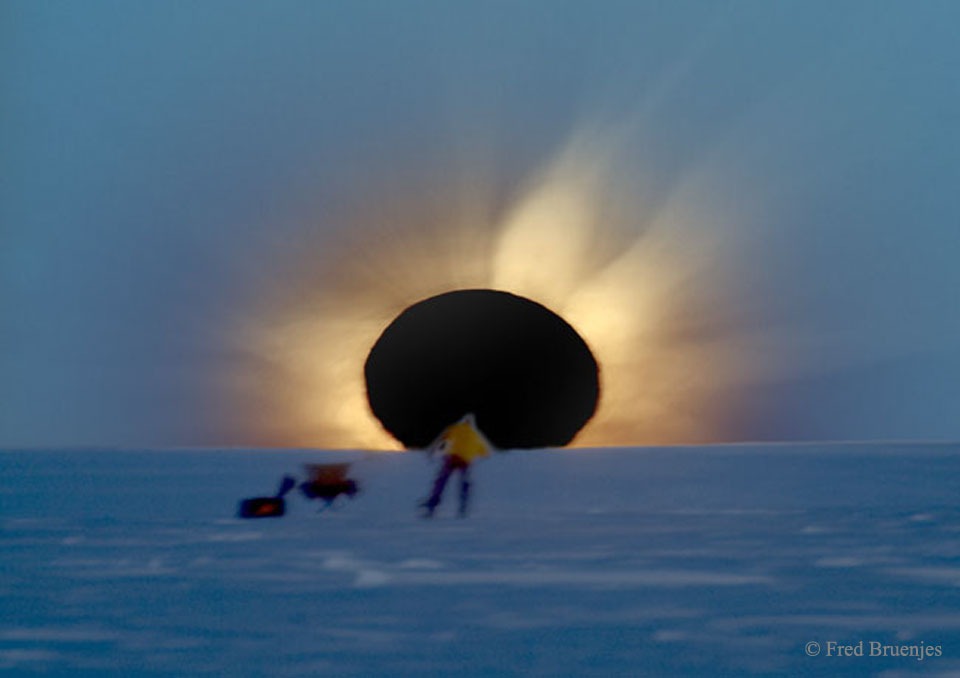
Would you go to the end of the world to see a total eclipse of the Sun? If you did, would you be surprised to find someone else there already? In 2003, the Sun, the Moon, Antarctica, and two photographers all lined up in Antarctica during an unusual total solar eclipse. Even given the extreme location, a group of enthusiastic eclipse chasers ventured near the bottom of the world to experience the surreal momentary disappearance of the Sun behind the Moon. One of the treasures collected was the above picture -- a composite of four separate images digitally combined to realistically simulate how the adaptive human eye saw the eclipse. As the image was taken, both the Moon and the Sun peeked together over an Antarctic ridge. In the sudden darkness, the magnificent corona of the Sun became visible around the Moon. Quite by accident, another photographer was caught in one of the images checking his video camera. Visible to his left are an equipment bag and a collapsible chair. A total solar eclipse will occur on Friday and be visible from the north Atlantic Ocean. via NASA http://ift.tt/1FikkS4

Return at Sunrise Return at Sunrise


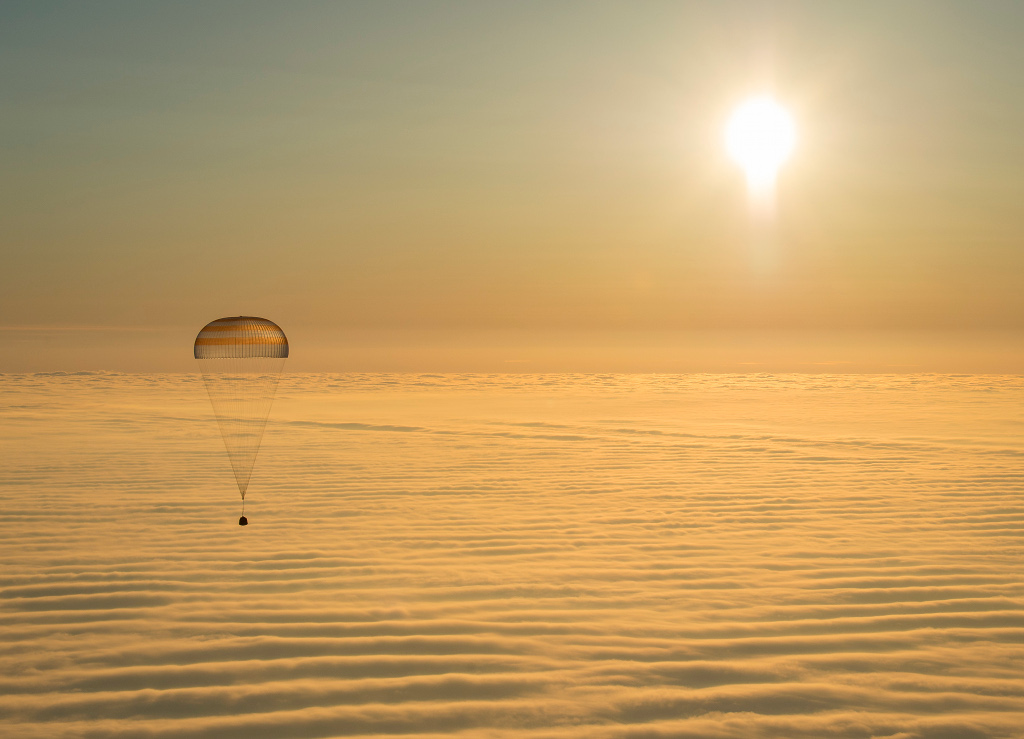
Thursday, shortly after local sunrise over central Asia, this Soyuz spacecraft floated over a sea of golden clouds during its descent by parachute through planet Earth's dense atmosphere. On board were Expedition 42 commander Barry Wilmore of NASA and Alexander Samokutyaev and Elena Serova of the Russian Federal Space Agency (Roscosmos). Touch down was at approximately 10:07 p.m. EDT (8:07 a.m. March 12, Kazakh time) southeast of Zhezkazgan, Kazakhstan. The three were returning from low Earth orbit, after almost six months on the International Space Station as members of the Expedition 41 and Expedition 42 crews. via NASA http://ift.tt/1G1fabG

The Great Wall by Moonlight The Great Wall by Moonlight


Last Friday, an almost Full Moon rose as the Sun set, over this mountainous landscape north of Beijing, China. Also near apogee, the farthest point in its elliptical orbit around planet Earth, it was this year's smallest and faintest Full Moon. The Jiankou section of the Great Wall of China meanders through the scene, the ancient Great Wall itself the subject of an older-than-the-space-age myth that it would be visible to the eye when standing on the lunar surface. But even from low Earth orbit, the large scale artifact of human civilization is very difficult to identify. At its farthest from our fair planet, the Moon shines brightly in the twilight sky though, posing in the faint, pinkish band known as the antitwilight arch or the belt of Venus. via NASA http://ift.tt/1HPtCok